


Quick Answer: How Do Hot Pot and Shabu Shabu Differ?
Chinese hot pot(火锅,huǒguō)covers many regional table-cooking traditions. Shabu shabu is a particular Japanese hot pot style, commonly associated with thinly sliced meat, a light cooking broth and separate dipping sauces.
- Broth: Chinese styles range from clear to strongly seasoned; shabu shabu often uses a light kelp-based liquid.
- Food and dips: Both can include meat, vegetables and tofu, but familiar ingredients and sauce combinations differ.
- Table experience: Both can be interactive shared meals; neither name guarantees an individual pot or a buffet.
The useful comparison is between recognizable traditions and actual menus, rather than a rule that all Chinese hot pot is spicy or all Japanese broth is plain.
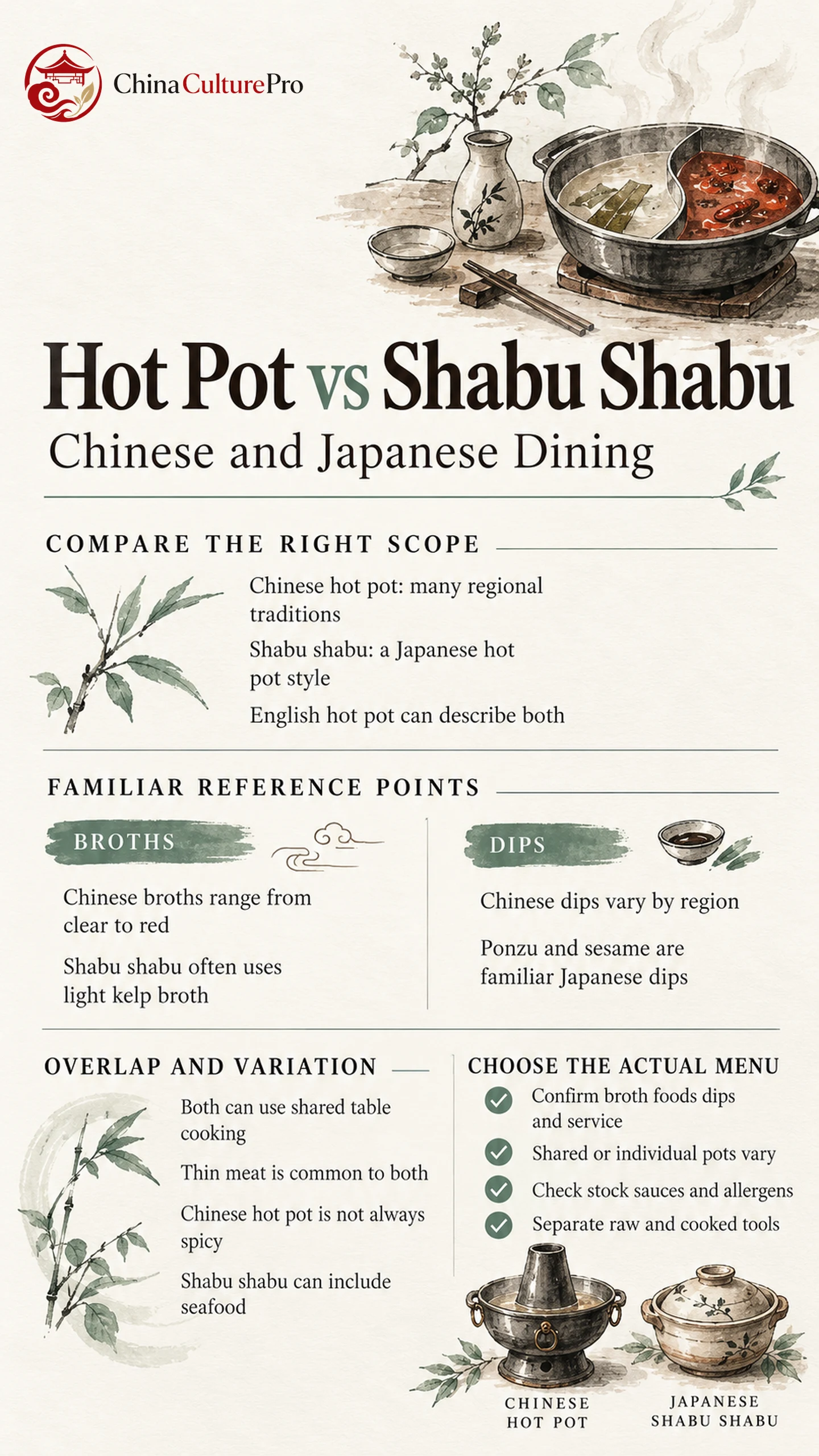
Two meals can place thin meat, vegetables and a heated pot in front of the diner while offering quite different flavor choices. The Chinese hot pot overview describes a broad regional family. This comparison places that family alongside shabu shabu without treating either restaurant label as a complete recipe.
Compare a Chinese Food Family with a Japanese Style
In broad English usage, hot pot can describe Japanese as well as Chinese meals. Here, Chinese hot pot means China’s regional traditions, while shabu shabu means the Japanese style. One is a broad culinary family; the other is a more specific reference.
Shabu shabu is recognized by moving thinly sliced food through hot liquid and enjoying it with dipping sauce. The Japanese name evokes that swishing action. A communal pot is a familiar presentation, so describing the dish as necessarily one pot per person misses an established form.[1]
Chinese traditions also cook thin slices in liquid. The technique alone does not create a national dividing line. Compare the combination of broth, favored foods, sauces and service.
Chinese blanched lamb cooking is identified as an influence on the development of Japanese shabu shabu. Its adaptation to beef and Japanese-style dipping sauces helps explain the family resemblance while leaving today’s dishes distinct.[7]
Broths, Ingredients and Dips at a Glance
The table describes familiar reference points. Restaurants may offer several options beyond them.
| Aspek | Chinese hot pot traditions | Shabu shabu reference |
|---|---|---|
| Kaldu | Clear water or stock, red chili broth, tomato, mushroom and other regional bases | Often light kelp-based broth, with restaurant variations |
| Meat | Lamb, beef, pork, poultry and offal vary by regional specialty | Thin beef is a classic reference; pork and other versions also exist |
| Supporting foods | Vegetables, mushrooms, soy foods, seafood, processed balls and starches | Vegetables, tofu, mushrooms and noodles are familiar companions |
| Dips | Sesame paste, garlic oil, shacha and other personal mixtures | Ponzu and sesame sauce are recognizable choices |
| Pot and service | Shared or individual pots; menu and buffet systems vary | Shared or individual arrangements depending on the restaurant |
Beijing hot pot provides a clear Chinese counterexample to the spicy stereotype: lightly seasoned liquid, sliced lamb and a substantial sesame-based dip.[5] The Sichuan and Chongqing styles illustrate a different emphasis, with chili, peppercorn and rich or vegetable-oil red bases.[4]
For shabu shabu, the dipping bowl is a major source of seasoning. Ponzu commonly contributes citrus and soy flavors; sesame sauce provides a richer coating. Thin beef and these two sauces are well-established reference points, rather than mandatory ingredients in every version.[2] The Chinese dipping sauces guide explains the different sauce families encountered on the Chinese side.
Shared Cooking, Different Menu Emphases
Both meals can move through small rounds of cooking and eating while people talk. Thin meat is one component, not a reason to assume that every food needs the same treatment. A dense vegetable, a fish slice and a filled meatball behave differently.
Shabu shabu is not restricted to beef. A documented Toyama regional version uses yellowtail, showing that seafood can belong within the tradition.[3] Seafood versions require attention to the actual fish and its preparation.
Chinese menus may foreground a particular ingredient, such as lamb, beef or mushrooms, rather than offering every imaginable item. Use the ingredient guide to identify what is actually available instead of treating menu size as a test of the cuisine.
For either meal, separate raw and cooked utensils, avoid overcrowding and cook ingredients thoroughly. Dipping in vinegar, alcohol or spicy sauce cannot replace proper cooking.[6] The hot pot eating guide covers the shared-table sequence without relying on a universal swish count.
Choosing a Meal and Checking Ingredients
Choose by the experience you want at that restaurant:
- Broth preference: Ask for the actual choices. A Chinese menu may have a light option; a modern shabu shabu menu may extend beyond a simple kelp broth.
- Ingredient focus: Check whether the menu emphasizes a meat selection, a regional specialty or a broad mixed range.
- Sauce preference: Confirm whether dips are supplied, mixed at a station or ordered separately.
- Service arrangement: Ask about shared versus personal pots, portion sizes and how the order is charged.
For dietary needs, check more than the surface appearance. A clear broth can include animal stock; soy-based sauces can contain wheat; sesame sauces require sesame checks. Citrus in a sauce name does not disclose every seasoning.
The vegetarian food guide helps separate plain ingredients from their cooking liquid and sauces. A shared pot also shares what other diners add. Neither a national label nor a divided vessel establishes allergen isolation.
FAQs About Hot Pot vs Shabu Shabu
Is Chinese hot pot always spicy?
No. Beijing-style lamb hot pot is a familiar lightly seasoned example, and many restaurants offer additional clear or mild bases.
Is shabu shabu always beef?
No. Beef is a classic reference, but other meats and regional seafood versions exist. Check the specific menu.
Does shabu shabu require an individual pot?
No. Shared-pot service is established, while some restaurants offer personal pots. The service arrangement is a restaurant choice.
Is clear kombu broth automatically vegan?
Plain kelp and water can be plant-based, but the complete broth, added foods and dipping sauces need checking. Appearance alone is insufficient.
Sumber
[1] Namiko Hirasawa Chen. Shabu Shabu
[2] Japan Livestock Products Export Promotion Council. Shabu-shabu
[3] Ministry of Agriculture Forestry and Fisheries Japan. Buri Shabu
[4] GoChengdu. Have Hotpot as Locals Do
[5] China University of Geosciences Beijing. Old Beijing Copper Hot Pot Swished Lamb
[6] Centre for Food Safety. Hot Pot Food Safety Advice
[7] Japan External Trade Organization. About Japanese Wagyu and Shabu Shabu