
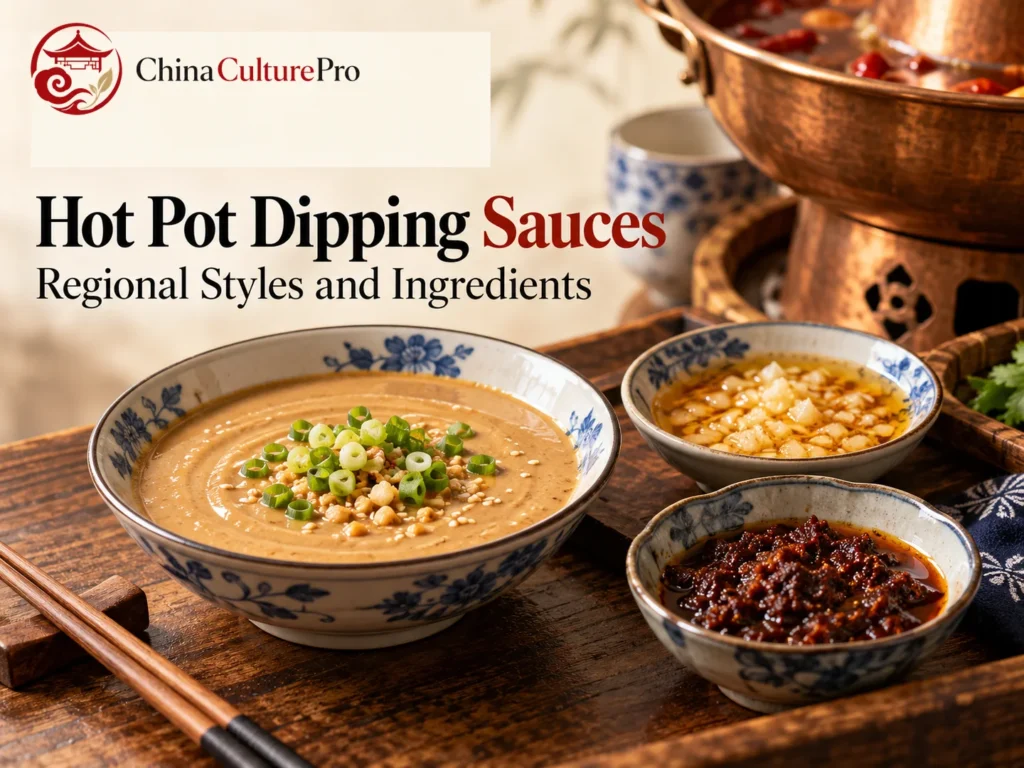

Quick Answer: What Are Hot Pot Dipping Sauces?
Hot pot dipping sauces are personal finishing sauces for food cooked in the communal broth. They add a second layer of aroma, texture, saltiness or acidity after cooking.
- Creamy choices: Sesame and peanut pastes give a substantial coating.
- Lighter textures: Garlic oil or soy-and-vinegar mixtures leave more of the food’s surface exposed.
- Other styles: Shacha(沙茶酱,shāchá jiàng)and dry chili dips bring different savory or granular finishes.
Regional associations help explain these choices, but they do not prescribe one bowl for everyone. The sauce is separate from the broth base and cannot make undercooked food safe.
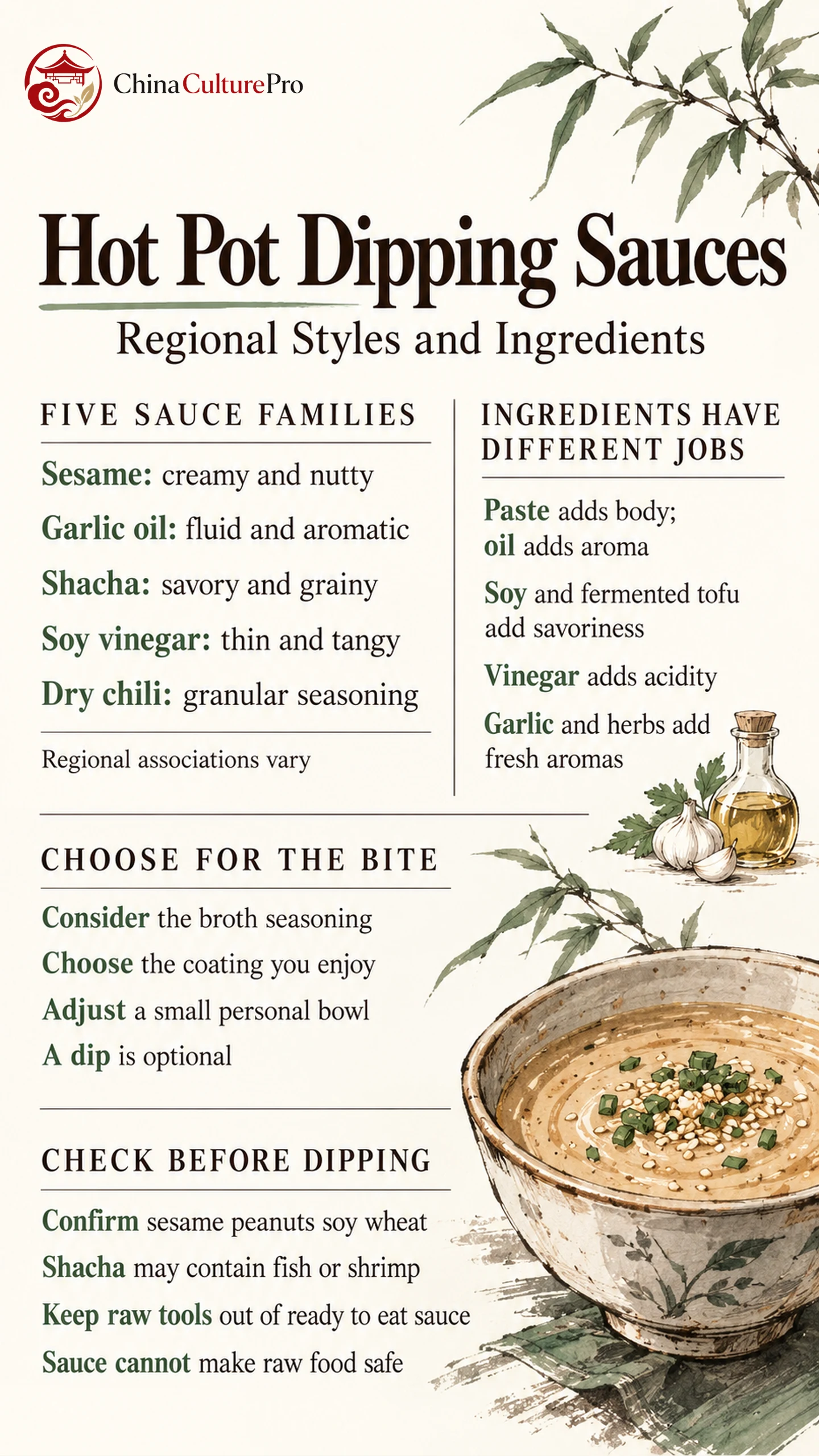
A sauce station can offer smooth beige paste, glossy oil, chopped herbs and dark, grainy condiments within arm’s reach. Choosing among them becomes easier when you separate the base from the additions. This guide focuses on the finishing bowl; the Chinese hot pot overview explains the wider meal.
Five Sauce Styles and Their Regional Associations
Sesame paste(芝麻酱,zhīmajiàng)is familiar alongside northern lamb hot pot. An oil dip(油碟,yóudié)is a recognizable southwestern alternative. These are useful reference points, not regional boundaries that a diner must obey.[2]
| Sauce style | Texture and common components | Regional or menu context |
|---|---|---|
| Sesame-based dip | Thick, nutty coating; sesame paste may be combined with other seasonings or peanut paste | Especially familiar with northern sliced lamb |
| Garlic oil dip | Fluid, glossy oil with mashed garlic and optional fresh herbs | Common with Sichuan and Chongqing red-broth meals |
| Shacha dip | Grainy, deeply savory sauce; some formulas include dried seafood | Familiar in southern Chinese and Taiwanese hot pot settings |
| Soy-and-vinegar dip | Thin, salty and tangy; aromatics are optional | A flexible personal choice across different broth styles |
| Dry chili dip | Powdery or granular chili seasoning, sometimes with seeds or crushed nuts | A southwestern option used alone or alongside a wet dip |
The sauce alongside Beijing hot pot can carry substantial flavor when the pot itself is lightly seasoned. Oil-and-garlic bowls are an area of overlap in Sichuan and Chongqing hot pot, rather than a reliable way to distinguish the cities.
Shacha is also a familiar companion to Chaozhou beef hot pot.[3] A dry dip(干碟,gāndié)adds loose seasoning instead of a liquid coating.[6] Chili, peppercorn, sesame and peanut mixtures exist commercially; that example does not define every dry dip.[4]
Sesame Paste, Sesame Oil and Other Sauce Bar Ingredients
Sesame paste and sesame oil share an ingredient association but behave differently. The paste supplies body; the oil supplies aroma and a fluid, oily mouthfeel. Adding oil does not reproduce the creamy consistency of paste. Prepared sesame sauces may already contain other ingredients, so a beige appearance does not establish purity.[1]
Fermented tofu(腐乳,fǔrǔ)contributes concentrated salty, fermented flavor. Garlic chive flower sauce(韭菜花,jiǔcàihuā)has a pungent allium character and is familiar in northern lamb dips. Both can change a sesame bowl considerably, even without chili.[1][6]
Chinese soy sauce contributes salt and savoriness; vinegar adds acidity. Garlic, scallion and coriander supply sharper fresh aromas. Chili oil combines oil with chili flavor, while peppercorn seasoning can add a distinct tingling sensation. Chili heat and peppercorn tingling are distinct sensations; aromatic sauces can also be mild.
Several additions are already strongly seasoned. A bowl containing soy sauce, fermented tofu and shacha may not need another salty condiment. Choose additions for the flavor or texture they contribute.
Choosing a Dip for Your Broth and Food
Consider the bite arriving from the pot. A lightly flavored broth leaves more space for a substantial sesame coating. A strongly seasoned red broth may already contribute considerable chili, salt and oil. A simple personal dip makes it easier to notice those existing flavors.
Texture also matters. A thick sauce coats slices and surfaces visibly; a thin mixture adds seasoning with less creamy body. The hot pot ingredients guide helps distinguish firm slices, porous tofu and other foods that carry sauce differently.
Start with the texture and dominant flavor you actually want, then adjust a small personal portion. Taste with a clean spoon. If the result is too intense, making a simpler fresh bowl is often clearer than adding every remaining condiment. These are preference choices, not rules assigning one sauce to every meat or vegetable.
You can also eat a thoroughly cooked ingredient without a dip. Choose the amount of sauce you enjoy. Avoiding chili in the dipping bowl, however, will not remove chili already carried by food cooked in a spicy broth.
Ingredient Checks and Sauce Bar Hygiene
Check the actual products rather than treating sauce names as dietary guarantees:
- Seeds and nuts: Sesame paste, sesame oil and dry mixes may matter for sesame restrictions; some pastes and powders also contain peanuts.
- Animal ingredients: Shacha can contain fish and shrimp. Oyster sauce, fish sauce or other compound seasonings require separate checks. One manufacturer’s shacha label explicitly lists fish and crustaceans.[3]
- Soy and wheat: Soy sauce, fermented tofu and compound sauces can introduce ingredients absent from plain oil or herbs. Read labels or ask staff about the specific product.
Use the vegetarian food guide to check the whole meal, including broth. A plant-based dip cannot change an animal-based cooking stock.
Keep ready-to-eat sauce separate from raw-food plates and tools. Use the sauce station’s clean serving utensils, and avoid adding unpasteurized raw egg to cooked food. Vinegar, alcohol, chili and other condiments do not reliably kill foodborne bacteria or parasites.[5] The hot pot eating guide covers the cooking sequence and shared-table tools.
FAQs About Hot Pot Dipping Sauces
Is sesame sauce the same as sesame oil?
No. Sesame paste gives a thick, creamy body; sesame oil stays fluid. A prepared sesame sauce may also contain seasonings or other ingredients.
Does shacha always contain seafood?
Many familiar versions contain fish or shrimp, but vegetarian alternatives exist. Confirm the actual label rather than assuming either formula from the name.
Do you have to use a dipping sauce?
No. A dip is a personal finishing choice. You can enjoy thoroughly cooked food as it comes from the broth.
Can vinegar make undercooked hot pot food safe?
No. Dipping sauces are seasonings, not substitutes for thorough cooking or separation of raw and cooked utensils.
Sumber
[1] Kaitlin Leung. How to Make a Hot Pot Dipping Sauce
[2] Unilever Food Solutions. The Story of the Hotpot
[3] HAW-DI-I Foods. Barbecue Sauce Product Information
[4] Sichuan Cuihong Foods. Compound Seasoning Powder Products
[5] Centre for Food Safety. Hot Pot Food Safety Advice
[6] Science China via Beijing Daily. Regional Hot Pot Dipping Sauces