


Quick Answer: What Is Chinese Coconut Milk Pudding?
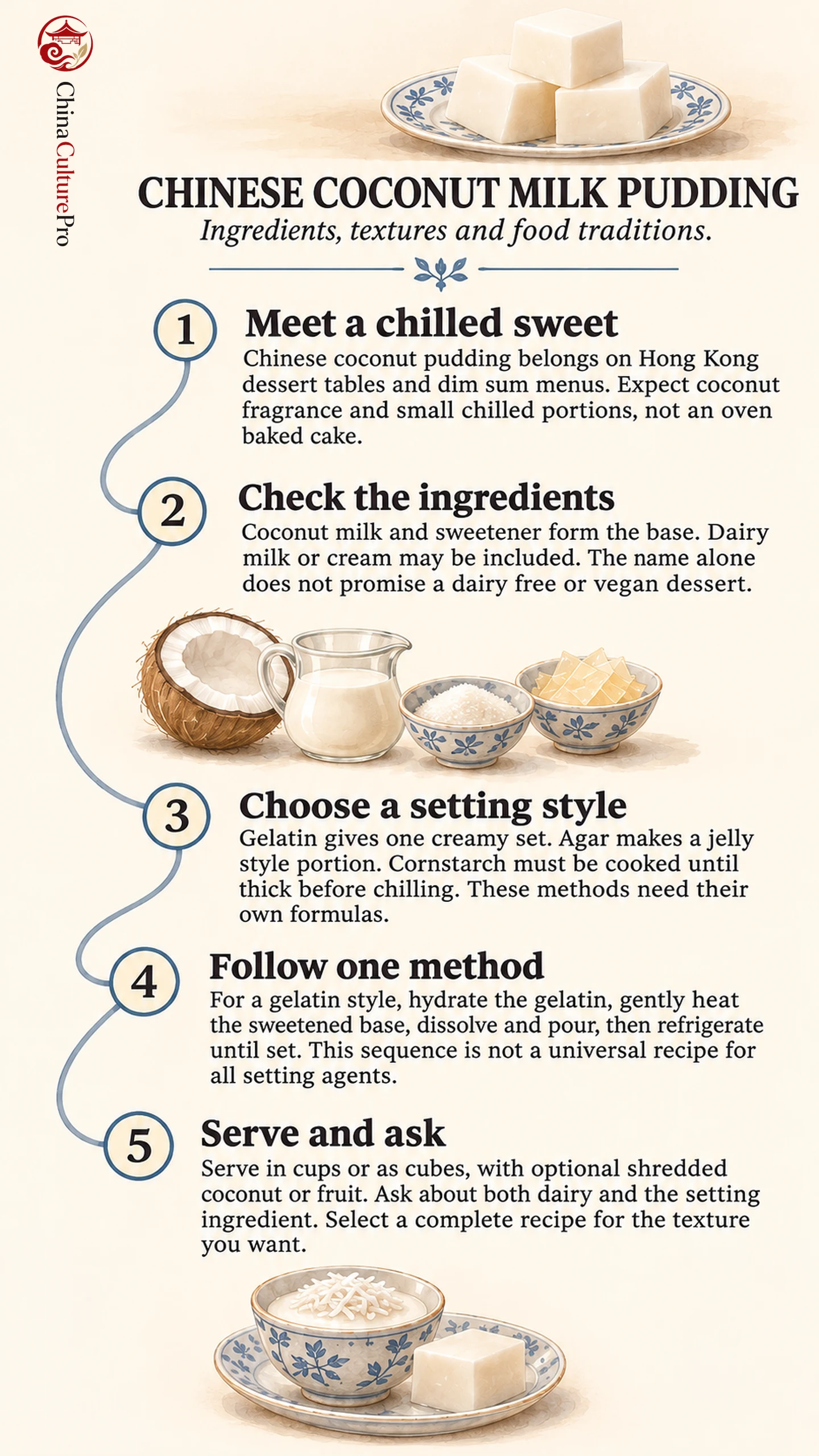
Chinese coconut milk pudding, often called ye zhi gao (椰汁糕, yē zhī gāo), is a sweet, chilled coconut dessert served as soft squares, cubes or molded portions. In Hong Kong it is associated with restaurant dessert trolleys and dim-sum dining.[1][4]
- Coconut milk supplies the characteristic flavor and white appearance.
- Dairy milk or cream may also be included.[2]
- Gelatin, agar and cornstarch versions use different ways to set.[1][3][4]
“Coconut pudding” does not identify one fixed recipe or guarantee that the dessert contains no dairy or animal-derived ingredients.
A small white square on a dim sum plate can look very simple. Its texture, however, depends on a choice that is easy to miss from the menu: what holds the coconut mixture together.
A Chilled Sweet from Hong Kong Dessert Tables
In Hong Kong, coconut pudding belongs to the familiar restaurant-dessert repertoire alongside mango pudding and other small sweets. The remembered dessert trolley, rather than a single annual festival, is a useful setting for understanding the dish.[1]
This places it naturally within Cantonese cuisine. Its appeal is a contrast with the hot savory dishes around it: a cool, lightly portioned sweet with a smooth surface and coconut fragrance.
The name translates roughly as coconut-milk cake, but it need not be a baked cake. Chilled setting, not an oven-baked crumb, is the relevant expectation here.
Coconut Milk, Sweetener and Setting Ingredients
A gelatin-based preparation may combine coconut milk with ordinary milk, heavy cream and sugar.[2] Another version uses coconut milk, dairy milk, water, sugar and gelatin without the cream.[4]
The ingredients have different jobs:
- Coconut milk: the main coconut flavor and creamy base.
- Sweetener and optional dairy: sweetness, dilution and richness that depend on the chosen recipe.
- Setting ingredient: gelatin, agar or cooked starch determines how the liquid becomes a portion that can hold its shape.
Coconut milk, coconut cream and a thin coconut drink should not be exchanged casually in a measured recipe. Their different consistency can change the intended result; use the product that the recipe specifies.[4]
Three Setting Methods and Their Textures
These examples describe related puddings rather than three ingredients to add to the same pot:[1][2][3]
| Setting method | Cara memasak yang umum | Texture expectation |
|---|---|---|
| Gelatin | Hydrate the gelatin, then dissolve it into a gently heated coconut mixture. | A soft, creamy set that can be served in a cup or cut into pieces. |
| Agar | Dissolve the agar using the recipe’s heating process before the mixture sets. | A jelly-style portion with its own firmness and cutting texture. |
| Cornstarch | Cook the starch with the coconut mixture until thick, then chill it. | A creamy, starch-set pudding rather than a gelatin jelly. |
How a Gelatin-Based Version Comes Together
For the gelatin-and-dairy style, the broad sequence is:[2]
- Hydrate the gelatin: soften sheets in cold water and drain them.
- Heat the base gently: warm coconut milk, dairy and sugar until the sugar dissolves.
- Dissolve and pour: stir in the softened gelatin until dissolved, then fill a mold or serving cups.
- Chill and portion: refrigerate until set, then serve in cups or cut into pieces.
This is a descriptive sequence, not a formula for every setting agent. The cornstarch version needs cooking until the mixture thickens; merely chilling an undercooked thin mixture does not complete that step.[3]
Serving Coconut Pudding and Choosing a Version
Serve chilled in cups or as cubes. Shredded coconut and fresh fruit are documented finishes.[2][3]
For ordering, ask two separate questions: whether dairy is included and what setting ingredient is used. A plant-based version can be made, but the word “coconut” by itself answers neither question. For cooking, choose the texture first, then follow one complete recipe instead of borrowing the setting quantities from another.
FAQs About Chinese Coconut Milk Pudding
Is coconut pudding always dairy-free or vegan?
No. Some recipes contain milk or cream and gelatin. A coconut-milk-and-cornstarch version without those additions is a different option.[2][3]
Can agar replace gelatin in the same quantity?
Do not assume so. The liquid proportions and heating process differ; use an agar-specific formula and the product’s directions.[4]
Why does a cornstarch version stay soft after chilling?
The mixture may not have thickened enough during cooking. Chilling follows the thickening stage; it does not replace it.[3]
Sumber
[1] HK01 (Hong Kong 01). Hong Kong Coconut Pudding and an Agar Preparation
[2] Elaine, China Sichuan Food. Coconut Milk Pudding
[3] Ms Shi and Mr He. Coconut Jelly with Cornstarch
[4] Wok Meets Oven. Chinese Coconut Pudding