


Quick Answer: What Are Chinese Belt Plaques?
Chinese belt plaques are hard ornaments attached to a strap. The plaques along the strap are called daikua (带銙, dàikuǎ). A belt can also have separate pieces for its closure and end. Historic examples include jade, gilt bronze and glass.[1][2][4]
- Plaques: Several pieces can repeat along the strap.
- Closure: A buckle holds the ends together.
- End fitting: An elongated or round-ended plate can mark the end of a strap.[1][3]
The fittings are one part of the history of Chinese clothing.
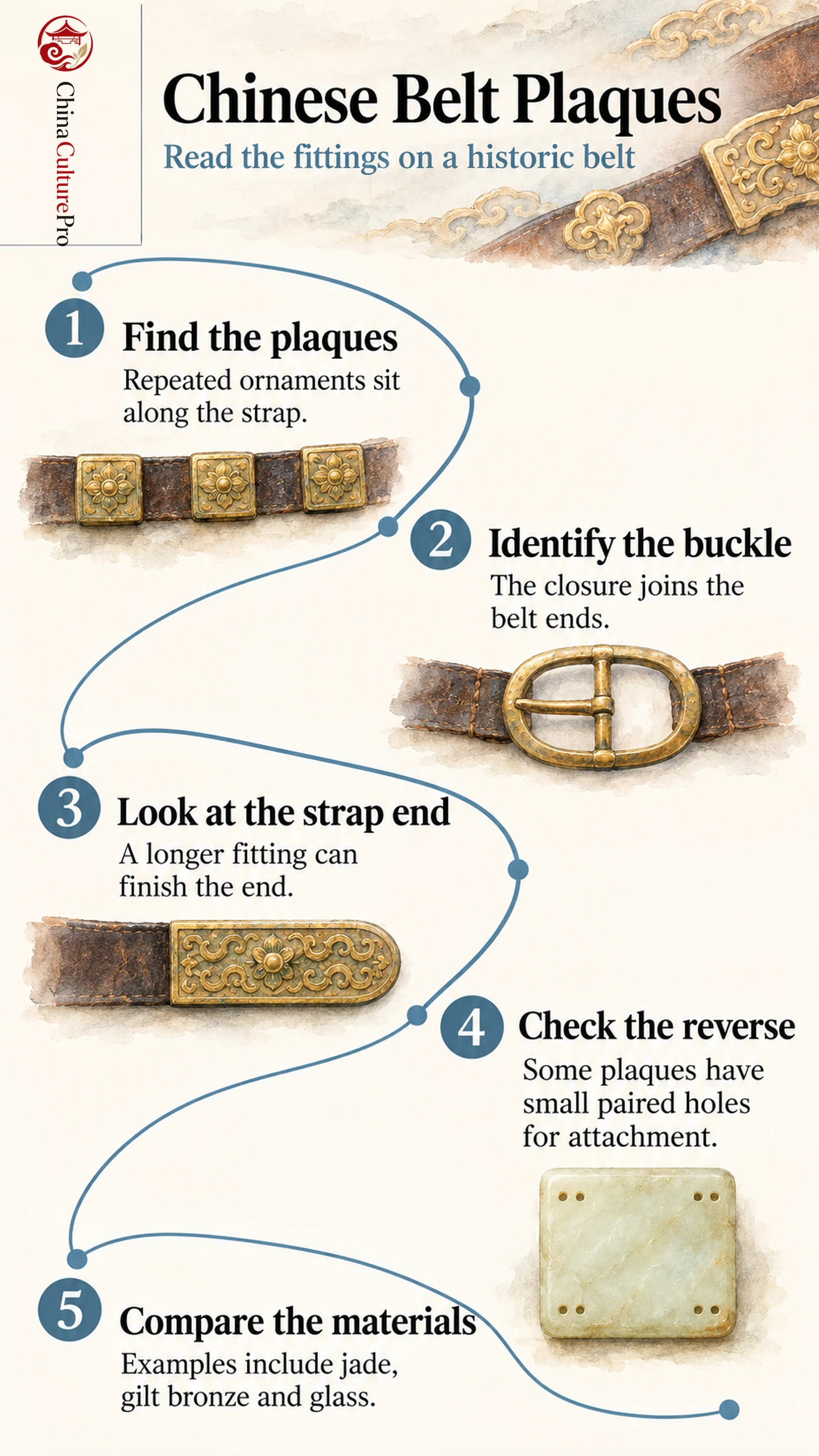
Viewed on a display mount, loose pieces can all look like ornaments. Their shapes and backs help explain where they once sat on a belt.
Plaques, Buckles and End Pieces
The belt fittings from the tomb of Fan Wenhu (范文虎, Fàn Wénhǔ) include eight square jade plaques, a longer piece with a rounded end and an oval buckle. Small paired holes on the backs helped attach the fittings to the belt. The paired holes show how the attachment could sit behind the decorated face.[1]
The repeated square pieces and the rounded end piece served distinct positions. The buckle sits where the belt closes. A single detached plate might give evidence about its attachment and size without revealing the full belt arrangement.
Jade, Gilt Bronze and Glass in Surviving Sets
A Tang nephrite set at The Met includes square reliefs of musicians and a dancer, with an elongated piece at the end. Relief makes the figures stand above the background.[3] The method is one way makers decorated jade belt ornaments in the wider tradition of Chinese jade carving.
An eighth-century gilt bronze group features deer motifs.[5] In a separate seventh-century set, glass and tiny pearls sit in gilt bronze fittings. Thin metal wires outline the inlaid motifs, and the museum records a silk backing.[2]
Thirteen Ming glass plaques at The Met are part of an original group that the museum estimates contained more than twenty pieces. Different sizes and shapes served different positions. The largest plaques in such arrangements could sit at the centre or at the ends. Counting the pieces in a display gives the surviving group.[4] The rules governing Chinese court belts provide the context for reading rank.
What to Check on a Modern Plaque Belt
Check the strap width and whether the buckle fastens securely over the clothes you will wear. Look at the back of each plate for rough edges, loose mounting or exposed hardware that could catch fabric. Fasten the belt over the intended garment and try sitting. A plate that lies flat when the belt is loose may lift or catch when the strap bends.
FAQs About Chinese Belt Plaques
Is a Belt Plaque the Same as a Buckle?
A plaque decorates the strap. A buckle belongs to the closure.
Were Belt Plaques Always Made of Jade?
Surviving examples include gilt bronze, glass and combinations of metal, glass and pearls.[2][4][5]
Can the Number of Plaques Identify a Rank?
The number of surviving pieces can differ from the original count. Rank interpretations depend on date, materials and the dress rules in use.[1][4]
Sumber
[1] National Museum of China. Jade Belt Fittings From Fan Wenhu’s Tomb
[2] The Metropolitan Museum of Art. Belt Buckle and Decorative Plaques
[3] The Metropolitan Museum of Art. Set of Decorative Belt Plaques
[4] The Metropolitan Museum of Art. Set of Thirteen Glass Belt Plaques
[5] The Metropolitan Museum of Art. Gilt Bronze Decorative Belt Plaques