

Quick Answer: What Is a Pineapple Bun?
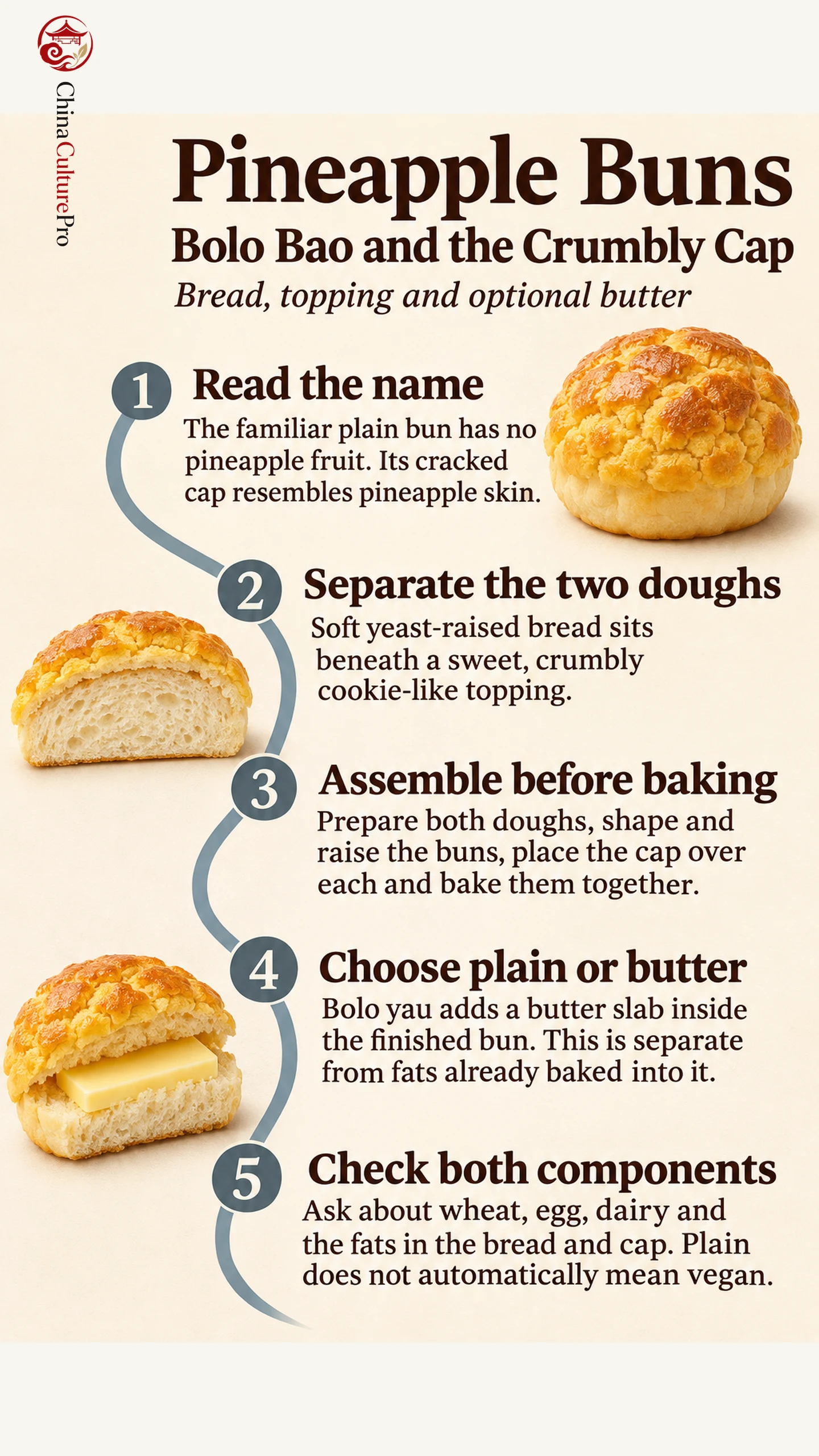
A pineapple bun(菠蘿包,bōluóbāo)is a soft baked bun with a sweet, crumbly topping. Bolo bao is a Cantonese menu spelling, separate from the Mandarin pinyin.[2]
- Bread: A soft, yeast-raised wheat bun.
- Cap: A separate cookie-like dough that becomes golden and cracked.
- Name: The rough pattern resembles pineapple skin.
- Serving: Plain or split for an optional slab of butter.
The familiar plain version contains no pineapple fruit; the name describes its appearance.[2]
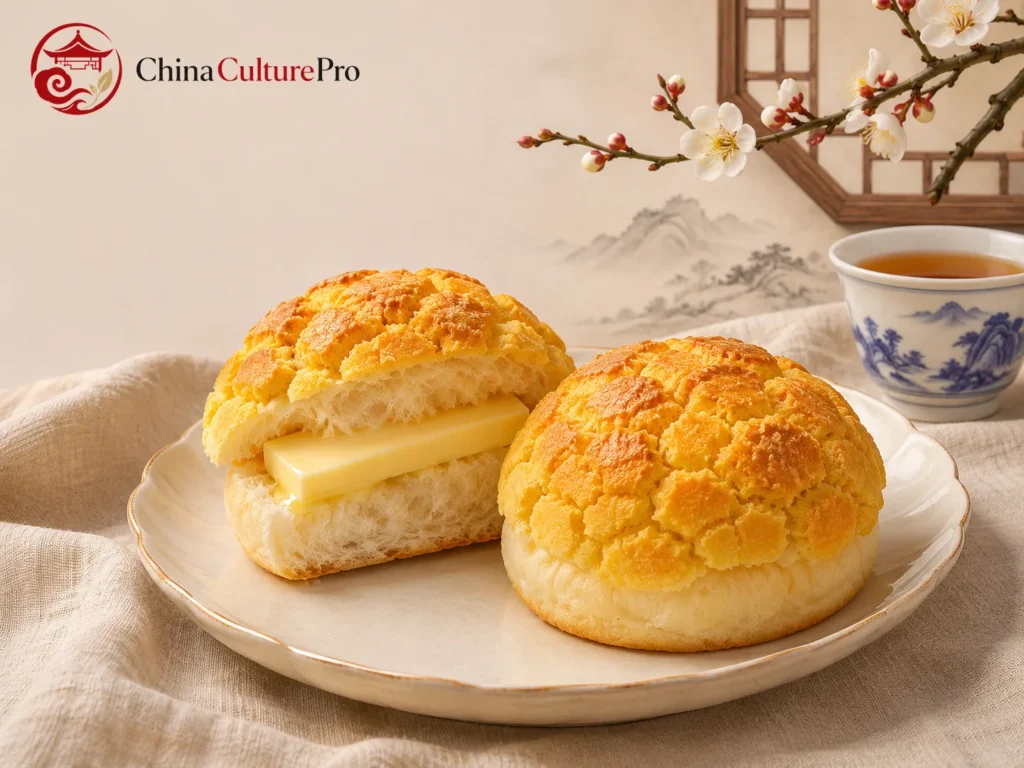
A crisp golden cap breaks over tender bread, creating the bun’s defining contrast. Understanding those two parts makes its bakery name much less puzzling.
Soft Bread and a Separate Crumbly Cap
The bread and topping are different doughs with different jobs. Wheat flour and yeast form the soft bread underneath. Kneading develops the dough’s structure, and rising creates the airy crumb. Milk, egg and fats appear in enriched versions, with individual formulas varying.[3]
The cap combines flour, sugar, fat and egg in a shorter, cookie-like mixture. It may also contain milk powder and chemical leaveners. The topping is deliberately more crumbly than the elastic dough supporting it. It is not simply a deeply browned patch of ordinary bread.[4]
Documented versions use different fats, including lard or butter. A butter slab inserted later is a separate serving addition, not a substitute for fats already baked into the bun.[3]
How the Topping Is Added and Baked
The two components come together before baking. A broad sequence is:[2]
- Prepare the raised bread dough and allow it to develop.
- Mix the separate sweet topping dough.
- Shape the bread into buns and give the dough its final rise.
- Place a flattened portion of topping over each bun and apply the chosen finish.
- Bake the assembled buns so the bread sets and the topping becomes golden and crumbly.
Leavening and expansion help the cap form its characteristic fissures. Egg wash can contribute surface color and aroma during baking. A pineapple-like pattern does not require every baker to cut identical crosshatching by hand; published methods also allow the crust to fracture naturally.[1][3]
Plain Bolo Bao and the Butter-Filled Version
Bolo yau(菠蘿油,bōluóyóu)is the familiar butter-serving name: the baked bun is split and a slab of butter goes inside. Warm bread against the cooler butter creates another contrast alongside the crumbly top. Plain buns can be eaten without that addition.[1]
| 選擇 | What changes | What remains |
|---|---|---|
| Plain pineapple bun | No extra butter slab in the center | Soft bread and the sweet cracked cap |
| Bolo yau | Butter inserted into the finished bun | The same two-part bread-and-topping structure |
Do not confuse a topping with an enclosed filling. Cocktail buns, cream buns 及 custard buns answer different filling preferences. If a bakery offers a filled pineapple-bun variation, ask about the center separately from the cap.
Pineapple Buns in Hong Kong Bakery Culture
Pineapple buns are familiar breakfast and afternoon-tea foods, with a strong place in Hong Kong food culture. A plain bun can be a simple bakery purchase; butter turns it into a different serving choice. Neither requires treating the bun as a fruit dessert.[5]
Pineapple-bun-making technique appears in Hong Kong’s intangible cultural heritage inventory. That recognition concerns the craft, including the separate bread body and topping. It does not require every commercial bun to have identical ingredients, nor does a bakery’s use of the name alone certify a particular formulation.[4]
Drinks are another part of the cafe setting. Readers exploring that side of the meal can compare Chinese lemon tea culture, where the choice of tea, fruit and sweetness has its own logic.
Choosing and Eating a Pineapple Bun
Decide whether you want the plain bun or a butter-filled serving. Look for the textural contrast you prefer: a more crumbly cap sheds fine pieces, while the bread underneath should still read as bread. A paper bag, wrapper or plate helps catch the topping as you bite.
Check ingredients across both doughs. Wheat, egg and dairy can appear, while the fat may be butter, lard, vegetable shortening or a mixture. “Plain” means no chosen extra filling; it does not mean the bread or crust is free of animal ingredients. For dietary restrictions, confirm the actual formula.[5]
FAQs About Pineapple Buns
Does a Pineapple Bun Contain Pineapple?
The familiar plain version does not. Its name refers to the cracked topping’s resemblance to pineapple skin. Check any separately advertised filled variation.[2]
Is the Topping a Filling?
No. It is a separate sweet dough placed over the bread before baking. Anything inserted into the center is an additional component.[3]
Is a Plain Pineapple Bun Vegan?
Not automatically. Egg, dairy and animal fats may occur in the bread or topping even without a butter slab inside. Ask about both doughs.[5]
資料來源
[1] Maggie Zhu. Pineapple Buns: Bolo Bao
[2] Sarah / The Woks of Life. Pineapple Buns
[3] Hong Kong Science Museum. How Pineapple Buns Become Crisp Outside and Soft Inside
[4] Intangible Cultural Heritage Office, Hong Kong. ICH Inventory: Pineapple Bun Making Technique
[5] More Than Bread. Bo Lo Bao: Pineapple Bun