


Quick Answer: What Are Beijing Rose Pastries?
Beijing rose pastries(玫瑰饼,méiguībǐng)are sweet filled pastries known for a flaky shell and a fragrant rose center. The floral name describes a flavor, not one identical recipe used by every bakery.[1][2]
- Shell: Fine pastry layers give a loose, delicate bite.
- Center: Prepared sweet rose filling supplies the floral aroma.
- Method: The filling is enclosed before the pastry is baked.
- Variation: Rose can appear alone or alongside bean paste, nuts or other ingredients.
A rose-flavored pastry is not automatically dairy-free or made only from plant ingredients.
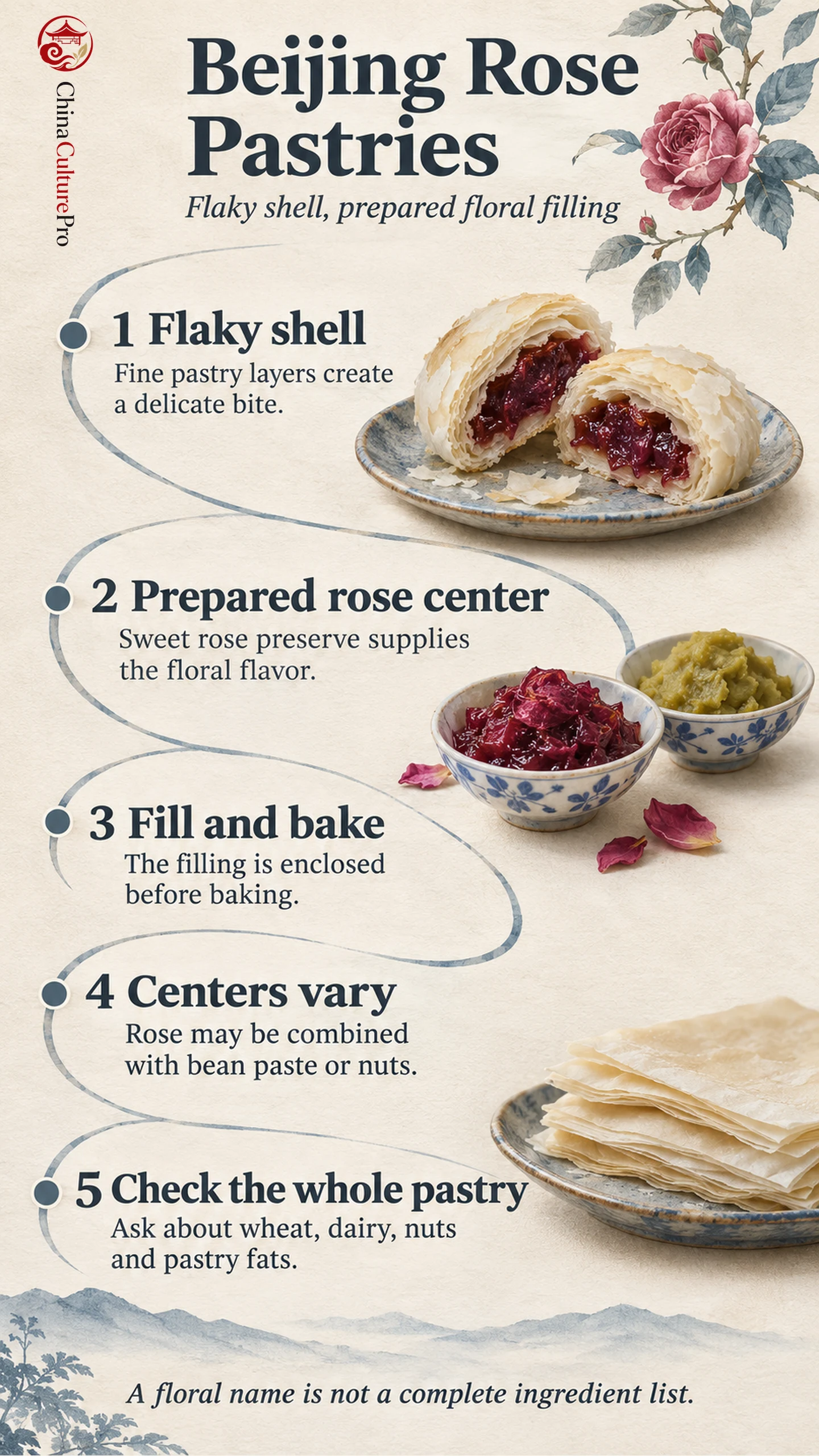
Break one open and compare the two textures: a fragile shell outside and a sweeter, denser center within.
The Flaky Shell and Prepared Rose Filling
A reported Beijing preparation uses a white flaky shell. Its fine layers supply the delicate structure, while the rose filling provides a separate flavor.[2]
The center in that example is a prepared preserve made from edible roses, enclosed in pastry and baked. It is not simply a raw flower.[2]
A local tasting account describes a strong rose aroma and a sweet center against the flaky shell. The intensity of that particular example should not become a promise that all rose pastries taste equally floral or equally sweet.[1]
How a Filled Rose Pastry Is Made
A broad filled-pastry sequence can be understood without turning it into a recipe:[3]
- Prepare the pastry dough components.
- Work the dough to form the intended flaky layers.
- Prepare and portion the rose-flavored filling.
- Enclose the filling and shape the pastry.
- Bake the formed pieces, then let them finish cooling for serving.
A pale pastry can be baked; white coloring does not mean it is raw or steamed.[2]
Rose Filling and Related Pastry Variations
| Documented style | 中央 | 重要分別 |
|---|---|---|
| Rose-preserve pastry | A sweet prepared rose filling | The rose center contrasts with a flaky shell |
| Rose and bean-paste pastry | Rose preserve enclosed with mung bean paste | The center includes a second, bean-based component |
| Rose-flavored flaky mooncake | Rose with nuts and other filling ingredients | A related product with its own ingredient list |
A contemporary Beijing record describes a white-flaky pastry with mung bean paste around rose preserve. That arrangement differs from a center focused on rose alone, even though both deliver floral flavor.[5]
Another local comparison distinguishes a softer, moister rose pastry filling from a firmer rose-flavored baked bread containing sesame and nuts. Similar floral names can therefore lead to noticeably different bites.[4]
A maker’s rose mooncake dossier lists nuts, rose and winter-melon paste in the filling, with ingredients such as lard and milk in its pastry. That example demonstrates variation; it is not an ingredient list for every Beijing rose pastry.[3]
Handcraft in Beijing’s Pastry Culture
Local reporting places rose pastries within Beijing’s tradition of small bakery sweets and hand-worked pastry. A magazine visit describes craftspeople working behind a glass-fronted kitchen, while a later local record describes continued hand-lamination alongside new product variations.[2][5]
Rose flavors also fit the broader world of jing ba jian pastry assortments. The single rose pastry and the mixed gift selection answer different questions: one identifies a flavor-focused piece; the other identifies a collection.
Stories connecting particular pastries to the imperial court are common in promotional material. They do not, by themselves, establish one verified invention date for all rose-filled pastries.
Choosing and Eating Rose Pastries
Ask whether the center is rose preserve alone or a mixture with beans, nuts or another paste. The answer helps distinguish a moist floral center from a denser bean-based or nut-rich filling.[3][4][5]
Check wheat, dairy, nuts, sesame and the actual pastry fat when relevant. Rose is only one ingredient; a floral name does not explain the shell. A product containing lard remains animal-derived even if its filling looks entirely floral.[3][4]
Serve the pastry on a small plate if you want to catch the loose layers. Compare sesame cookies for a different baked crumb, or explore Chinese food culture for the wider context of sharing sweets.
FAQs About Beijing Rose Pastries
Is a Rose Pastry Simply Filled with Raw Petals?
Not in the preparation described here. Edible roses are made into a prepared sweet preserve before being enclosed and baked.[2]
Do All Rose Pastries Have the Same Filling?
No. Rose preserve, rose with bean paste and nut-rich rose fillings appear in different documented products.[3][5]
Are Rose Pastries Automatically Vegan?
No. Some related pastries contain lard or milk. Check the whole recipe, including the shell.[3]
資料來源
[1] Xicheng Tourism / Beijing Tourism. A Beijing Bakery Tasting: Rose Pastry
[2] Binbin Paoying / Dining World. Fuhuazhai and Beijing’s Handcrafted Pastries
[3] Beijing Daoxiangcun Food Co. / China Food Safety News. Beijing-Style Flaky Rose Mooncake: Product Ingredients and Process
[4] Beijing Tourism. A Comparison of Rose Pastry and Rose-Flavored Baked Bread
[5] Beijing Xicheng / Beijing Tourism. Fuhuazhai: Continuing Beijing Pastry Craft