

Quick Answer: What Is Chinese Sago Dessert?
Chinese sago dessert(西米露,xīmǐlù)is a sweet, spoonable dessert built around small cooked starch pearls. Sai mai lo is a Cantonese menu spelling.[2]
- Pearls: Tiny, soft, translucent starch beads.
- Base: Coconut milk, dairy, fruit puree or a combination.
- Additions: Mango, melon, taro or other ingredients vary by version.
- Serving: Often chilled, with some versions served warm.
It is not rice pudding. Desserts called “sago” may use tapioca pearls rather than true palm sago.[3][5]
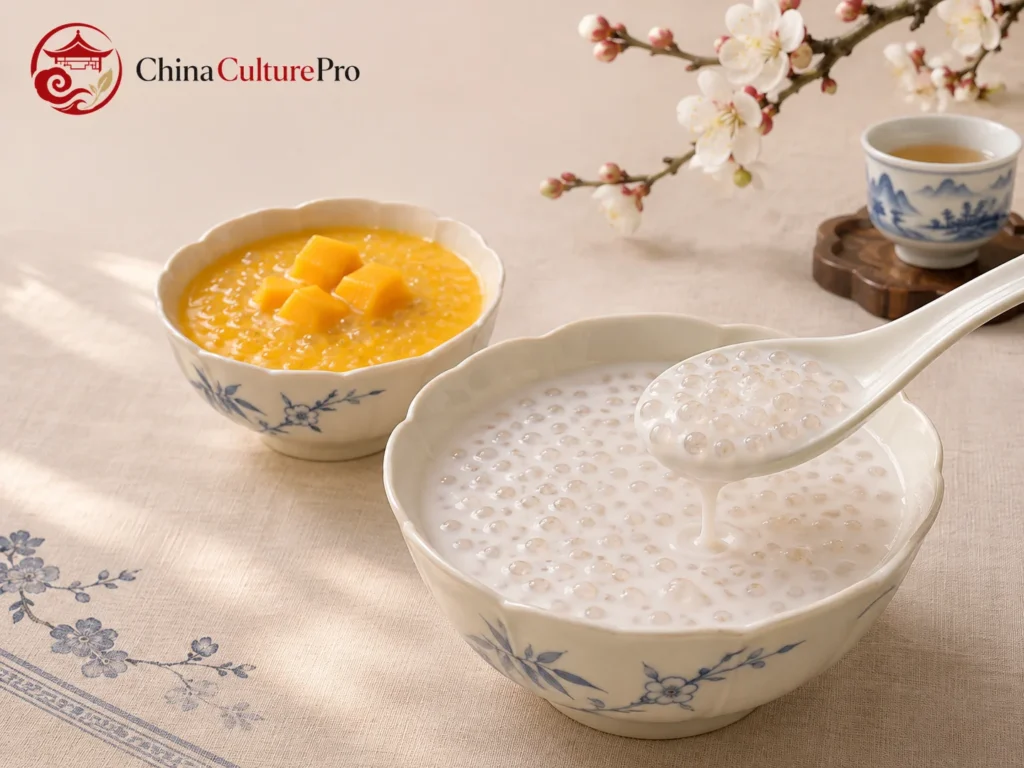
Small pearls suspended in a pale coconut base or golden mango mixture make this dessert recognizable. The pearls and surrounding liquid supply different textures.
What Are the Small Pearls Made From?
True sago is starch extracted from the pith of sago palms. The plant material is processed to separate starch from fibers; the resulting starch can be formed into pellets or pearls. It is a different botanical source from cassava, the root used for tapioca.[1]
In present-day Chinese food usage, “sago” often refers to small starch pearls made with tapioca. Actual dessert recipes labeled sai mai lo use small white tapioca pearls, and Chinese ingredient explanations describe the same naming shift. The package ingredients are more informative than the English name alone.[2][5]
The “mi” in the Chinese name therefore does not mean the bowl contains intact rice grains. These are formed starch pieces. Nor does their round shape make them identical to every large, chewy pearl used in bubble tea.[5]
Pearls, Liquid Base and Fruit or Taro
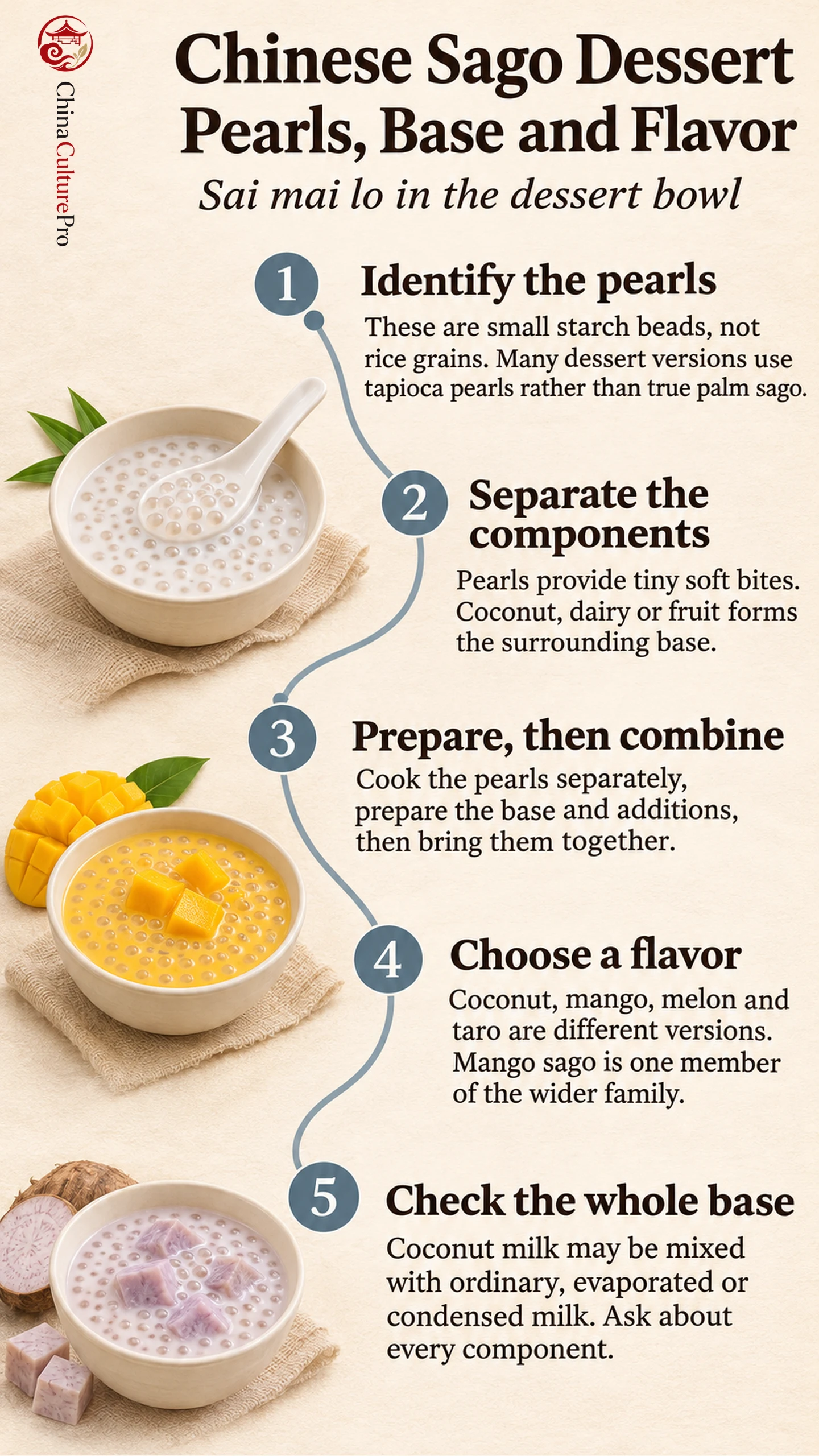
Think of the bowl as a combination of components. The pearls provide small, slippery, yielding bites; the base carries most of the sweetness and aroma. Fresh fruit, puree or cooked taro adds another layer.[3][4]
| 風格 | Base and additions | Main texture contrast |
|---|---|---|
| Coconut sago | Coconut milk, sometimes mixed with dairy | Small pearls in a smooth liquid |
| Mango sago | Mango puree and pieces, often with coconut or dairy | Soft pearls against fruit and puree |
| Melon sago | Melon puree or pieces with a sweet base | Fresh fruit beside the tiny pearls |
| Taro sago | Cooked taro with a coconut or milky base | Tender root pieces and small starch beads |
Mango versions may add pomelo, but pomelo is not essential to every mango-sago preparation. Likewise, coconut milk does not exclude condensed milk or ordinary milk. Check the complete base rather than identifying it from color.[2][4]
For the root-vegetable version in more detail, see taro sago soup. Its cooked taro deserves separate attention from the general pearl-and-base format.
How the Pearls and Dessert Base Come Together
A common method prepares the starch pearls separately from the fruit or creamy base:[3]
- Cook the small pearls in water until they develop their intended translucent, soft texture.
- Drain and rinse them as required by the chosen pearl preparation.
- Prepare the sweet coconut, milky or fruit base separately.
- Combine the cooked pearls with the base and any prepared additions.
- Serve at the temperature appropriate to that version.
The sequence keeps two jobs distinct: cooking the pearls and building the dessert around them. A mango puree does not need the same treatment as cubes of taro. Mixing raw fruit into a finished base and cooking a root vegetable are different preparation tasks.[3][4]
Sago Desserts in Cantonese Food Culture
Sago desserts belong within the broader Cantonese family of tong sui(糖水,tángshuǐ), sweet soups and spoonable desserts. Mango sago is a familiar cold example: fruit and small pearls provide the interest instead of a pastry crust or cake crumb.[4]
They also appear in restaurant and dim sum settings. Within Cantonese cuisine, a sweet soup can end a meal without taking the form of a Western-style plated dessert. Black sesame soup offers another texture to compare with pearl-based bowls.[2]
Choosing a Sago Dessert
Choose the dominant flavor first: coconut, mango, melon or taro. Then ask whether it is served cold or warm and whether the base is thin and pourable or more puree-like. A label such as “sago pudding” can still describe a spoonable mixture rather than a firmly set pudding.
If you avoid dairy, ask specifically about milk, evaporated milk and condensed milk as well as cream. Published coconut and mango versions mix plant-based coconut milk with dairy ingredients, so “coconut” alone is not a dairy-free or vegan guarantee.[2][4]
For other ingredient restrictions, check the pearls, base and toppings separately. A familiar appearance is useful for recognizing the dish, but the actual product and preparation determine what is in the bowl.
FAQs About Chinese Sago Dessert
Is Sago a Kind of Rice?
No. True sago comes from palm starch, while many dessert pearls use tapioca starch. Neither is an intact rice grain.[1][5]
Is Every Sago Dessert Mango Sago?
No. Coconut, melon and taro versions also exist. Mango describes one flavor combination within the broader dessert family.[2][3]
Does Coconut Sago Contain Dairy?
It can. Some recipes combine coconut milk with ordinary, evaporated or condensed milk. Ask about the whole liquid base.[2][3]
資料來源
[1] Food and Agriculture Organization. Traditional Post-Harvest Technology: Starches Derived from Stem Crops
[2] Hester / Simply Asian. Coconut Tapioca Dessert Soup: Sai Mai Lo
[3] Raymund / Ang Sarap. Sai Mai Lo
[4] Gail Ng / Teak & Thyme. Mango Sago
[5] Wang Wenjie / Science Popularization Times. What Kind of Rice Is Sago? An Ingredient Interview