


Quick Answer: How Should a Guest Prepare?
Follow the couple’s invitation, dress code and gift preferences first. A Chinese wedding may combine a banquet, family rituals and a separate ceremony; being invited to one part does not automatically include the others.
- Confirm the event, arrival time, venue and names covered by the invitation.
- Choose clothes at the requested level of formality and check uncertain colors with the host.
- If money is the preferred gift, prepare a hongbao (红包, hóngbāo), a red envelope containing cash and good wishes.[1]
Mainland China, Hong Kong, Taiwan and Chinese diaspora communities do not share one fixed guest rulebook. The advice below is a practical starting point for asking the right questions.
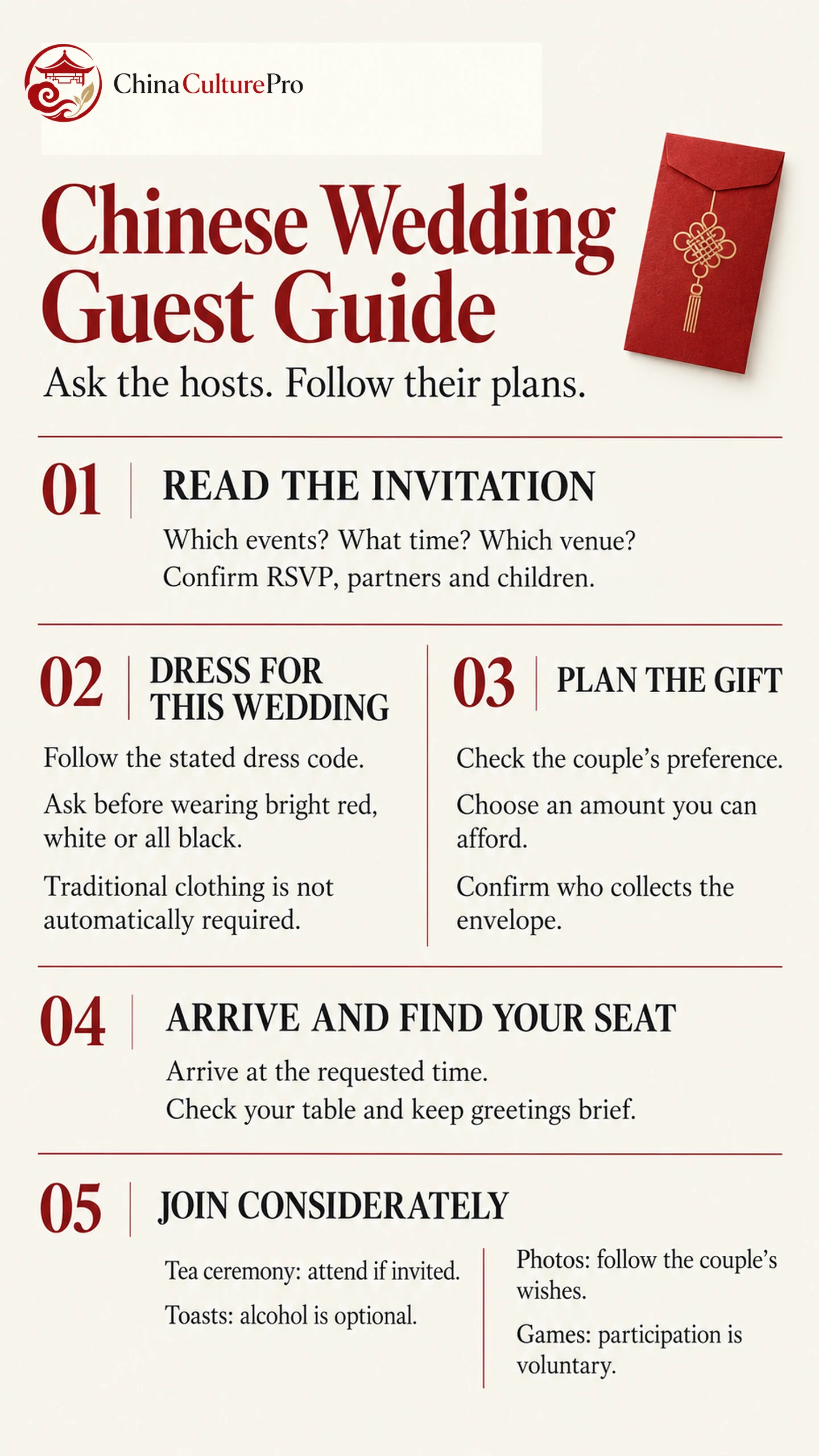
The easiest way to be a considerate guest is to remove small uncertainties before the wedding. Knowing where to arrive, what to wear and whom to ask is more useful than memorizing a long list of supposed cultural mistakes.
For the meaning behind the events you may see, start with Chinese wedding traditions. This guide focuses on your role as a guest.
Read the Invitation Before Following a Tradition
Check whether you are invited to a ceremony, banquet, tea ceremony or several events. These may have different addresses and starting times. A banquet invitation alone is not permission to arrive at the couple’s home for morning preparations.
Reply by the requested date. Confirm whether a partner or children are included, and tell the named contact about dietary or access requirements early. Do not add guests on the assumption that a large wedding has spare seats. The guide to Chinese wedding invitations explains the names and event information you may encounter.
If the instructions are brief, send one clear message: “Thank you for inviting me. Could you confirm which events I should attend, the arrival time, the dress code and your preferred gift arrangement?” Keep practical questions with the designated contact rather than sending several messages to the couple on the day.
Choose Clothes That Fit This Wedding
Contemporary formalwear is often appropriate; guests are not automatically expected to wear Chinese ceremonial clothing. Follow any stated black-tie, formal, semi-formal or traditional-attire request.[2] A neat suit, dress or coordinated separates can be a better choice than buying an unfamiliar outfit simply because the wedding is Chinese.
Color advice needs context. Some couples welcome red; others reserve prominent red outfits for the bride. White may resemble bridal clothing or carry mourning associations, while attitudes toward black vary with the family and the formality of the event.[2] As a cautious practical choice, avoid a head-to-toe bridal-looking outfit unless it is requested. If you want to wear bright red, white or all black, send the host a photo rather than asking whether an entire color is universally forbidden.
A qipao (旗袍, qípáo) can be suitable when the hosts welcome it, but it is not compulsory. Distinguish a guest outfit from the heavily embellished ceremonial clothes described in our Chinese wedding dress comparison. Check that you can sit, walk and manage stairs comfortably, particularly if the day moves between a home, ceremony space and banquet venue.
Prepare the Gift Without Guessing a National Rate
Cash in a red envelope is a familiar wedding gift, but a couple may request a registry gift, a confirmed transfer method or no gifts. A red packet conveys blessings; its significance is not simply the cash total.[1] Follow explicit preferences rather than assuming every couple wants the same arrangement.
There is no useful worldwide “correct amount.” Start with what you can afford, then ask a trusted guest familiar with this family and location about the usual range. Explain whether the gift is from one person or a household. Treat local meal-cost charts as social context, not an invoice you must settle.
Where number symbolism matters, even sums are commonly preferred and four may be avoided; eight is often favored. These are customary associations, not a requirement to stretch your budget.[1] Our Chinese wedding gift guide separates guest gifts from the different exchanges between families.
Prepare the envelope before leaving. Use a clean packet suitable for a wedding, include a short wish and make the giver’s identity clear if the hosts request it. Ask who is collecting gifts; a staffed reception desk or designated family member may handle them. Hand the packet respectfully, using both hands when practical. If choosing an object instead, check the couple’s preferences before buying something with a potentially sensitive meaning.
Arrive, Greet and Find Your Seat
Aim to be ready at the requested arrival time. Do not rely on the claim that Chinese weddings always start late: a ceremony, photo session or meal service may be tightly scheduled. If delayed, tell the named contact and enter quietly at an appropriate break.
At reception, give the name used on the invitation, follow the gift arrangements and check your table. Greet the couple and parents when there is a natural opportunity, but keep the exchange brief if a queue is forming. “Congratulations, and thank you for having me” is entirely sufficient; you do not need a memorized Chinese speech.
Follow the seating plan instead of moving place cards to sit with friends. Family relationships and hosting responsibilities may affect the arrangement. If the seat creates a practical problem, ask an usher privately. Avoid public questions about how much other guests gave, the couple’s finances or when they will have children.
Join the Celebration Without Taking Over
The wedding tea ceremony often involves a selected circle of relatives rather than every banquet guest.[2] Watch from the place indicated. Do not join the serving order, give a speech or move closer for a photograph unless invited.
At the wedding banquet, follow your table’s cues for shared dishes, speeches and the couple’s visit. Use serving utensils where provided, pass dishes considerately and avoid interrupting formal moments. Raise a glass if you wish, but choose water or another non-alcoholic drink when that suits you. A warm toast does not require drinking alcohol or emptying the glass.
Ask before posting close-up photos or private family rituals, and keep aisles clear for the photographer. Games are invitations to participate, not obligations: decline calmly if uncomfortable and accept someone else’s refusal. For sensitive customs, use the guide to family expectations and wedding taboos as context for a private question, not a reason to correct other guests.
If you need to leave early, arrange it beforehand where possible, avoid a ceremony or speech and thank the hosts without creating a second receiving line. A short message afterward is a considerate way to acknowledge the invitation.
FAQs About Chinese Wedding Guest Etiquette
Can I wear red to a Chinese wedding?
Ask the couple or designated contact. Red is welcome at some weddings and reserved for bridal clothing at others; the invitation and the actual outfit matter more than a blanket rule.
Do I need to attend the tea ceremony?
Only if you are invited to that event. A reception invitation does not necessarily include an intimate family ceremony.
Must I drink alcohol during a toast?
No. You can offer congratulations with a non-alcoholic drink and decline refills politely. Do not pressure other guests to drink.
What if I cannot attend the wedding?
Reply promptly and send your congratulations. Ask about gift preferences if you wish to send something; neither a national cash figure nor another guest’s spending should determine your budget.
資料來源
[1] Sun Yat Sen Nanyang Memorial Hall / Singapore Chinese Cultural Centre. Red packets (Hongbao)
[2] The Knot. The Ultimate Chinese Wedding Guest Attire Guide