

Quick Answer: What Is the Wedding Tea Ceremony?
A Chinese wedding tea ceremony (敬茶, jìng chá) is a family ritual in which the couple offers tea to parents and other agreed elders. It expresses gratitude and recognition of the marriage, often followed by blessings and gifts. [1][2]
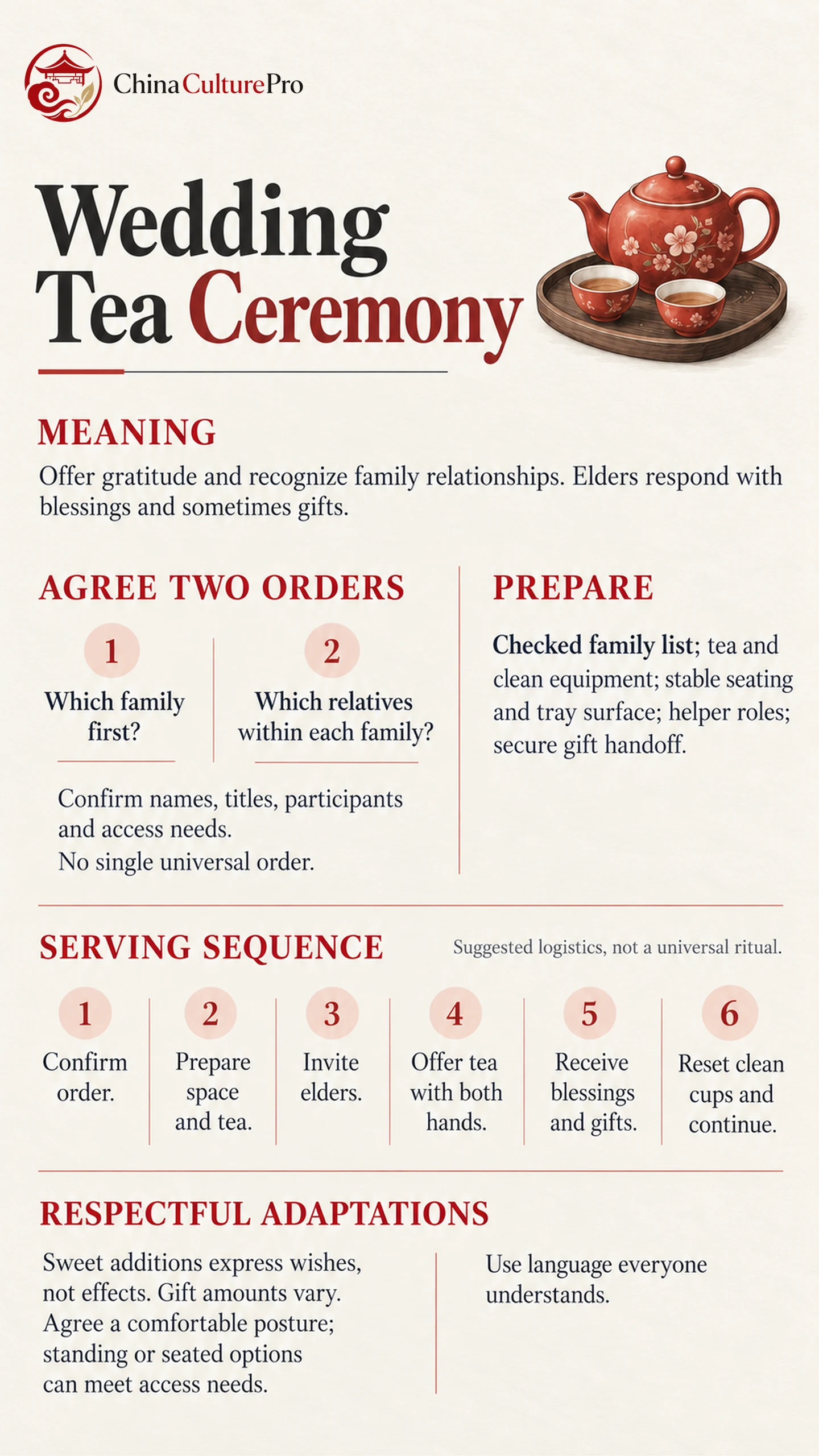
- Participants: Confirm the people each family wants to honor.
- 秩序: Agree both which family is served first and the order within each family.
- Service: Prepare tea, clean cups, suitable seating and helpers for cups and gifts.
The purpose is respectful family connection; one household’s exact order or posture is not a rule for every wedding.
The ceremony can be a quiet conversation with close relatives or a larger gathering watched by friends. Its meaning is easier to preserve when the practical details are settled beforehand. Within Chinese wedding traditions, serving tea gives the couple and elders a personal exchange that can feel different from the public banquet.
What Serving Tea Expresses
The couple’s offer of tea is a visible thank-you to the people who raised, supported or welcomed them. Elders respond through acceptance, good wishes and sometimes a gift. A Singapore photograph catalogued from 1962 records this exchange as part of family recognition; it documents a particular time and community rather than every present-day arrangement. [1]
Museum objects also show the ritual’s material side. A wedding cup from Taiwan bears a wedding motif and is described in connection with sweet tea and red-envelope gifts. Such records help explain why cups and trays can become keepsakes, but a museum example of a set does not establish the number of cups every modern couple must buy. [3]
The ceremony belongs to the social use of 茶. Its main task is acknowledging relationships, rather than demonstrating an elaborate tea-tasting technique. Choose a preparation that people can comfortably drink and a pace that allows them to speak.
Agree Two Orders Before the Day
There are two separate questions: which side of the family is served first, and which relatives go first within each side. Mixing them together creates avoidable disagreements. A traditional account may start with the groom’s parents and continue through relatives by seniority, while a modern family may organize one combined gathering. [2][4]
Use a written list with each person’s name, relationship, preferred form of address and any access needs. Ask the family coordinators to approve it. If grandparents are to come first, record that; if parents come first, record that instead. The aim is a shared plan, not surprising a relative with a rule found online. [5]
Chinese kinship terms can distinguish maternal and paternal relatives as well as age or family rank. Use the family terms guide when identifying relationships, then confirm what the person actually prefers to hear. A known family nickname may feel more natural than a technically correct title nobody uses.
For separate sessions, check travel and who can attend each venue. For a combined session, agree how the two sides alternate or follow one another. The couple’s family structures may include stepparents, guardians, foster parents or other important elders; contemporary ceremony guidance includes such choices. Invite people deliberately rather than letting a printed template decide who matters. [5]
What to Prepare
A short preparation list is more useful than buying a large ceremonial kit without checking the plan.
- A checked family list: Names, titles, serving order and a copy for the person announcing each round.
- Tea and clean serving equipment: A suitable tea, kettle or pot, cups, trays and a way to wash or replace used cups.
- Stable seating and a tray surface: Chairs for elders and a clear place to put hot liquids away from passing guests.
- A helper plan: Someone to prepare and carry tea, someone to guide relatives, and clear responsibility for used cups.
- A gift handoff: A trusted person and designated container for envelopes or jewelry, separate from wet cups.
Count how many cups the agreed serving pattern uses, including whether both partners offer separate cups. Do not assume that the number of relatives equals the number of cups needed at one moment. Modern firsthand accounts show that preparing, carrying, presenting and collecting cups are different tasks even in a small ceremony. [4]
Check the route from tea preparation to the seats. Long dresses, crowded doorways and photographers can all affect that handoff. A brief rehearsal with empty cups often reveals a problem before there is hot tea on the tray.
A Practical Serving Sequence
This is a suggested organizing sequence for the family’s agreed version, rather than a newly invented mandatory ritual.
- Confirm the family order: Agree who receives tea, their titles and the order for both families.
- Prepare the space and tea: Set out stable seats and a clear serving route; brew and cool the tea enough to sip.
- Invite the first elders: A helper announces the agreed names and guides the elders to their seats.
- Offer tea respectfully: Address each elder and offer the cup with both hands, using the agreed posture.
- Receive blessings and gifts: Thank the elders; pass cups and any gifts to the designated helpers.
- Continue through the list: Reset clean cups and repeat for each agreed group, then thank everyone.
Offering with both hands and using the elder’s family title are documented gestures of respect. Details such as left-right positions, separate cups and the order between individual partners can differ; settle them in the rehearsal rather than making corrections over an elder’s head. [2][4]
Keep spoken invitations short enough that the recipient knows the cup is for them. The dedicated ceremony script provides words and titles; this page owns how the people and objects move through the event.
Tea, Gifts and Respectful Adaptations
Sweet additions such as dates or lotus seeds appear in some documented versions, carrying wishes associated with family life and descendants. Those are cultural meanings, not effects produced by drinking the tea. No single ingredient combination defines all wedding tea ceremonies. The wedding tea ingredients guide explores the choices separately. [2]
Hongbao (红包, hóngbāo), red envelopes containing money, and jewelry can be gifts from elders to the couple. The exchange should follow the family’s plan. Do not assume each relative owes the same amount or that a tea gift replaces every other wedding gift. If jewelry is presented, decide whether it will be put on immediately or handed to the gift helper. [1][2]
Kneeling is documented in traditional descriptions, but respect can also be expressed through an agreed standing or seated presentation. Arrange a comfortable position for mobility needs and explain it to the people guiding the ceremony. The meaningful exchange is the attention between the couple and the elder, not physical strain.
For a multilingual family, introduce the purpose in the languages people understand. Use preferred names and relationship terms, and invite blessings without demanding fertility wishes or a particular speech. A simple, well-explained adaptation gives more room for genuine conversation than a ritual nobody can follow.
FAQs About the Chinese Wedding Tea Ceremony
Do parents or grandparents receive tea first?
Both arrangements occur in family practice. Confirm the order with the relatives coordinating the ceremony and put it in the written serving list.
Must the couple kneel?
Kneeling appears in traditional accounts, but a comfortable standing or seated presentation can be agreed. Plan access needs before the ceremony.
Does the tea need special sweet ingredients?
No single mixture is universal. Some families use symbolic sweet additions; others choose a simpler tea. Check taste, ingredients and the family’s preference.
Can both families join one ceremony?
Yes. A combined ceremony can honor both sides in an agreed order. A separate session at each family’s home is another documented approach.
資料來源
[1] National Museum of Singapore. A Chinese wedding tea ceremony
[2] L. K. Yee, Chinese Historical and Cultural Project. Chinese Wedding Tea Ceremony
[3] National Museum of Taiwan History. 囍字鐵杯
[4] The Woks of Life. How to Do a Chinese Wedding Tea Ceremony
[5] American Marriage Ministries. Simple Guide to the Chinese Tea Ceremony Wedding Tradition