


Quick Answer: What Is a Taiwanese Oyster Omelet?
Taiwanese oyster omelet (蚵仔煎; é zǐ jiān in Mandarin) combines oysters, egg, greens and a starch batter. It is a layered pan-fried dish rather than an egg-only omelet.[6]
- Texture: A starch layer gives chew alongside the egg; edges may become crisp.[1]
- Vegetables: Recipes use different leafy vegetables.[3]
- Finish: A sweet-savory sauce is commonly spooned over the serving.[1]
Batter, vegetable and sauce formulas vary. Choose a complete recipe rather than combining unrelated starch ratios.
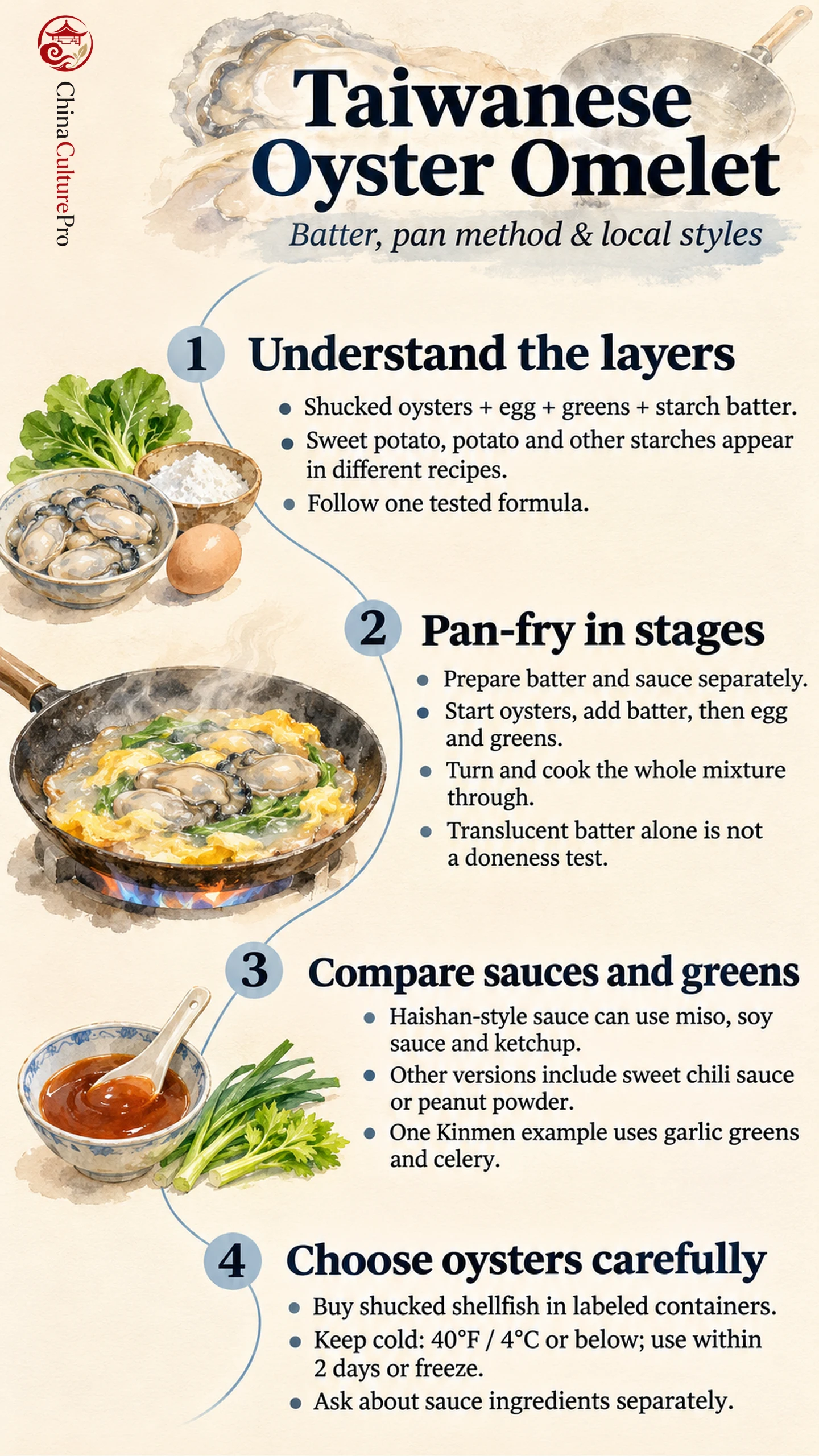
The English word “omelet” can suggest mostly egg, but here the batter deserves equal attention. Understanding the separate layers makes this familiar item in Taiwanese food culture easier to recognize and cook.
Oysters, Egg and a Starch Batter
One preparation blends sweet potato starch, potato starch and rice flour, alongside oysters, eggs and bok choy. This does not make those starches interchangeable.[2]
A cooking-school example uses sweet potato starch with chrysanthemum greens.[3]
A published cookbook recipe instead lists tapioca starch. Check the actual formula before choosing a starch product.[1]
The batter and egg have different visual roles. Look for a pale, partly translucent starch layer with yellow egg and green leaves, not a thick wheat pancake enclosing a whole oyster shell. The oysters used in the pan are shucked.
A Pan-Frying Method with Separate Sauce
This blended-starch method is an overview; use a tested recipe for quantities and pan size.[2]
- Shucked oysters and cooking oil
- Eggs and baby bok choy
- Sweet potato starch, potato starch and rice flour for the batter
- Water and seasonings for the batter
- Prepared sweet-savory oyster-omelet sauce
- Prepare the components: Mix your chosen batter and prepare the sauce separately. Drain oysters and wash greens.
- Start the oysters and batter: Heat oil, add oysters, then batter. Cook until the starch sets and becomes translucent.
- Add egg and greens: Add egg and greens. Turn and cook until oysters, egg and batter are fully cooked.
- Plate and sauce: Plate, spoon over the sauce and serve promptly.
The sequence explains why the sauce is made separately: it dresses the cooked omelet rather than serving as the liquid in which the raw ingredients cook. For the broader distinction between pan-frying and other techniques, see the Chinese cooking methods guide.
A translucent starch layer is a batter cue, not a safety test for the oysters or egg. Continue cooking the full mixture through; do not stop simply because the starch has changed appearance.[5]
Sauces and Regional Variations
Haishan sauce (海山醬; hǎi shān jiàng) can combine miso, soy sauce, ketchup, sugar and a thickener. It adds a sweet-savory finish, but it is not the only sauce formula used for the dish.[1]
Another sauce uses sweet chili sauce, ketchup, thick soy sauce and peanut powder, plus a garlicky soy-based addition.[2]
A documented Qionglin preparation in Kinmen uses sweet potato starch, egg, garlic greens and celery, with sweet chili sauce or ketchup offered alongside. This is a concrete local example rather than a claim that every Kinmen cook follows one formula.[4]
Texture also varies by recipe and cooking style. Ask whether a serving leans soft and chewy or has a crisper edge if you have a preference. Avoid assuming that one shop’s sauce color or vegetable choice defines the whole region.
Buying Oysters and Choosing a Serving
Buy shucked shellfish in labeled containers from a reputable supply, and keep seafood cold. If using it within two days, refrigerate at 40°F (4°C) or below; otherwise freeze it appropriately. Thorough cooking remains important even when the oysters looked fresh at purchase.[5]
When ordering, ask about the sauce separately from the batter and filling. Miso, soy seasoning, peanuts or other additions can change what is in the final plate. Read product labels for a home preparation rather than relying on the omelet’s name.
The wider Chinese street food guide offers other small dishes for comparison. Here, the distinctive combination is the oyster, starch, egg and greens, with sauce chosen as its own component.
FAQs About Taiwanese Oyster Omelet
Why does the omelet have a chewy layer?
The starch batter forms a separate layer alongside the egg; it is part of the dish’s identity.[1]
Is every oyster-omelet sauce the same?
No. Miso-based sauces and sweet-chili or peanut-containing preparations are documented alternatives.[2]
Does translucent batter mean the oysters are cooked?
No. It shows the starch has changed, not that every oyster and the egg are fully cooked.[5]
Источники
[1] Chelsea Tsai, original cookbook recipe via Yun Hai. Oyster Omelets
[2] Ytower original recipe publication. 蚵仔煎(7)
[3] Tunghai University Hospitality Management. 特色小吃:蚵仔煎
[4] Kinmen Cultural Affairs Bureau, Qionglin fieldwork report. 金門縣瓊林再造歷史現場,5-34
[5] US Food and Drug Administration. Selecting and Serving Fresh and Frozen Seafood Safely
[6] Taiwan Ministry of Education. 蚵仔煎:重編國語辭典修訂本