

Quick Answer: What Is Shaanxi Guokui?
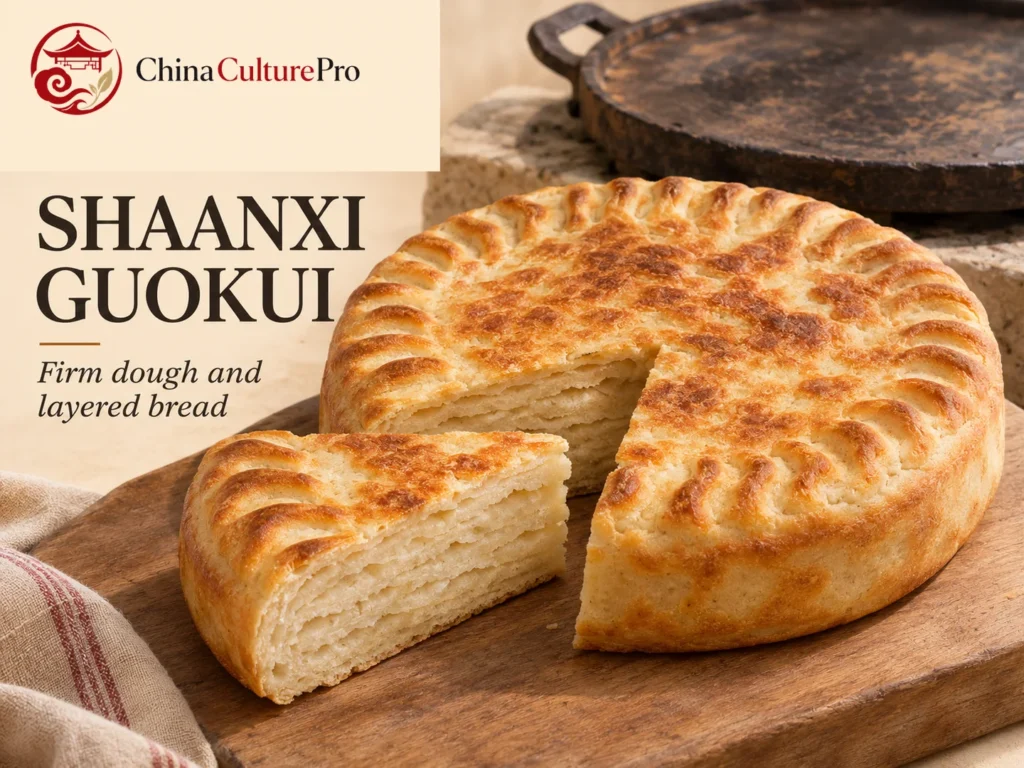
Guokui (锅盔, guō kuī) is a thick, round wheat bread associated with Shaanxi. Qianzhou’s version has an evenly browned exterior and a dry, layered interior that becomes fragrant as you chew.[1]
- Firm dough and repeated pressing help define the bread.
- Traditional local methods include fermentation; it is not always unleavened.[2]
- It can be eaten plain, filled or softened in a dish.[3]
The name also belongs to breads in other provinces. A thin, filled guokui from a vertical oven is not necessarily the thick Shaanxi version.
Among the wheat foods of Шэньси, guokui stands out for its substantial shape and the work that goes into the dough. “Helmet bread” translates the name; the dough and cooking method explain what to expect.
A Thick Bread with a Layered Interior
A Qianzhou loaf is more substantial than a thin street pancake. Its center is thick, its outer skin comparatively thin, and its interior breaks into distinct layers. A wavy, radiating edge can give the surface a chrysanthemum-like pattern.[1]
Military-helmet stories help explain the name in local folklore. Another tale connects Qianzhou bread with workers building the Qianling tomb complex. These are origin legends, not a securely established invention date.[1]
Ingredients and the Role of Firm Dough
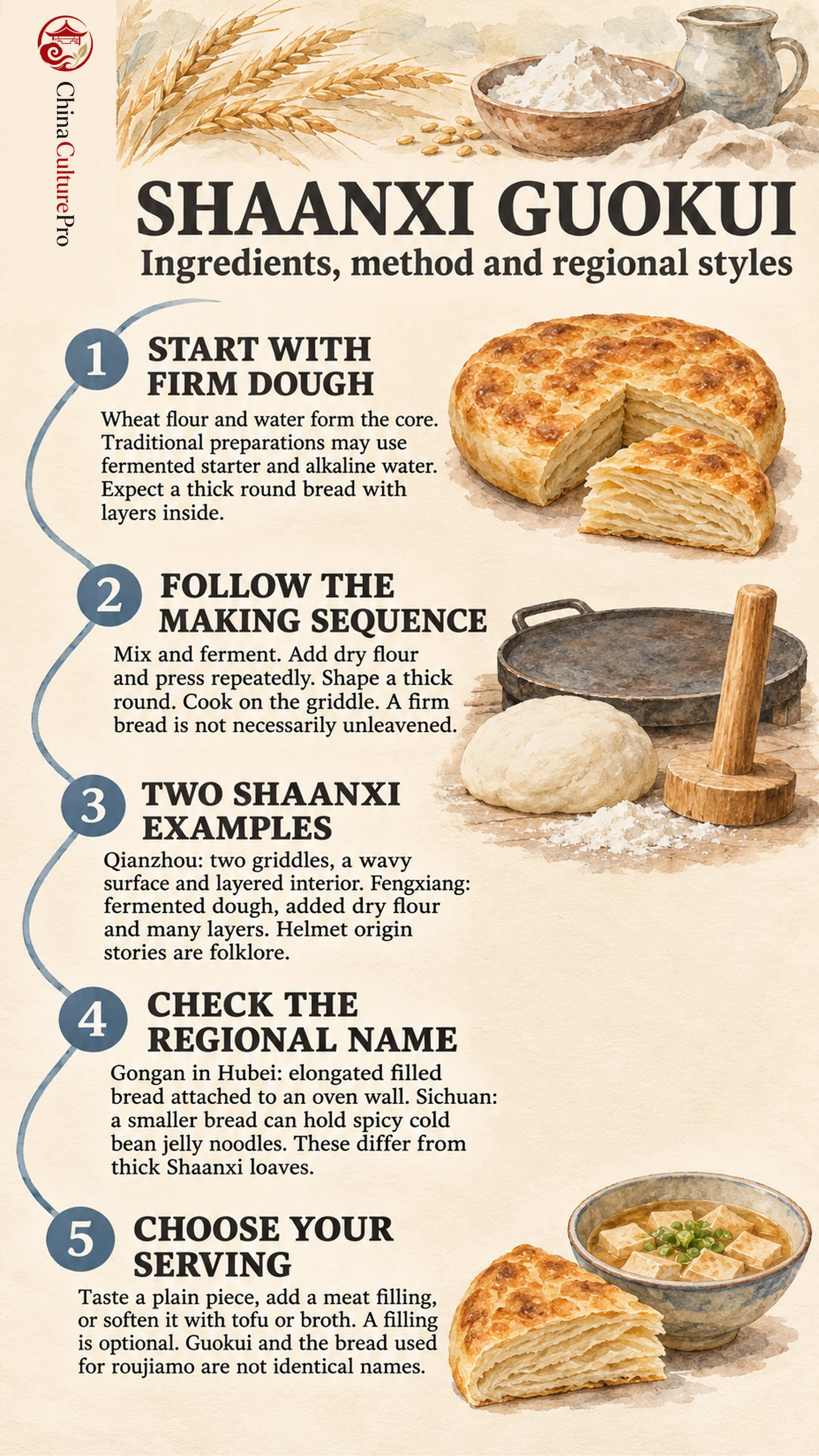
The core is wheat flour and water. Traditional preparations may include fermented starter and alkaline water. During pressing, more dry flour is worked into the dough, producing a firm mass rather than the soft, wet dough of an airy loaf.[3]
Oil, sweeteners, sesame or a filling should not be assumed from the name alone. Ask about the actual loaf if you are choosing by ingredients; a plain-looking bread and a filled street snack can share the same broad name.
How Shaanxi Guokui Is Made
The Fengxiang process gives a clear traditional sequence. It explains the craft rather than providing a measured home-baking recipe.[2]
- Mix and ferment the dough: mix flour and water and let the dough rise.
- Add flour and press: work dry flour into the risen dough through repeated pressing and kneading.
- Shape the bread: form the firm dough into a thick round.
- Cook on the griddle: griddle the shaped round until cooked through.[2]
Qianzhou and Fengxiang Styles
Two documented examples show what “regional style” means here:
- Qianzhou style: associated with today’s Qian County, it is cooked using two griddles and is known for a wavy surface, even browning and layers inside. It belongs to the local “Four Treasures” food tradition.[1]
- Fengxiang style: the making process emphasizes fermentation, adding dry flour, and repeated pressing. Its many layers have earned it the descriptive name “thousand-layer guokui.”[2]
These are useful local emphases, not a claim that only one place can make a layered loaf. For a broader tasting plan, compare guokui with the other breads and noodles in the Xi’an food guide.
Other Breads Called Guokui
Gongan guokui, from Hubei, is a different comparison. Dough is filled to order, stretched into an elongated shape, sprinkled with sesame and attached to the inner wall of a barrel-like oven. Sweet and savory fillings both occur.[4]
In Sichuan, another serving splits a smaller bread and fills it with spicy cold bean jelly noodles. The contrast is between the baked bread and the cool filling, rather than the thick plain loaf emphasized in Shaanxi.[5]
Check the bread’s shape, thickness and filling before expecting the name to tell you everything.
Three Ways to Serve It
- Eat it plain: break off a piece and taste the wheat and browned crust.
- Add a filling: guokui can be split and paired with meat.
- Soften it in a dish: documented Shaanxi servings combine it with tofu, tofu pudding or meat broth.[3]
Start with a small plain piece if you want to judge the bread itself. Choose a broth or tofu serving when you would prefer it softened. These are serving choices, not a requirement to soak every loaf.
FAQs About Shaanxi Guokui
Is Shaanxi guokui always unleavened?
No. The documented Fengxiang method ferments the dough before adding more dry flour and pressing it. A dense finished bread can still come from a leavened process.[2]
Is guokui the same as roujiamo bread?
Not exactly. Roujiamo (肉夹馍, ròu jiā mó) names the meat-filled food, and a familiar bread used for it is baijimo (白吉馍, bái jí mó). Guokui can also hold meat, but the names do not identify one identical bread.[3][5]
Does it always contain a filling?
No. Plain guokui is a complete bread in its own right. Fillings and soup preparations are ways to serve it, not compulsory ingredients of every loaf.[3]
Источники
[1] Shaanxi Intangible Cultural Heritage Digital Museum. Traditional Techniques of Qianzhou’s Four Treasures
[2] Shaanxi Normal University Cultural Resources Archive. Fengxiang Guokui, Citing the Local Intangible Heritage Catalogue
[3] Xinmin Evening News. Guokui as Traditional Dry Bread
[4] Hubei Daily. Gongan Guokui Traditional Preparation
[5] Shanghai Government Information Office. More Than a Staple, Bread Has a Fascinating History