


Quick Answer: What Are the Regong Arts?
The Regong arts (热贡艺术, Règòng yìshù) are a group of Tibetan Buddhist and local artistic traditions practiced in monasteries and villages of the Longwu River basin in Qinghai. The group includes portable painted scrolls, wall paintings, silk appliqué and sculpture.[1][2][3]
- Place: The documented communities are in the Tongren area of Huangnan.
- Materials: Artists work with cloth, walls, cut silk and sculptural materials.
- Learning: Skills pass through families and apprenticeships, including in monasteries.
A Regong label points to a regional tradition. The material and setting help identify the particular form.
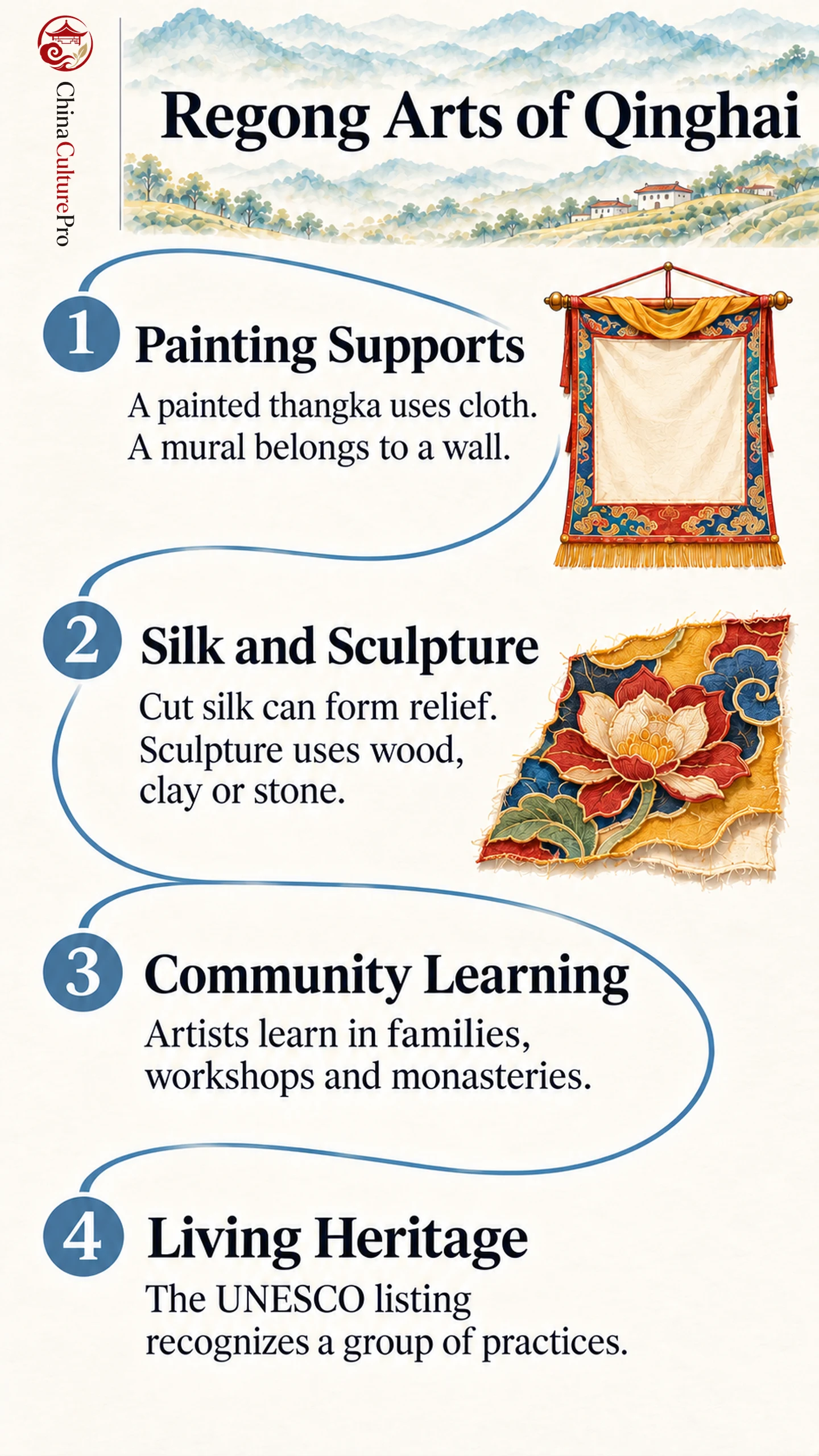
A painted scroll, a silk ornament and a figure on a wooden panel can all belong to the Regong arts. The name connects several practices in the Longwu River basin. Look at what the work is made of and where it was used.
Thangka and Murals: Portable and Fixed Images
Thangka (唐卡, tángkǎ) is a portable image format with uses in Tibetan Buddhist devotion and teaching. UNESCO’s account describes artists preparing a design on cloth and applying color with a brush. The cloth format allows the work to hang for viewing or be rolled for storage. The guide to Tibetan thangka explains the wider tradition beyond Regong.[1]
A mural has a different support. The painting remains with the wall, where its scale and placement relate to the building. A detail of a figure can resemble one on cloth, so an isolated photograph may conceal the difference in format. In Буддийские храмы the relationship between images and rooms can be part of what a viewer is meant to notice.[1][2]
The national record names episodes from the Buddha’s former lives, historical figures and stories among the subjects. Religious imagery is central, and the record also includes some secular material.[2]
Silk Appliqué and Sculpture
The textile work UNESCO calls barbola (堆绣, duīxiù) uses cut silk shapes arranged in layers. A flower or animal can stand out slightly from its textile ground. The edges of the cut silk define the contours. UNESCO describes uses in hangings and column ornaments, where the fabric adds color and a sense of depth.[1]
Sculptors work in several materials, including wood, clay, stone and brick. A rafter carving belongs to a building. A carved cabinet panel belongs to a piece of furniture. Some sculpture serves religious settings and some decorates homes. Techniques such as relief in Chinese stone carving can help describe a particular surface, even though the wider Regong tradition spans more than one material.[1][2]
How Artists Learn in Villages and Monasteries
Accounts of the Longwu basin name Wutun (吾屯, Wútún) and other nearby villages among the places associated with the arts. UNESCO describes Tibetan and Tu artists and Buddhist monks as participants. Skills can pass through family teaching or through work with a master. Manuals guide such choices as how to draw figures, match colors and develop patterns.[1][3]
One practitioner’s record illustrates how those paths can overlap. Gengden Daji learned painting from his father, worked on thangka at Wutun Upper Monastery and later studied clay sculpture under another teacher. The record also describes him drawing on his sculptural experience in painting. His career shows how artists can learn several forms within Tibetan cultural traditions.[4]
What the Heritage Listings Recognize
Regong arts entered China’s national inventory in 2006. In 2009 UNESCO inscribed the collective practice on the Representative List of the Intangible Cultural Heritage of Humanity. The decision records the participation of practitioners and local organizations in the nomination, alongside institutions and authorities.[2][5]
The listings document knowledge and its transmission. A work’s date, maker and original setting require evidence specific to the piece. The guides to Chinese intangible cultural heritage и safeguarding living heritage explain how records of a craft can sit alongside the work of teaching it.[1][5]
FAQs About the Regong Arts
Are the Regong arts the same as thangka painting?
Thangka painting is one of the Regong arts. The regional group also includes murals, silk appliqué and sculpture.
Is a Regong mural a thangka?
A mural belongs to a wall. A painted thangka is a portable cloth image. A detail of the subject may look similar in either format.
What is barbola?
Barbola is the name used by UNESCO for a technique that arranges cut pieces of silk into a design with a slight relief effect.
Who passes on the Regong arts?
The documented communities include monks and lay artists, including Tibetan and Tu practitioners. Teaching can take place in families and in apprenticeships.
Источники
[1] UNESCO. Regong Arts
[2] China Intangible Cultural Heritage Digital Museum. Regong Arts: National Representative Inventory
[3] National Ethnic Affairs Commission. Regong Arts of Qinghai
[4] China Intangible Cultural Heritage Digital Museum. Gengden Daji: Regong Arts Practitioner
[5] UNESCO Intergovernmental Committee. Decision 4.COM 13.21: Regong Arts