

Quick Answer: What Are Chinese Hemp Textiles?
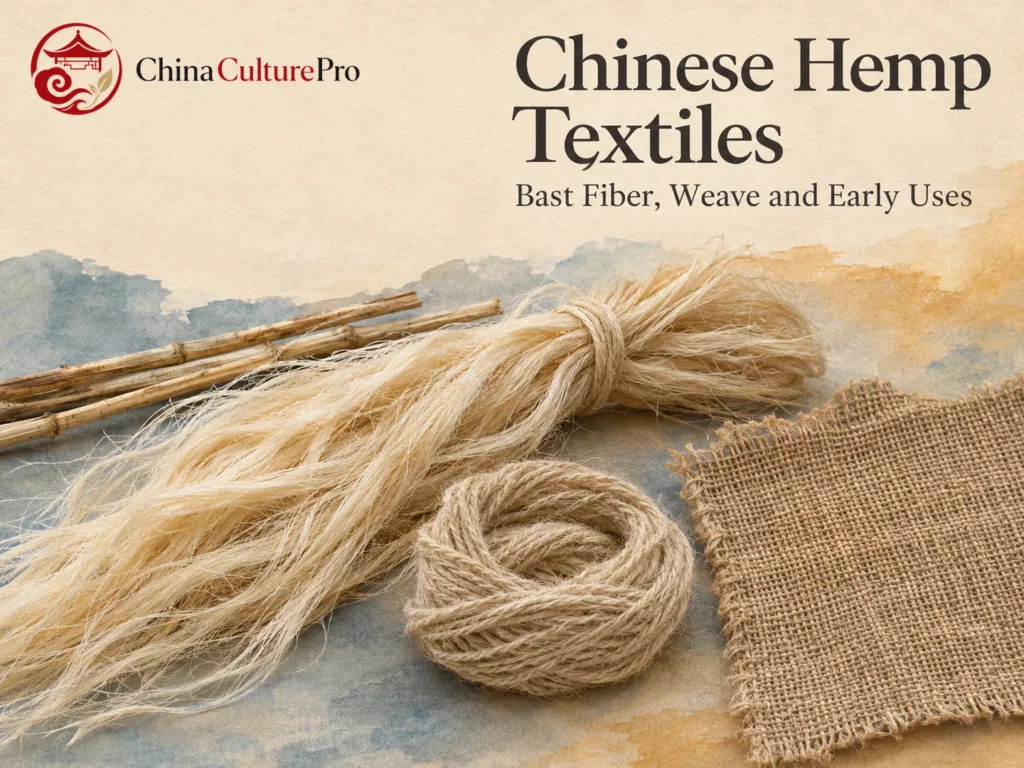
Chinese hemp textiles are made with bast fibers from the stem of hemp, or dama (大麻, dàmá). In historical Chinese, ma (麻, má) can refer to hemp or to a wider group of plant fibers. The term and the fiber identification deserve separate attention.[2]
- Tested cloth: A fragment from Linzi was identified as hemp in a plain weave.[1]
- Uses: A Dunhuang hanging uses hemp cloth beneath silk embroidery.[4]
- Related fiber: Ramie, or zhuma (苎麻, zhùmá), comes from a different plant and has its own textile history.[2]
Check whether the record names a plant species or uses a general term for bast fiber.

A label that gives a weave tells you how threads cross. A label that gives a plant tells you where the fiber comes from. Historical sources can be precise about one while leaving the other open.
Separate Hemp From the Wider Name Ma
Hemp and ramie supply bast fibers from the inner layers of stems. Ramie comes from a different plant. The historical word ma can have a narrower meaning in one text and a broader meaning in another. An English translation alone may leave that difference hard to see.[2]
The discussion of ancient Linzi textiles compares hemp with ramie finds in other regions. The companion guide to Chinese ramie clothing follows the uses of that fiber in specific garments and workshop traditions.[1]
Read the Linzi Cloth and Its Weave
A fabric fragment excavated at the ancient city of Qi in Linzi, Shandong, was identified as hemp after microscopy and fiber analysis. In plain weave each weft passes alternately over and under warp threads. The specimen has about nine threads per centimeter in each direction. Testing did not detect dye. The spaces between the threads make it a relatively open fabric.[1]
The study proposes that the cloth could have served as an underlay in workshop production, given its open structure and the wider archaeological context. That interpretation is less certain than the fiber identification. Keep the proposed use separate from the measured weave.[1]
Where Bast Cloth Appears in Objects and Texts
A Turfan fragment is described as closely woven plain cloth under the broad name ma. Its record mentions bast cloth used as clothing material and other local cloth used to meet obligations or pay fees. The catalog description gives these uses for local cloth generally and gives no plant species for this fragment.[3]
A Tang dynasty embroidered hanging from Dunhuang uses three widths of cloth cataloged as hemp beneath a facing of woven silk. In this object the bast cloth supports the embroidered picture. The embroidery is worked on the silk face, while the hemp cloth is beneath it.[4]
The classical Book of Rites also names a hemp band used to tie the hair in certain mourning circumstances. The passage records a prescription for particular family relationships. See Chinese mourning clothing for the wider role of clothing in mourning.[5]
Use the Fiber Identification in the Record
Cloth made from plant fibers continued alongside the expansion of cotton spinning and weaving. Cotton fiber comes from around the seed, while hemp fiber comes from the stem. Chinese cotton textile history follows the growth of cotton work as a household industry.[6]
When a record gives only a broad material label, keep that wording in your own description. A close view can show whether the weave is dense or open. A botanical identification requires separate support.
FAQs About Chinese Hemp Textiles
Does ma always mean hemp?
The term can name hemp in some contexts and can cover a broader set of bast fibers in others. Look for a plant name or technical identification in the record.[2]
Was hemp cloth always coarse?
Hemp can be prepared and woven in different densities. The Linzi fragment is an open plain weave, and the same study describes historical examples of finer hemp cloth.[1]
How did hemp differ from cotton?
Hemp is a bast fiber from the stem. Cotton is a seed fiber. Both have long histories as sources of woven cloth in China.[2][6]
Источники
[1] China National Silk Museum. Textile Analysis at the Ancient City of Qi, Linzi
[2] Rita Dal Martello and colleagues, Vegetation History and Archaeobotany. Cannabis in Archaeobotanical and Written Sources
[3] National Museum of China. Plain-Woven Bast-Fiber Cloth From Turfan
[4] The British Museum. Shakyamuni Preaching on Vulture Peak
[5] Chinese Text Project. Book of Rites, Record of Smaller Matters in the Dress of Mourning
[6] University of Washington. Making Cloth in China