
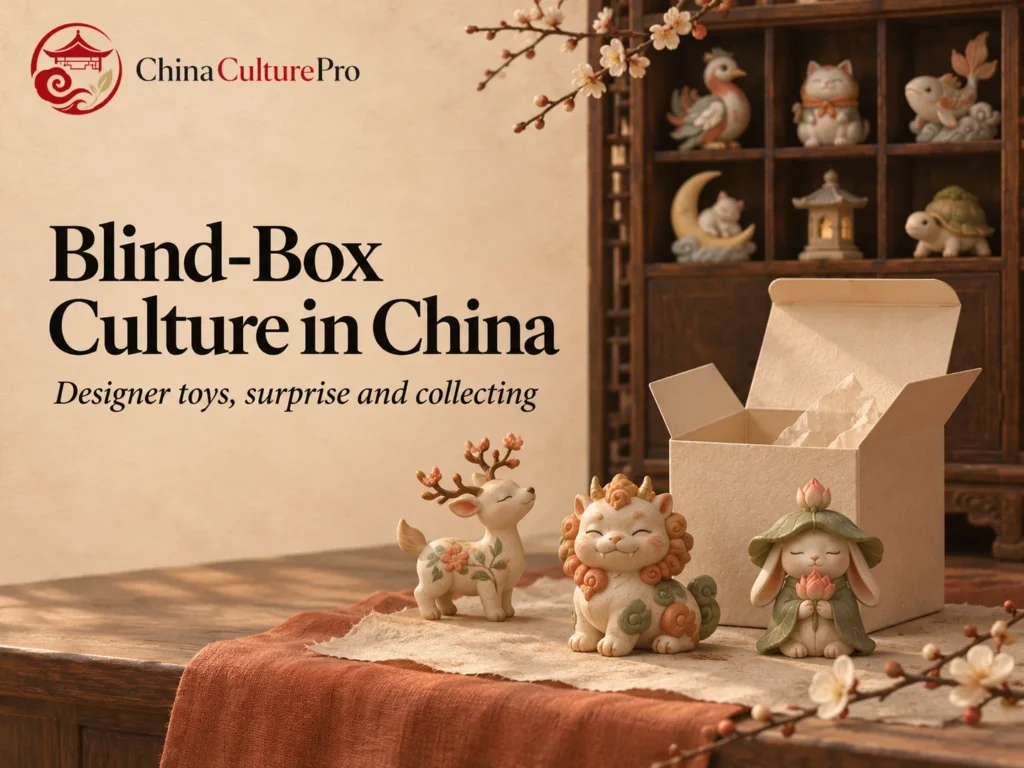

Quick Answer: What Is Blind-Box Culture in China?
A blind box (盲盒, mánghé) is sold as part of a known range, with the exact item hidden until the buyer opens it or reveals it online. China’s collectible toy scene grew around character series such as Pop Mart’s Molly. Collectors share openings, display figures and trade duplicates. The same format also appears in museum merchandise, where the possible designs can refer to objects in a collection. [1][2][3][4]
- The box: The package can show the series and possible designs while concealing which one is inside. [1][3]
- The collection: Some buyers enjoy the surprise. Others use swaps or resale listings to find one figure. [1]
- The odds: China’s market regulator published trial guidance in 2023 that calls for key terms, including drawing probabilities, to be disclosed before purchase. [3]
The format combines a designed object, an uncertain outcome and a social way of collecting.
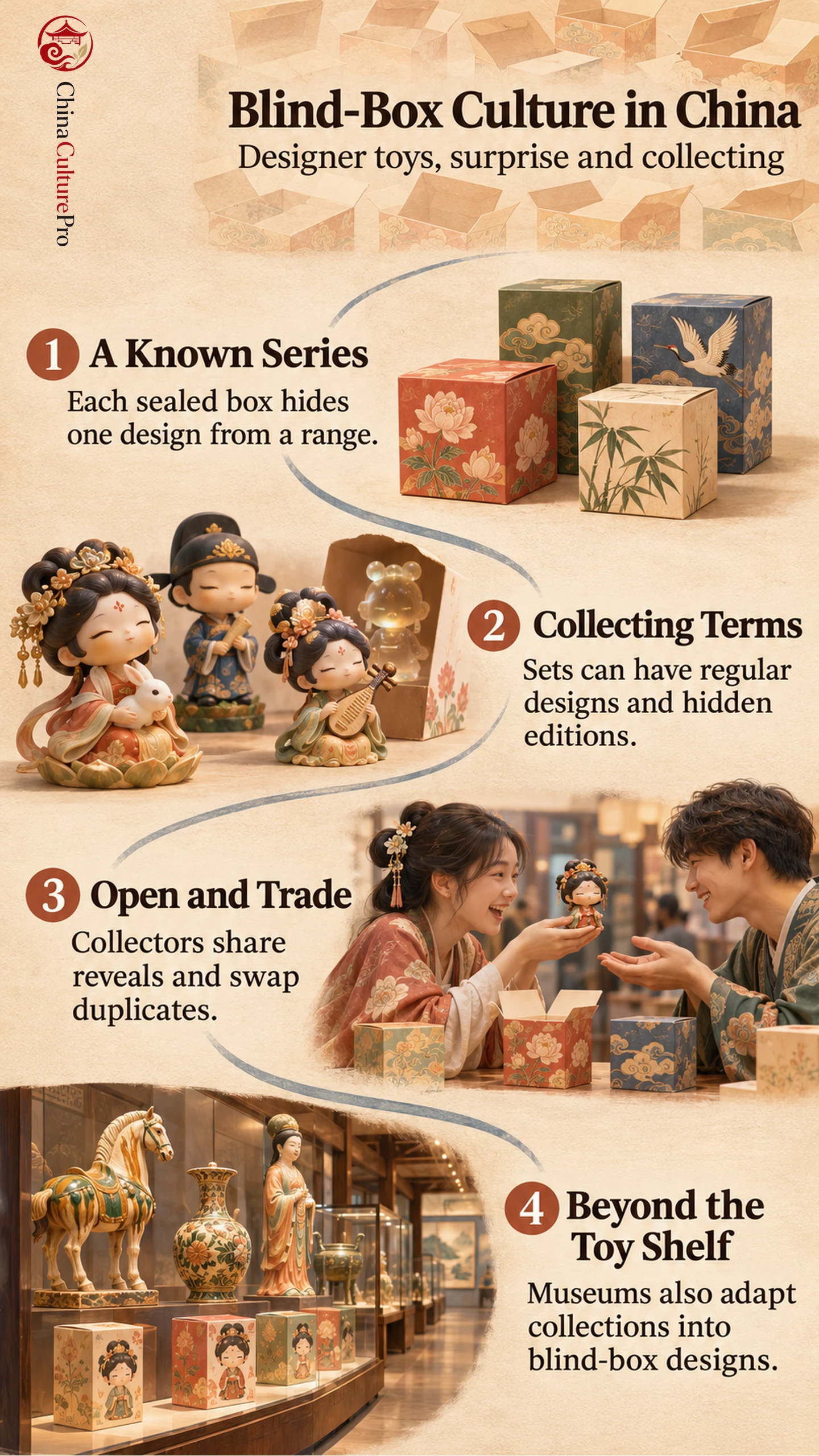
The same small figure can circulate as a surprise in a sealed box, a duplicate offered for trade or a named collectible on a shelf. In China, those different ways of getting and sharing figures help explain how a retail format became a hobby. [1][4]
How Blind Boxes Became a Designer Toy Format
Opaque retail packaging had precedents in Japanese lucky bags and capsule toys. Designer toy blind boxes took the idea of surprise and applied it to series of recognizable characters. The character stays recognizable across variations in costume, pose or theme. [1][4]
Hong Kong artist Kenny Wong created Molly in 2006. Pop Mart’s listing prospectus records the company’s August 2016 launch of a Molly Zodiac blind-box series. That example shows how a character created by an artist became the basis for a set of themed variants. For context on the media and fan scene around some character goods, see ACG culture in China. [2]
What Collectors Mean by a Series, a Duplicate and a Hidden Edition
A series is the range of designs from which a figure can be drawn. A duplicate is another copy of a design a buyer already has. A hidden edition is a less common design in some ranges. A hidden design can be shown in marketing, represented by a silhouette or described only in the terms for a particular release. [1][2][3]
A sealed single box offers an unknown design. Buying a case means buying multiple boxes together. Check the listing for any guarantee about the regular designs, the treatment of hidden editions and the drawing odds. The series name alone does not tell you what a case includes. [2][3]
Why People Unbox, Display and Trade Figures
A study of Chinese blind-box collectors describes opening, exchange and resale across shops and online platforms. A collector can film the reveal, arrange a shelf around a favorite character or use a swap to finish a series. Offering a duplicate for trade gives collectors a reason to contact each other. [1]
The experience changes when someone wants one particular figure. Swapping with another collector or buying an identified piece makes the identity of the item part of the transaction. Condition and provenance then matter more than the surprise. The guide to Chinese fan communities explains other ways shared interests become social activities. [1]
Museum Boxes and Consumer Disclosures
Museums can use the same format to introduce people to collections. Research using the Macao Museum as an example examines how recognizable cultural details carry over into the design of a box or figure. The guide to Chinese cultural creative products explains how museum objects and motifs are adapted for merchandise more broadly. [4]
In mainland China, the State Administration for Market Regulation’s 2023 trial guideline calls for prominent pre-purchase disclosure of details including the range, rules, drawing probabilities and value range. The guideline also directs sellers to refuse sales to children under eight. Buyers can see the terms of the draw while the individual result remains a surprise. [3][5]
FAQs About Blind-Box Culture in China
Did Pop Mart invent the blind-box format?
Pop Mart helped popularize designer toy blind boxes in China, including through its Molly Zodiac series in 2016. Surprise packaging had earlier precedents, including Japanese capsule toys. [2][4]
Is a hidden edition guaranteed in a full case?
The terms for the specific case determine which designs are included. Look for an explicit guarantee and how the seller describes hidden editions and odds. [2][3]
Why do collectors trade duplicates?
A trade can turn an extra figure into a design the collector wants and connect people collecting the same series. [1]
Источники
[1] Thomas William Whyke and colleagues, Global Media and China. Unboxing the Chinese Blind Boxes among China’s Grown-up Missing Children
[2] Pop Mart International Group, Hong Kong Exchanges and Clearing. Global Offering Prospectus
[3] State Administration for Market Regulation. Trial Guidelines on Blind-Box Business Practices
[4] PLOS One. Opening the Box to Explore the Contents: A Macao Museum Case Study
[5] Ministry of Commerce policy database. Blind-Box Business Practices Trial Guidelines: Regulatory Record