
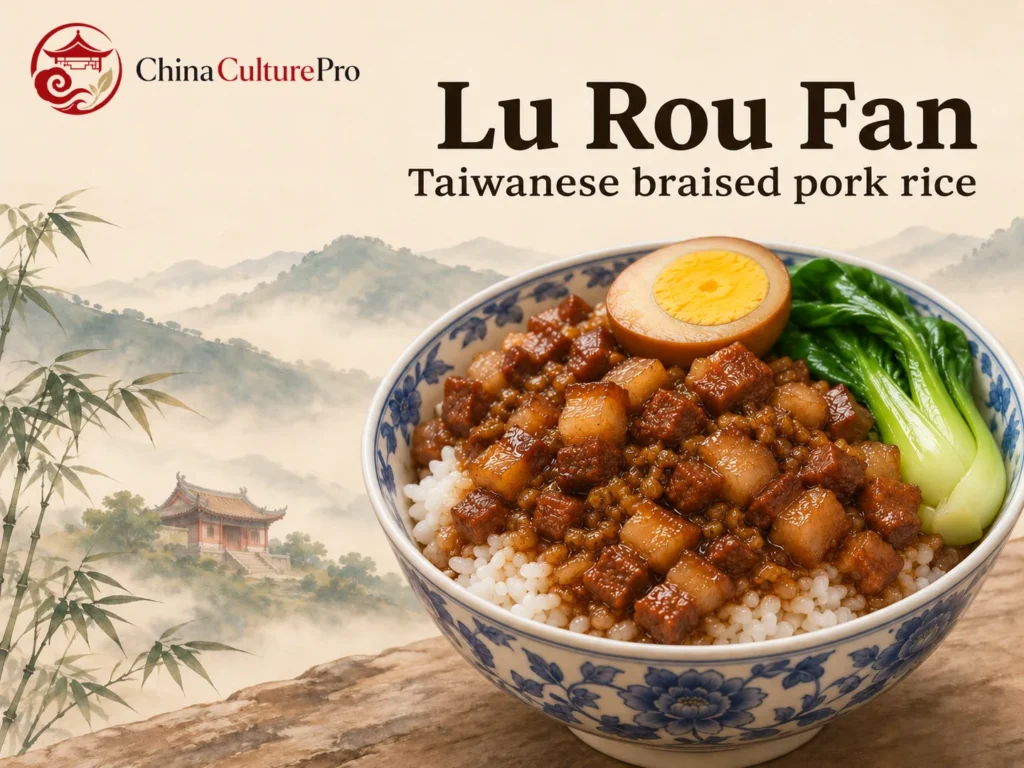

Quick Answer: What Is Lu Rou Fan?
Lu rou fan (卤肉饭, lǔ ròu fàn) is Taiwanese braised pork served over rice. In its small-meat form, chopped or minced pork and sauce season the rice rather than forming a separate steak-like portion.[4]
- Regional names can distinguish finely chopped pork from a whole piece of belly.[4]
- Fried shallots (油葱酥, yóucōngsū) add an aromatic, onion-like sweetness in many versions.[3]
- Rice, meat and sauce need to work together; excessive sauce can make the bowl wet and salty.[9]
Below is one diced-pork recipe.

Prepare the rice and green vegetables while the pork simmers. Keep a spoon for tasting the cooked sauce separate from utensils that handled raw pork.
Regional Names and Pork-Cut Differences
The same English description can conceal different plates:
- Small-meat rice: In northern and central Taiwan, lu rou fan commonly refers to minced or finely chopped pork over rice. In the south, this is often called rou sao fan (肉燥饭, ròu sào fàn, in Taiwan Mandarin).[4][5]
- Whole-piece pork rice: In southern usage, lu rou fan can instead mean rice topped with a braised slab of pork belly. Elsewhere, that preparation has another local name.[4]
These are regional usage patterns, so check a menu’s description or photograph before ordering. Meat size is a more useful clue than assuming the name guarantees a single presentation.
Dibandingkan dengan hong shao rou (红烧肉, hóngshāo ròu), a large-chunk red-braised pork dish, the finely cut version makes a rice-seasoning meat sauce. Aromatics also differ between recipes.[2]
Some cooks use skin-on belly, while a chef’s version uses fatty neck and extra skin for a richer, sticky sauce. Neither that cut nor a particular fat percentage defines every bowl.[2][9]
Ingredients for One Diced-Pork Version
- Pork and aromatics: 500 g pork belly, in 1 cm cubes; 2 tbsp dried shrimp (虾米, xiāmǐ), measured dry, then soaked and chopped; 4 tbsp fried shallots; 2 tbsp pre-fried minced garlic.[1]
- Seasoning: 2 tbsp granulated sugar; ¼ tsp five-spice powder (五香粉, wǔxiāngfěn); 2 star anise; ¼ cup light soy sauce (生抽, shēngchōu); 2 tbsp dark soy sauce (老抽, lǎochōu); ¼ cup Chinese cooking wine (料酒, liàojiǔ).[1]
- To braise and serve: Hot water to cover pork; 4 peeled hard-boiled eggs; 2 cups cooked rice; 1 bunch blanched bok choy.[1]
How to Braise the Pork and Serve the Rice
- Prepare the shrimp. Soak until softened; drain and chop. Keep refrigerated during any delay.[1]
- Render the pork. Cook diced belly over medium heat about 10 minutes, until released liquid largely evaporates.[1]
- Add flavourings. Stir in shrimp, sugar, star anise and five-spice. Add both soy sauces, wine, fried shallots and fried garlic; stir and cook about 5 minutes.[1]
- Braise gently. Add hot water just to cover pork, then eggs. Cover and simmer about 30 minutes as a guide, continuing until pork is cooked through and tender. Stir to prevent sticking; turn eggs halfway.[1]
- Finish and serve. Once pork is tender, reduce excess liquid if needed, keeping a spoonable sauce. Serve pork and sauce over cooked rice with eggs and greens.[1][2][3]
Reduction should happen after the pork is tender. Stir as the sauce concentrates so sugar and soy do not scorch on the bottom.[2][3]
FAQs About Lu Rou Fan
Can I use ground pork instead?
Ground-pork versions exist, including the meat sauces described in regional definitions. They give a finer texture than hand-cut belly. Use a complete ground-pork method rather than expecting the same fat release, liquid reduction and cooking time as diced belly.[4]
Are dried shrimp or mushrooms essential?
Neither appears in every version. This recipe includes dried shrimp; other recipes use shiitake mushrooms. Check the full ingredient list instead of treating one cook’s additions as the definition of lu rou fan.[2][3]
Why is the sauce thin or greasy?
Fat is part of the character of a belly-based braise, while skin can add body. If the meat is tender but the liquid is watery, reduce it uncovered, stirring, without drying the pot. Add sauce to rice gradually rather than flooding the bowl.[2][3][9]
How should I store the pork, eggs and rice?
Refrigerate shallow portions within 2 hours, or 1 hour above 90°F/32°C, at 40°F/4°C or colder. Keep rice separately and use leftovers within 3 days; reheat to 165°F/74°C, bringing braising sauce to a rolling boil. Do not leave rice out overnight: reheating cannot reliably destroy toxins formed during prolonged room-temperature storage.[6][7][8]
Sumber
[1] Asian Family Foods. Taiwanese Braised Pork Rice: Lu Rou Fan
[2] Judy Leung. Lu Rou Fan: Taiwanese Braised Pork Rice Bowl
[3] Wei Guo. Lu Rou Fan: Taiwanese Pork Rice Bowl
[4] Taiwan Ministry of Education. Taiwanese Dictionary: Lu Rou Fan, Two Regional Meanings
[5] Taiwan Ministry of Education. Revised Mandarin Dictionary: Rou Sao
[6] Hong Kong Centre for Food Safety. Bacillus Cereus in Fried Rice
[7] U.S. Department of Agriculture. How Do I Handle Leftovers Safely?
[8] U.S. Department of Agriculture. What Methods of Reheating Food Are Safe?
[9] Chen Ching-yi, reporting chef Chen Yong-hua’s demonstration. Taiwan in a Bowl: Lu Rou Fan