
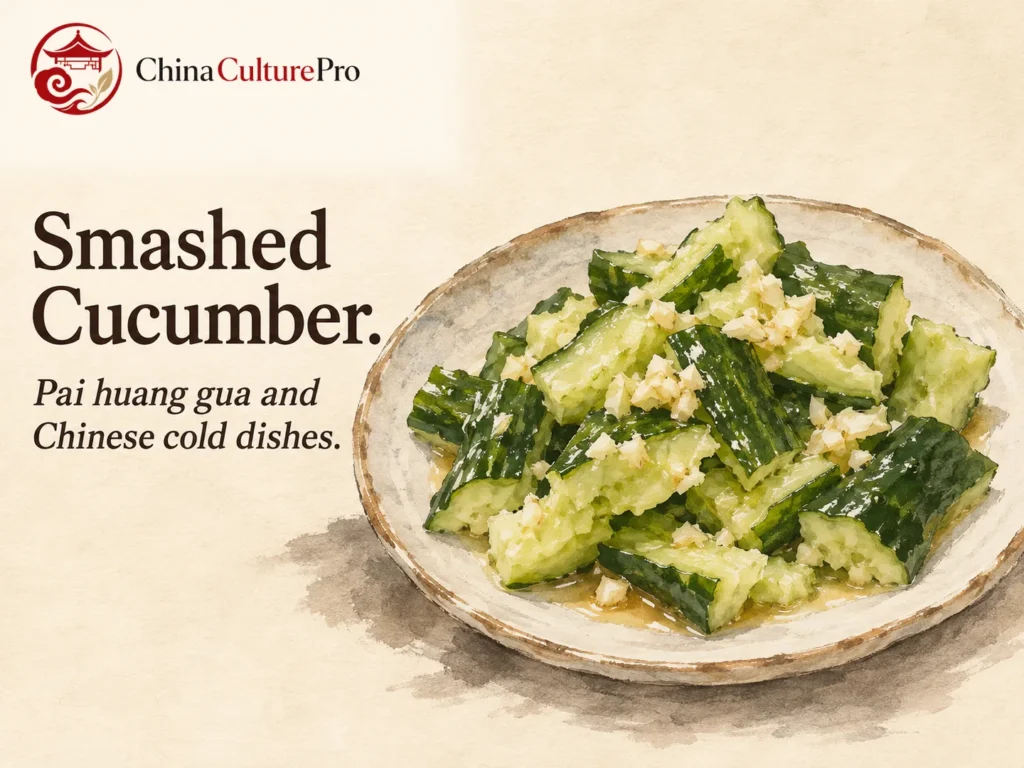

Quick Answer: What Is Smashed Cucumber?
Pai huang gua(拍黄瓜,pāi huángguā)is a Chinese cold dish of cucumbers cracked open, cut into manageable pieces and mixed with a savory, tangy dressing. The rough surfaces and crisp bite are central to its character.[1]
- The vegetable: Cucumber usually stays raw and crunchy.
- The method: Smashing creates irregular edges before the pieces are dressed.
- The flavor: Garlic and vinegar are familiar, with soy sauce, sesame oil or chili varying by preparation.
It is not defined by one mandatory chili level, cucumber variety or garnish. A freshly dressed cold dish also differs from a fermented or shelf-stable pickle.

Jagged cucumber pieces glisten with dressing, their dark green skin contrasting with pale, crisp flesh. Garlic and vinegar give the plate a pronounced aroma even when no chili is added. As one of many Chinese cold dishes, it can open a meal or sit alongside warm food at a shared table.
Cucumber Skin, Seeds and Crunch
Thin-skinned cucumbers are convenient because their skin and flesh can be eaten together without a tough contrast. One cook’s published version uses English cucumber and also discusses smaller varieties, while treating peeling as a choice shaped by the skin’s texture.[2]
That is more useful than insisting that one named variety is the only correct cucumber. Skin and seed cavities differ between cucumbers. Peeling or removing a watery core changes the bite; neither is mandatory for every variety.
The desired bite remains crisp after the cucumber is broken open. Softness from an old or deteriorating cucumber is not the same texture as the fresh vegetable’s newly cracked flesh.
Why Smashing Changes the Surface
Smashing creates fractures and uneven edges through the cucumber. Those rough surfaces give the dressing places to collect, while the pieces retain a substantial crunch. A Beijing cooking-school recipe describes cracking the cucumber lengthwise before cutting it into small pieces.[3]
The result is a plate of pieces, not a cucumber puree. Smooth slices have their own uses, but they do not create the same combination of broken edges, exposed flesh and firmer skin. That physical difference helps explain why “smashed” is part of the dish’s English name.
A rolling pin or another suitable blunt tool can produce the effect; a particular cleaver is not an ingredient requirement. Use a stable surface and controlled pressure. The aim is split pieces that retain their crunch.
Garlic, Vinegar and Optional Chili
Garlic supplies a fresh, pungent aroma, while vinegar provides acidity. Soy sauce can add savory seasoning and sesame oil a toasted note; sugar may round out the dressing. One published preparation combines these ingredients and makes chili an optional addition.[2]
Chinese black vinegar gives a different character from a lighter rice vinegar, and recipes can use different products. The ingredient choice affects the dressing’s color and flavor, without changing the fact that the cucumber has been smashed and dressed.
Chili oil, chili crisp, fresh chilies or Sichuan pepper can create stronger variations, but none is required in every bowl. The Chinese chili oil guide explains one of those additions. Ask which seasonings are already mixed into the dressing when requesting a mild version.
Salt, Water and Dressing the Pieces
The cracked cucumber releases liquid after seasoning. One preparation salts the pieces before dressing and drains off the released water, while explicitly treating this as an optional step.[1] Salt here changes moisture and seasoning; it is not a cooking process.
Another cook emphasizes dressing close to serving because the released water can dilute the sauce.[4] These approaches address the same practical issue in different ways. They do not establish a single mandatory resting time or a rule that every cucumber must be drained twice.
The useful distinction is between moisture deliberately removed before dressing and the dressing intended to stay on the pieces. A little liquid in the serving bowl is normal. It does not turn the salad into soup, but excessive released water can make the flavor less concentrated.
A Cold Dish at a Shared Table
Smashed cucumber appears as a cold appetizer and an accompaniment to a larger meal.[4] Its crispness and sharp dressing provide a textural change alongside braises, noodles, rice and other dishes. It also appears in everyday meals across different regional settings.
A plate may arrive before the hot dishes, or be eaten alongside them. “Cold dish” identifies its serving category, not a compulsory point in a nationwide meal sequence. At a shared table, use the serving utensils provided; the wider guide to Chinese table manners explains shared-dish habits.
The familiar mild garlic-and-vinegar bowl and a chili-heavy version can occupy the same place in a meal. The dressing changes the flavor and heat of the plate. Confirm the restaurant’s version rather than judging by a menu photograph alone.
Clean Handling and Dietary Checks
Because the cucumber commonly stays raw, washing and clean equipment matter. The FDA advises washing produce under running water before cutting or peeling, using a clean brush for firm produce such as cucumbers, and keeping it separate from raw meat and contaminated utensils. It does not recommend soap or detergent for produce.[5]
Vinegar and salt in a dressing do not replace those steps. Hong Kong’s Centre for Health Protection specifically advises against relying on salt, vinegar or wine to kill bacteria.[6] A tangy taste is not evidence that a prepared cold dish has been sterilized.
For dietary restrictions, check the complete dressing. Soy sauce can introduce soy and wheat; sesame oil and seeds introduce sesame. The FDA identifies these among major food allergens.[7] A basic vegetable-and-plant-seasoning version can be vegan, but compound sauces and garnishes still need checking; see Chinese vegetarian food. Keep pre-cut or packaged produce refrigerated as directed, and use clean serving tools.
FAQs About Smashed Cucumber
Is the cucumber cooked?
It usually stays raw. A version with heated oil in the dressing is still different from cooking the cucumber through.
Does smashed cucumber have to be spicy?
No. Garlic-and-vinegar versions can omit chili, while other preparations add chili oil or stronger spices.
Do you have to peel the cucumber?
No. It depends on the cucumber’s skin and the cook’s preference. Wash it first even if peeling.
Is smashed cucumber a fermented pickle?
Not ordinarily. It is a freshly dressed cucumber dish, not automatically a fermented or shelf-stable preserved product.
Sumber
[1] Wei Guo. Smashed Cucumber: Definition, Optional Salting and Variations
[2] Maggie Zhu. Chinese Cucumber Salad: Cucumber Choice and Dressing
[3] The Hutong. Paihuanggua with a Twist: Published Cooking-School Recipe
[4] Judy, The Woks of Life. Smashed Cucumber Salad: Surface, Moisture and Cold-Dish Serving
[5] U.S. Food and Drug Administration. Selecting and Serving Produce Safely
[6] Centre for Health Protection, Hong Kong. Food Poisoning: Prevention and the Limits of Vinegar or Salt
[7] U.S. Food and Drug Administration. Food Allergies: What You Need to Know (Alergi makanan: hal yang perlu diketahui)