


Quick Answer: What Is Sichuan Pepper Oil?
Sichuan pepper oil, hua jiao you (花椒油, huā jiāo yóu), is a culinary seasoning oil that carries the aroma and mouth-tingling sensation of Sichuan pepper into a dish without requiring whole pepper husks.[1][4]
- Sensation: numbing and tingling, distinct from chili’s burning heat.
- Types: red, green and tengjiao labels point to different pepper styles and products.
- Uses: dress cold dishes, season noodles or finish a hot dish.
- Amount: begin with a small amount in the food and taste before adding more.[1][2][3][4]
This guide concerns edible seasoning oil. A red Sichuan pepper label does not make the bottle the same thing as red chili oil.
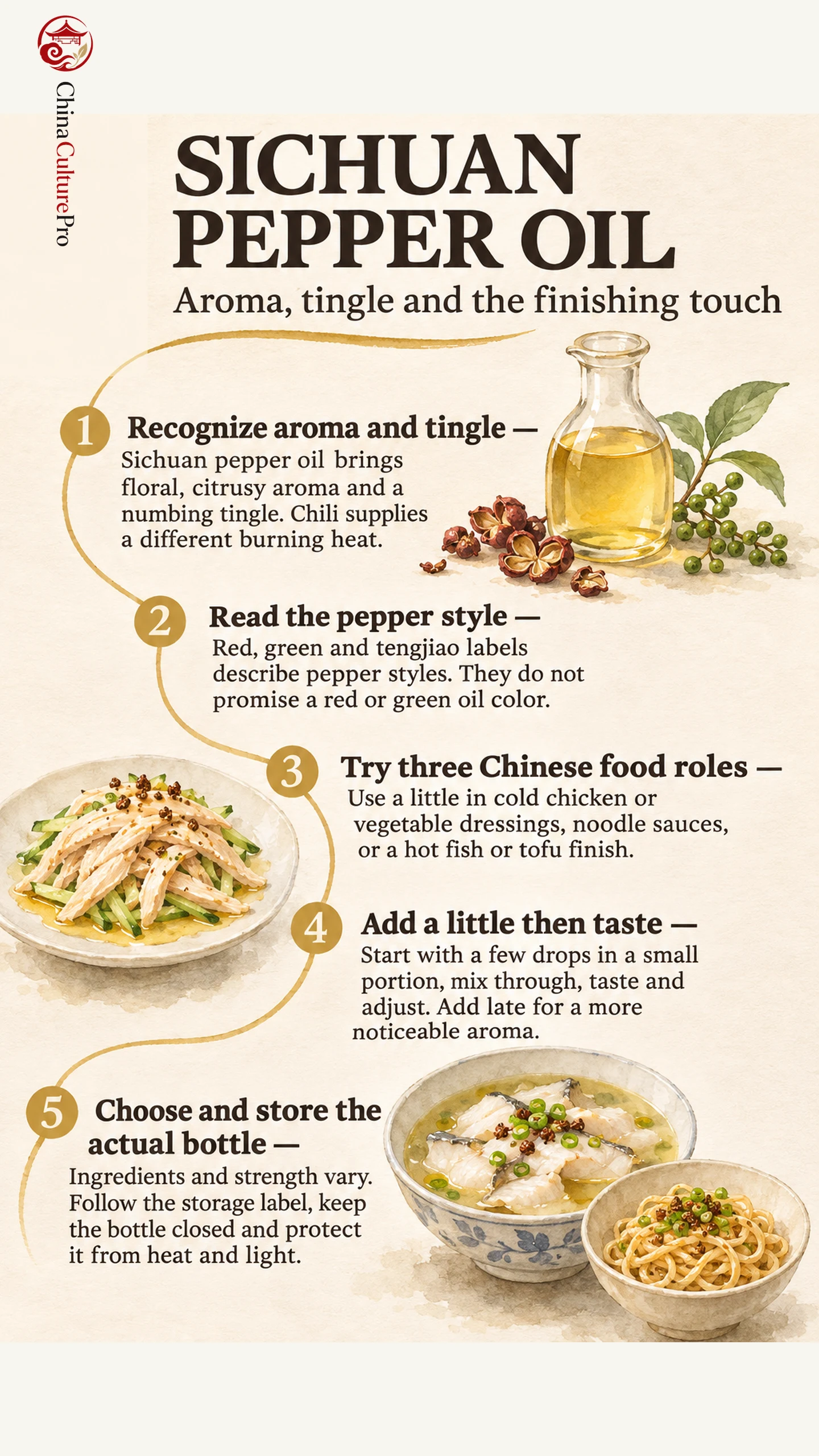
Choose the aroma and tingle you want in the finished dish, then adjust a small portion first.
Numbing Aroma, Culinary Oil and Chili Heat
Sichuan pepper supplies floral, citrusy aroma and tingle; chili adds heat. Together they form mala (麻辣, má là), the “numbing-spicy” combination associated with Sichuan cuisine.[1][2]
Commercial oils are not all manufactured or formulated alike. Some contain pepper in a carrier oil; others list natural Sichuan peppercorn flavors. The carrier may be rapeseed oil, soybean oil or a blend, and some products include aromatics such as ginger and shallots.[2][5][6]
Read the ingredients to understand what you are adding.
Red, Green and Tengjiao Oil Labels
| Label | Maknanya | Flavor direction |
|---|---|---|
| Red Sichuan pepper oil | Culinary oil flavored with red Sichuan pepper | Often warmer citrus and a rounded aromatic character |
| Green Sichuan pepper oil | Culinary oil flavored with a green Sichuan pepper style | Often brighter, lemony and more assertively fresh |
| Teng jiao you (藤椒油, téng jiāo yóu) | Rattan-pepper oil, commonly sold among green Sichuan pepper oils | A fragrant, citrusy, numbing condiment |
These labels overlap. Tengjiao is a particular pepper style, while a generic green-oil label does not establish one formula or standardized strength.[2][3][4][6]
“Red” and “green” describe the pepper used, not necessarily the oil’s visible color. A red Sichuan pepper oil can still look golden rather than chili-red.[1][3]
Three Chinese Cooking Uses
- Cold chicken or vegetable dressings: add a little oil to the dressing for poached or shredded chicken, or for a cold vegetable dish. It contributes fragrance and tingle without a mouthful of husks.[4][6]
- Noodle sauces: stir it into the dressing or finishing sauce for Chinese noodles. Treat it as one seasoning alongside the dish’s other flavors.[4][5]
- Hot fish or tofu dishes: use it to finish fish in broth or a tofu dish when that recipe calls for Sichuan pepper character. A late addition can make the aroma more noticeable.[4][8]
It is not a complete sauce on its own. Saltiness, acidity and chili heat still come from the other ingredients you choose.
How Much to Add and When
Oil and whole or ground pepper have no universal conversion: formulations and concentration differ.[1][6][7]
- Start small: put a few drops into a small portion of the food or dressing, following any product-specific directions.[2]
- Mix through: toss or stir so the oil is distributed. For a hot dish, add near the end when you want its aroma to stand out.[1][4]
- Taste and adjust: taste the seasoned food, then add more gradually if the fragrance and tingle need strengthening.[2][8]
Some products allow cooking use, with reduced tingling intensity. Begin with a finishing dose to learn the bottle’s character.[2][3][8]
Buying and Storing the Bottle
Look for a culinary product with the pepper type, full ingredients and storage instructions clearly stated. A simple-looking oil may contain flavoring, and a green-pepper product may contain visible pepper and aromatics. Check allergen declarations as well as the name on the front.[5][6]
Follow the actual bottle’s storage directions. Some products permit cool, dark pantry storage; some makers recommend refrigeration to preserve flavor. Keep the bottle tightly closed and protect it from heat and light.[4][7]
A small bottle can be practical when you use only a few drops at a time.
FAQs About Sichuan Pepper Oil
Is red Sichuan pepper oil the same as chili oil?
No. Red Sichuan pepper oil supplies pepper aroma and tingle. Chili oil supplies chili flavor and heat; some blends combine them.[1][3]
Can I replace whole Sichuan peppercorns with the oil?
It can supply aroma and tingle without the husks. Adjust a small amount in the dish; there is no fixed weight conversion.[1][7]
Can I use it for frying?
Some products allow cooking use, but finishing is a good way to retain a noticeable aroma and tingle. Use the product’s guidance rather than assuming every bottle is a general frying oil.[2][8]
Are all green pepper oils the same?
No. Pepper style, carrier oil, flavoring and added aromatics vary. A green label does not establish that two bottles will taste equally strong.[2][4][6]
Sumber
[1] The Woks of Life. Sichuan Peppercorn Oil
[2] 50Hertz. Green Sichuan Pepper Oil
[3] 50Hertz. Red Sichuan Pepper Oil
[4] The Mala Market. Green Sichuan Pepper Oil: Rattan Pepper Oil
[5] Lee Kum Kee. Sichuan Peppercorn Flavored Oil — Ingredients
[6] Lee Kum Kee. Green Sichuan Peppercorn Oil — Ingredients and Uses
[7] 50Hertz. Frequently Asked Questions
[8] My Chinese Home Kitchen. Sichuan Peppercorn Oil