
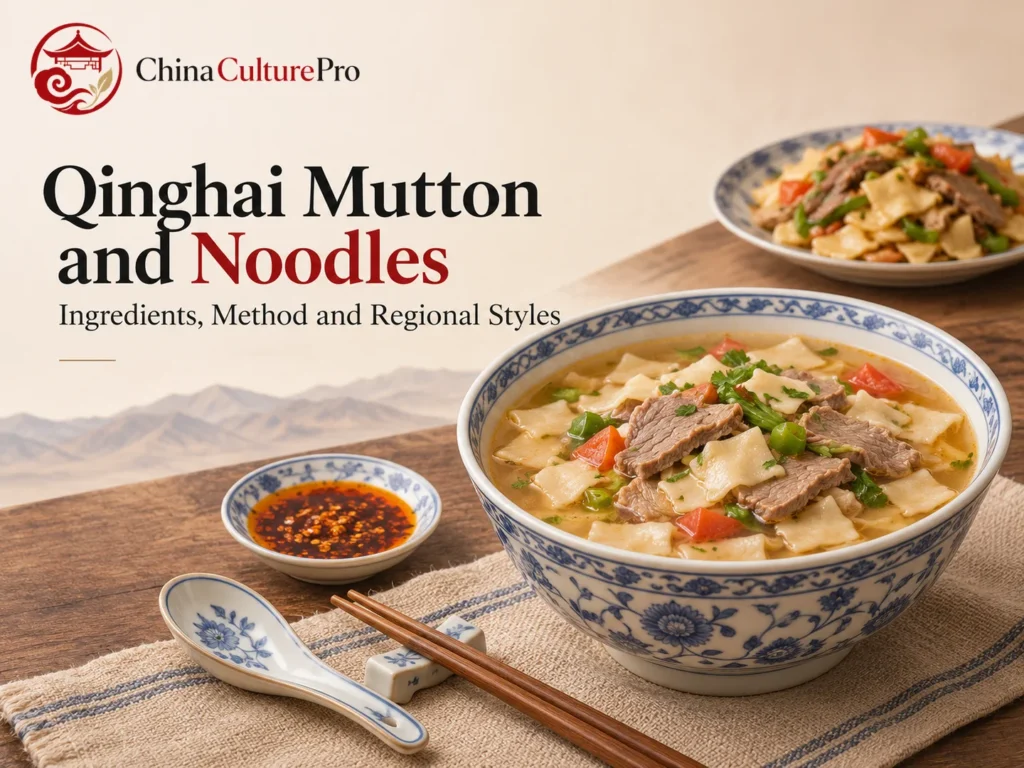

Quick Answer: What Are Qinghai Mutton and Noodle Dishes?
“Qinghai mutton and noodles” is a broad English description, not one fixed recipe. A representative dish is mutton mianpian (羊肉面片, yángròu miànpiàn): small pieces of wheat dough served with sheep meat and vegetables, either in soup or in a stir-fried preparation.[3][4]
- Noodle form: Hand-torn pieces are different from long pulled strands.
- Meat and stock: Mutton is one choice; some related dishes use beef.
- Serving: Soup, mixed and stir-fried preparations have different serving forms.
The menu name is more precise than the broad English description.[2][5]
A bowl of broth and a plate of stir-fried noodle pieces can belong to the same local food tradition. In Qinghai, shape and final cooking method are separate clues. Read both before deciding what the meat, vegetables and sauce will contribute.
The Noodles: Small Hand-Torn Pieces and Longer Strands
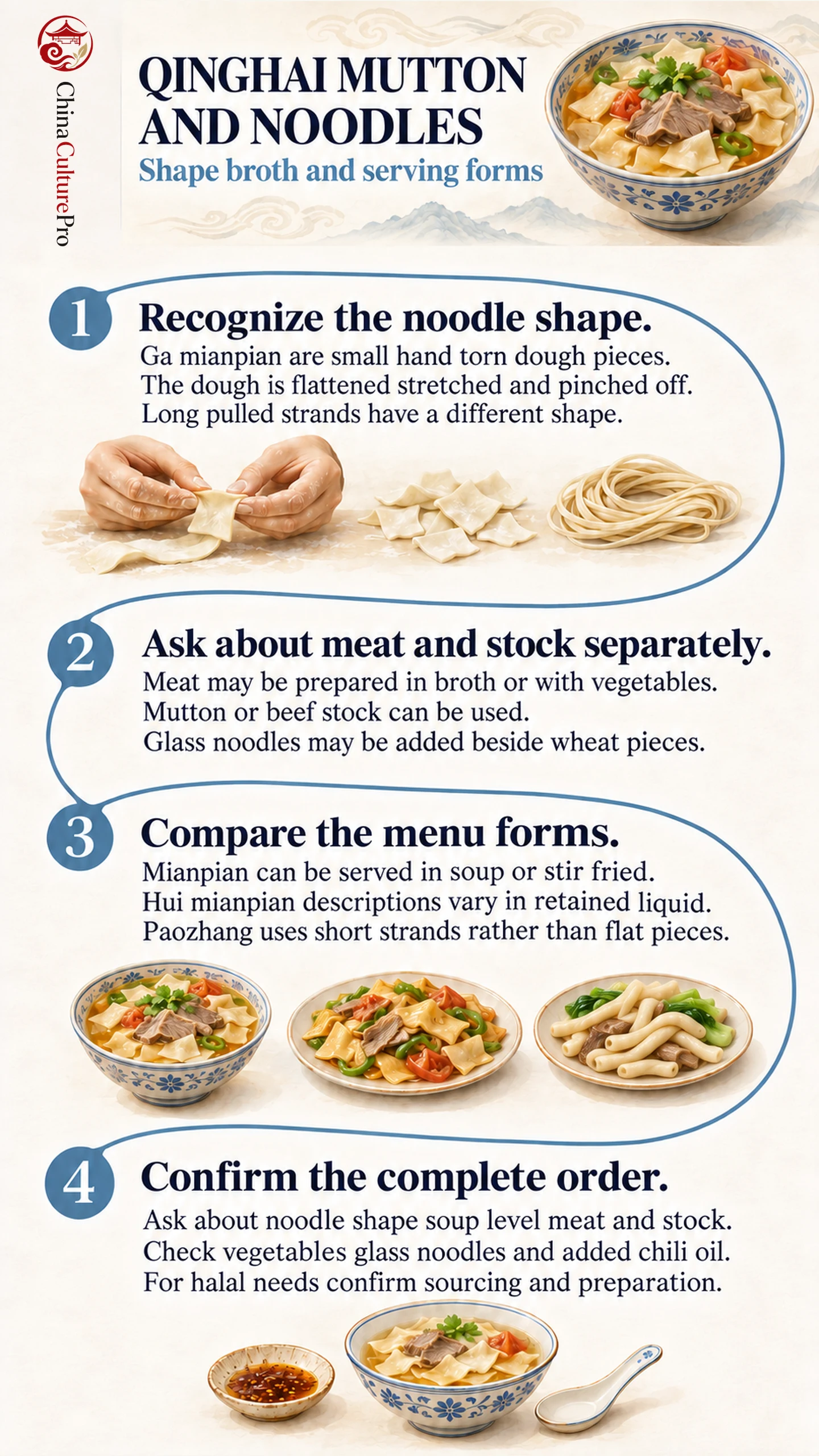
Ga mianpian (尕面片, gǎ miànpiàn) means small noodle pieces; the local ga refers to their small size. Dough portions are flattened, stretched and pinched off by hand. The small pieces are thin and resilient.[1][3]
A Xining chef describes using strong wheat flour. These are members of the Chinese noodle family, with a different shape from long hand-pulled strands, although both involve stretching.[3]
Meat, Broth and Final Cooking
Meat can be prepared as part of a broth or cooked with vegetables before the noodle pieces are added. Sheep leg meat is one documented choice, not a universal cut. Tomatoes, peppers and other vegetables appear in contemporary preparations.[2][3][4]
The stock and visible meat are separate questions: a shop may use mutton or beef broth. Some versions also add glass noodles alongside the wheat pieces. These are additional starch strands, not another name for mianpian.[3]
Hui mianpian (烩面片, huì miànpiàn) is a related mixed preparation. Local descriptions differ on how much liquid remains, so the name alone does not promise one fixed broth level.[1][2]
Soup, Stir-Fry and Short-Noodle Variations
| Menu form | Shape and serving clue |
|---|---|
| Soup mianpian | Small hand-torn dough pieces served with broth. |
| Chao mianpian (炒面片, chǎo miànpiàn) | Cooked dough pieces combined with meat and vegetables in the wok. |
| Paozhang mian (炮仗面, pàozhàng miàn) | Short sections of noodle strands, rather than pinched flat pieces. |
The same small piece can therefore appear in soup or a stir-fry. Paozhang is a shape distinction: the short strands resemble little firecrackers. [2][5]
These are everyday Qinghai foods, with vegetable and sauce choices that vary between preparations.[3][4]
How to Choose and Order
Confirm the full menu name, noodle shape, soup level, meat and stock. Ask about vegetables and glass noodles, and check added chili oil separately.[3]
For wheat restrictions, remember that the dough pieces remain wheat even if glass noodles are also present. For halal requirements, confirm meat sourcing, seasonings and kitchen preparation with the establishment; regional Muslim food traditions provide context, but a dish name cannot confirm the whole preparation.
FAQs About Qinghai Mutton and Noodles
Is Qinghai mutton and noodles one fixed recipe?
No. The English phrase covers related preparations, including mutton mianpian.
Are mianpian always served in soup?
No. The same dough pieces can appear in soup or stir-fried dishes.
Are paozhang noodles the same shape as mianpian?
No. Paozhang uses short strands; mianpian are small, flat dough pieces.
Does every mianpian dish contain mutton?
No. Related preparations can use beef or vegetables instead.
Sumber
[1] Guide County Government. Ga Mianpian
[2] China Weather Network, Qinghai Station. Qinghai Ga Mianpian
[3] Xining Evening News; chef Zhang Yanshan interviewed via Qinghai News. A Bowl of Ga Mianpian in Xining
[4] He Qiannan, China News Service. Sheep Dishes in Qinghai
[5] Qinghai News, local food report and broadcaster visit. Xining’s Traditional Noodle Foods