


Quick Answer: What Is Huangjiang Used For?
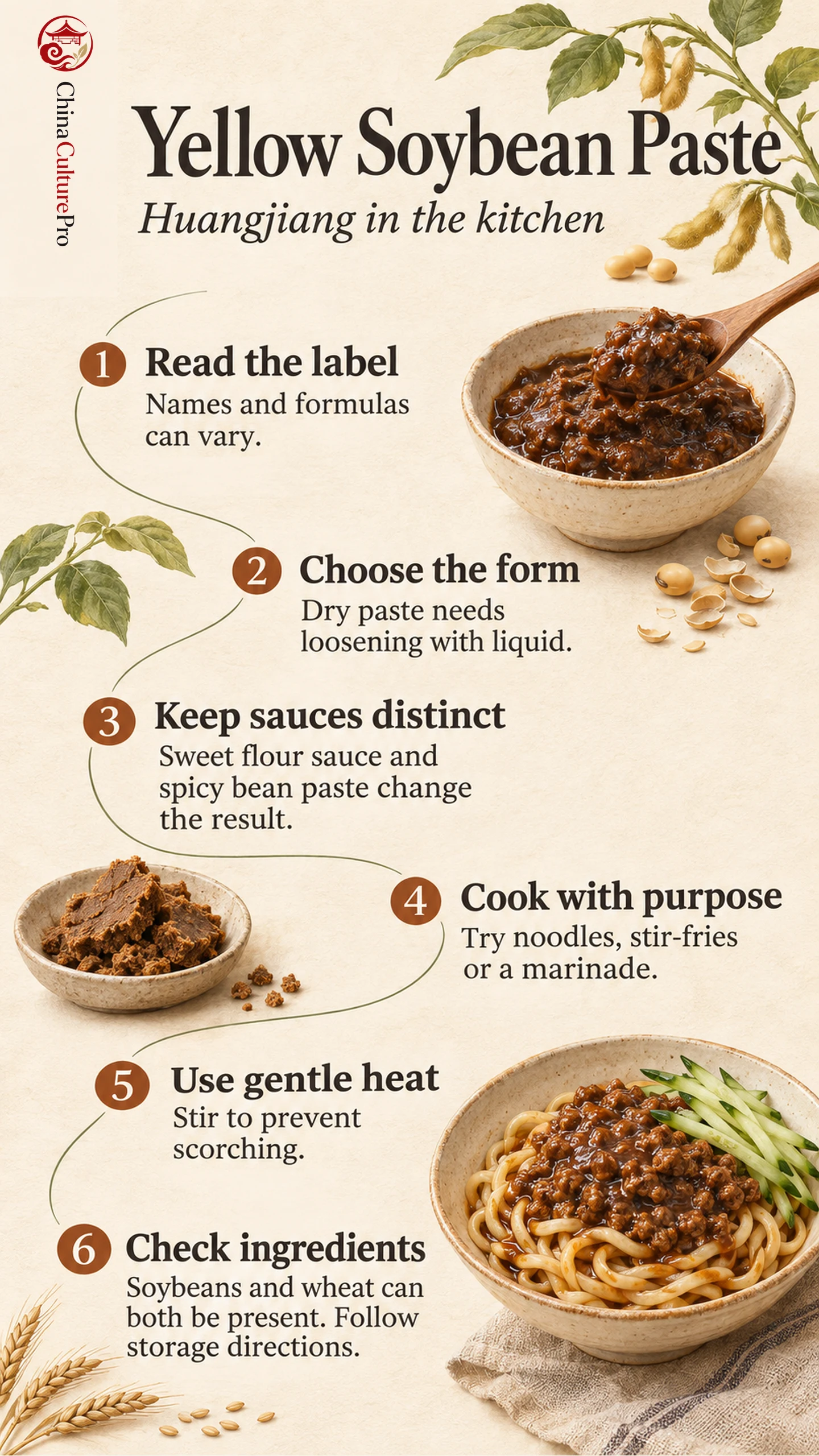
Huangjiang (黄酱, huángjiàng), also encountered as huangdoujiang (黄豆酱, huángdòujiàng), is a fermented soybean seasoning used in Chinese cooking. Despite the name yellow soybean paste, a product may be dark brown and thick.[4]
- Flavor: Expect a savory, fermented soybean character rather than chili heat as its defining feature.[5]
- Forms: Spoonable sauces and concentrated dry paste need different preparation.[3]
- Uses: Noodle sauces, stir-fries, steaming and marinades are common applications.[3][5]
Read the ingredient list: some commercial versions contain wheat flour as well as soybeans.[2]
The English words bean paste cover several very different purchases. For this ingredient, check the Chinese name, the consistency and the intended recipe. That gives you a more useful starting point than choosing a jar by color or assuming every brown sauce tastes alike.
Read Huangjiang as a Family of Labels
Packages and recipes may use yellow soybean paste, soybean sauce or ground bean sauce in English. Within this group, a product’s water content, texture and added seasonings can differ.[3][4] Match the ingredient to the recipe’s description, especially when a dense dry paste is specified.
The basic flavor comes from fermentation, but a retail sauce can also include sugar, starch or other seasonings. One current commercial ingredient list, for example, includes soybeans, wheat flour, salt and sugar among its ingredients.[2] The name alone does not establish a fixed formula or an identical level of sweetness.
Choose Dry Paste or a Spoonable Sauce
Gan huangjiang (干黄酱, gān huángjiàng), or dry yellow soybean paste, is concentrated enough to need loosening with liquid before use. Water or a cooking wine can be used in a suitable recipe.[3]
A spoonable soybean sauce is easier to distribute through a dish, but its saltiness and seasoning still matter. A dry-paste noodle method can mix the dry and wetter forms together after the dry paste has been loosened; the mixture belongs to that recipe rather than a universal rule for all jars.[6]
When shopping, specify dry paste or a wetter sauce, then use a recipe quantity intended for that form.
How It Differs from Sweet and Chili Bean Sauces
| Saus | Defining role | What changes if you substitute it |
|---|---|---|
| Huangjiang | A salty fermented soybean base | Establishes the savory soybean character of the sauce.[3] |
| Tianmianjiang (甜面酱, tiánmiànjiàng) | Sweet fermented flour sauce | Adds a noticeably sweeter, smoother component; it is often combined with yellow soybean paste.[4] |
| Doubanjiang pedas (豆瓣酱, dòubànjiàng) | Chili-bean paste | Adds heat and changes the intended flavor; it can be a deliberate recipe variation.[4] |
For the closest match, buy the named paste before planning substitutions.
Where the Paste Works in Chinese Cooking
- Noodle sauce: Zha jiang mian (炸酱面, zhájiàngmiàn) combines a cooked soybean-paste meat sauce with noodles and vegetables. It is a useful example within the broader world of Chinese noodles.[3]
- Stir-fry seasoning: A tofu-and-pork preparation adds soybean sauce after cooking the pork, then combines it with fried tofu and aromatics. The paste becomes part of the coating on the dish.[7]
- Steaming or marinade: A spoonable soybean sauce can season meat before or during cooking, contributing savory flavor, aroma and color.[5]
This noodle preparation is closely associated with Beijing’s food traditions.[4]
Because these sauces can be salty, use them as part of the dish’s total seasoning. Add other salt-bearing ingredients with care. Excessive heat can scorch the paste and produce bitterness, so gentle cooking and stirring are useful when making fried sauce.[1]
Loosen Dry Paste Before Cooking
- Put the recipe’s measured dry paste in a bowl, ready to combine with liquid.[6]
- Stir in the recipe’s water or cooking wine to loosen it into a workable mixture.[3][6]
- Add the loosened paste in the recipe’s sequence, cooking gently and stirring to prevent it catching on the pan.[1]
One chef’s method loosens dry paste with ginger water and cooking wine, sieves coarse particles, then mixes it with the wetter paste.[6] That illustrates why the dry form needs preparation. Sieving is a texture choice within that method, so follow the recipe you have selected.
Buying, Allergens and Storage
Check the product name, ingredients, use directions and storage information before buying. Choose a sealed product from a reliable retailer, and reject visible mold or signs of deterioration.[1]
Soybean paste should not automatically be treated as gluten-free. Some commercial sauces explicitly list both soybeans and wheat as allergens.[2] Check the actual container, particularly when changing between a different market’s product or a differently flavored version.
Follow the jar’s storage instructions, including refrigeration after opening where specified. Smaller packages are useful when you use little at a time.[1] Storage advice for the condiment itself is separate from the safe storage of a cooked pork sauce made with it.
FAQs About Yellow Soybean Paste
Is yellow soybean paste always yellow?
No. A product sold as yellow bean paste can be dark brown. Identify it from the name and ingredients as well as appearance.[4]
Is yellow soybean paste spicy?
Chili heat is not its defining role. A spicy chili-bean paste substitution adds a different flavor, so check the product you are buying.[4][5]
Can I use the same amount of dry and wet paste?
Do not assume so. Dry paste needs loosening, and a recipe may deliberately combine forms. Follow quantities for the form specified.[3][6]
Is yellow soybean paste gluten-free?
Some versions contain wheat flour and list wheat as an allergen. Check the ingredients and allergen statement on your product.[2]
Sumber
[1] China Food and Drug Administration and Chinese Institute of Food Science and Technology. Consumer Advice on Bean and Flour Sauces
[2] Lee Kum Kee USA. Soybean Sauce: Ingredients and Allergens
[3] The Woks of Life. Zha Jiang Mian: Beijing Fried Sauce Noodles
[4] Wei Guo, Red House Spice. Zha Jiang Mian: Ingredients and Substitutions
[5] Lee Kum Kee UK. Yellow Bean Sauce: Product Description and Cooking Uses
[6] Beijing Radio and Television, Btime. Dry and Wet Soybean Pastes in Old Beijing Fried-Sauce Noodles
[7] Lee Kum Kee USA. Stir-Fried Tofu and Pork with Soybean Sauce