


Quick Answer: What Is Zhangping Shuixian Tea?
Zhangping Shuixian(漳平水仙,Zhāngpíng shuǐxiān)is an oolong tea from southwest Fujian, especially recognised for small, paper-wrapped square cakes. Its regional making tradition draws on both northern and southern Fujian methods. [2]
- Material: Tea leaves supply the drink; the name does not mean a flower infusion.
- Form: Pressed cakes are familiar, but official requirements also describe loose tea. [1]
- Making: Shaping and wrapping come before the final baking in the documented cake process. [3]
- Flavour: Orchid-like or osmanthus-like aromas occur in descriptions and sensory research. [4]
A square shape is a product form, not a separate tea category. Pressing does not turn an oolong into green tea or automatically give it the properties of other compressed teas.
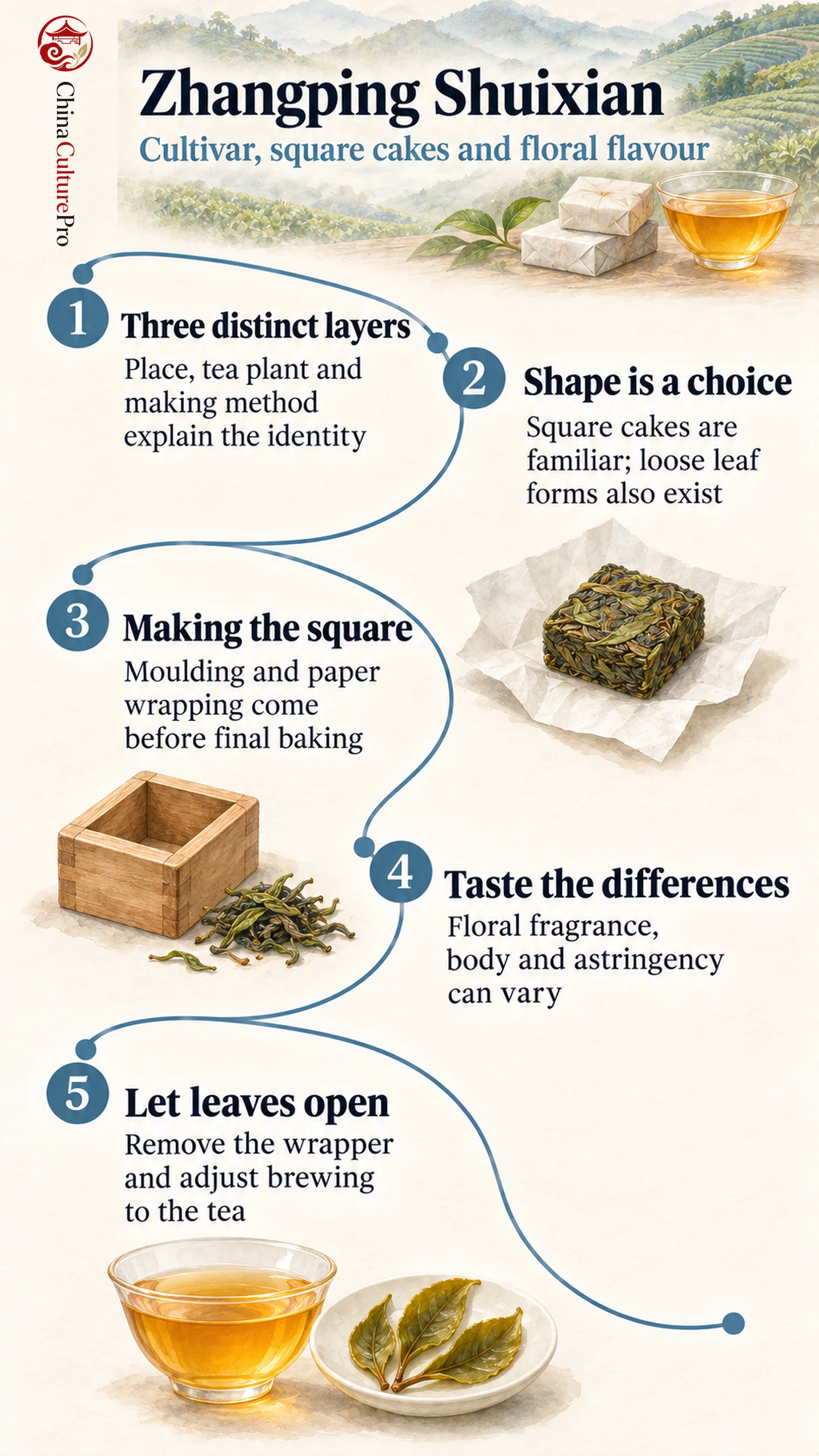
Unwrap a small square and the tea still looks compact, with leaves and stems pressed together. Water gradually reveals the leaf material behind that shape. Zhangping Shuixian is a useful introduction to китайский улун because its packaging, making method and flavour each tell a different part of the story.
Zhangping Origin and the Shuixian Tea Plant
The geographical-indication requirements locate production in nine townships of Zhangping, southwest Fujian, along the upper North Creek of the Jiulong River. [1]
Shuixian(水仙,shuǐxiān)also identifies the tea-plant material. A documented maker’s account describes substantial leaves and stems and picking opened shoots, rather than limiting the raw material to the tiny unopened buds associated with some green teas. [3]
Origin, plant material and method answer separate questions. The full regional name matters more than the translated idea of a “water sprite,” which says little about the flavour of an actual cup.
Square Tea Cakes and Loose-Leaf Forms
The official product description distinguishes two forms:
| Форма | Appearance described in the requirements |
|---|---|
| Tea cake | A roughly square, compressed form with green-yellow colour. |
| Loose tea | Tight, substantial leaf strands with a dark, lustrous appearance. |
The square cake is familiar, but it is not the only recognised form. [1]
Shape is also separate from flavour style. The brewing-and-tasting standard also distinguishes flavour styles. Form and flavour are separate axes of description. [5]
From Withered Leaves to Paper-Wrapped Cakes
The documented sequence begins with sun exposure and resting, followed by zuoqing(做青,zuòqīng): alternating agitation and rest as the leaves change. Shaqing(杀青,shāqīng)then provides the heating stage, before rolling, moulding and baking. [3]
For the cake, a wooden mould presses the rolled leaves into shape. Paper helps hold that form before the package goes through baking. This order matters: describing the tea as finished loose oolong that is simply wrapped after everything else omits the role of shaping within the making sequence. [7]
A maker’s technical account adjusts work according to weather, season and leaf condition. Its exact quantities and timings should not be treated as a compulsory recipe for every producer. The useful lesson is how the stages connect and how the maker responds to the leaves. [3]
The wrapper is packaging, not an ingredient to brew. Remove it before putting the tea into a vessel.
Floral Aromas, Roast and the Brewed Cup
The requirements describe bright orange-yellow liquor, substantial infused leaves with reddish margins, and orchid-like or osmanthus-like fragrance. [1]
The standard’s qingxiang(清香,qīngxiāng)and nongxiang(浓香,nóngxiāng)categories help distinguish different processing and aroma styles. Read the actual product description alongside those names rather than assuming every small square tastes equally light or equally roasted. [5]
A 2021 sensory and biochemical study compared two Zhangping Shuixian flavour types made in spring and autumn. One had a sweet osmanthus-like fragrance and stronger astringency; the other had an orchid-like fragrance with a brisk, mellow taste. These were findings about the tested samples, not guarantees attached to every packet using a similar description. [4]
When tasting tea, separate fragrance, liquor colour, body and astringency. A floral aroma can coexist with a substantial taste; it is not a synonym for weakness.
Brewing a Cake and Adjusting the Infusion
The regional brewing-and-tasting method uses freshly boiled water and includes a brief moistening stage for pressed squares, followed by draining and infusion. It also allows the drinker to adjust steeping time according to preference. The official standard record identifies its scope and January 2024 implementation date. [5][6]
A gaiwan(盖碗,gàiwǎn)or pouring teapot lets you separate the infusion from the leaves. The gaiwan guide explains handling, while our discussion of tea rinsing distinguishes leaf moistening from a universal requirement to throw away every tea’s first infusion.
Read the package weight before treating one cake as one serving. Match the amount to your vessel and the product instructions. As the compact leaves open, later infusions may need different timing; compare the taste instead of applying one unchanged steep to the entire session.
This approach also avoids judging the tea from a tightly closed square alone. The opening leaves and the poured liquor provide information that the dry package cannot show.
Regional Making Skills and Living Traditions
Zhangping Shuixian making entered China’s fifth national intangible-cultural-heritage list in 2021 as an extension of oolong-tea making skills. The record emphasises responding to weather and leaf condition, and the exchange between northern and southern Fujian techniques. [2]
A December 2025 report describes masters and apprentices teaching locally, including a village instruction initiative begun in 2024. It also places the tradition within China’s broader 2022 UNESCO inscription for tea-processing skills and associated practices. These records concern living knowledge, not a quality certificate issued to every retail package. [7]
This makes the tea part of Fujian’s regional culture as well as a manufactured product. The paper square makes the product recognisable, while transmission preserves the skills behind it.
Reading the Label and Comparing Products
Start with the regional origin, cake or loose form, flavour style and stated weight. The same small outline can contain products with different processing and sensory characteristics.
The sensory research demonstrates variation within Zhangping Shuixian itself. It is more useful to ask whether you prefer floral fragrance, briskness, body or astringency than to expect one universal flavour from the name. [4]
Nor does compression alone tell you that long ageing will improve a particular tea. Follow the product’s storage information rather than borrowing instructions from an unrelated compressed-tea category. Our oolong and green-tea comparison explains why appearance and tea classification need separate attention.
FAQs About Zhangping Shuixian Tea
Is Zhangping Shuixian a Green Tea?
No. Its recognised making tradition belongs to oolong tea. Greenish dry leaves or a compact square do not change that classification. [2]
Are Flowers Added to Give It an Orchid Aroma?
Not necessarily. Orchid-like and osmanthus-like notes describe tea aromas in research and product requirements. Check the ingredients if a product is sold as a blend. [1][4]
Does All Zhangping Shuixian Come in Square Cakes?
No. The square cake is familiar, but the official product requirements also describe a loose-leaf form. Read the product label. [1]
Does Zhangping Shuixian Contain Caffeine?
Yes. Research on this tea identifies caffeine among its components. Floral fragrance and a relatively light-looking liquor do not make it caffeine-free. [4]
Источники
[1] China National Intellectual Property Administration. Zhangping Shuixian protection requirements, notice640,pp1529–1531
[2] China ICH Network. Oolong making: Zhangping Shuixian
[3] Ministry of Commerce Old Brands Digital Museum. Deng Jin Ji craft record
[4] Weng Jingjing and colleagues, Food Science. Different flavour types of Zhangping Shuixian,2021
[5] Fujian Administration for Market Regulation. DB35/T2137–2023: brewing and tasting, public primary-text reproduction
[6] National Standards Information Platform. DB35/T2137–2023 official record
[7] Fujian provincial portal, reported interview. Tea-making transmission and innovation,December2025