


Quick Answer: What Is Suan Cai?
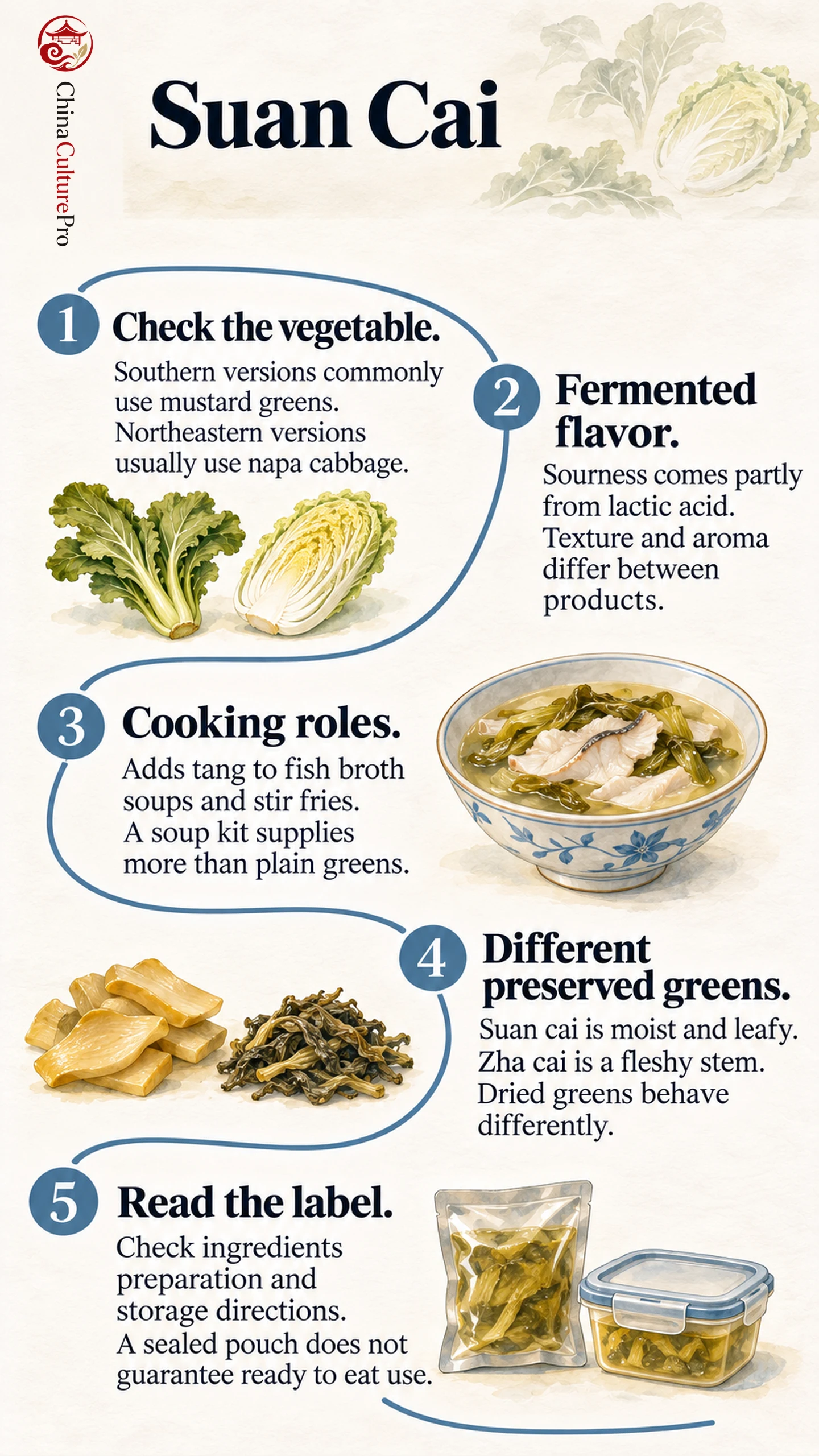
Suan cai (酸菜, suāncài) means “sour vegetables.” In southern Chinese cooking, the name commonly refers to fermented mustard greens (芥菜, jiècài), used as an ingredient rather than simply a garnish. Northeastern Chinese suan cai is usually made from napa cabbage, so the English label alone does not identify the vegetable.[1][3]
- Flavor: Sour and salty, with a fermented aroma; chili is an optional addition.
- Texture: Softened leaves with a firmer bite in the thicker ribs.
- Cooking role: Adds acidity and savory depth to soups, stir-fries and meat dishes.
Check both the Chinese product name and the actual ingredient list. Mustard-leaf pickles, preserved mustard stems and dried greens are different pantry products.
A packet of sour greens can transform a broth or provide contrast in a rich meat dish. Understanding the vegetable inside, how it was preserved and whether it comes already seasoned makes choosing the right product much easier.
Mustard Greens and Sour Napa Cabbage
Mustard-based suan cai preserves the leaves and their substantial ribs. In Hakka cuisine (客家菜, Kèjiācài), mustard greens become several preserved ingredients through different combinations of fermentation and drying. The moist sour version belongs to this wider preservation tradition.[3]
The northeastern cabbage version is also called suan baicai (酸白菜, suānbáicài). Its raw material is napa cabbage, with broad pale leaves and ribs. Historical household production helped preserve vegetables for the northeastern winter; the name describes a related sour vegetable tradition, rather than proving that mustard and cabbage products are identical.[1]
For shopping, the useful distinction is the plant on the ingredients panel. “Chinese sauerkraut,” “sour vegetable” and “pickled mustard” are overlapping English descriptions, so look for mustard greens or cabbage instead of relying on a translated front label.
Why Suan Cai Tastes Sour
In fermented suan cai, microorganisms transform components of the vegetable and produce organic acids. Lactic acid is an important contributor to sourness. Saltiness, acidity and fermented aroma work together, giving the greens a different character from fresh leaves simply dressed with vinegar.[1]
The result is not one fixed flavor. Research comparing mustard varieties found differences in texture, organic acids and aroma compounds. Expect variation between products rather than assuming that every packet has the same sharpness or crunch. The leaves and thicker ribs also give different sensations within one piece.[2]
Fermentation describes how a food was made; it does not guarantee living microorganisms in the food you eat, or establish that it contains proven probiotic strains. This ingredient is best understood first through its culinary role among Chinese fermented foods.[8]
How Suan Cai Is Used in Chinese Cooking
Суаньцайюй (酸菜鱼, suāncài yú), fish with sour vegetables, shows how the ingredient works in Sichuan cooking. Mustard greens contribute aromatic acidity to a broth containing fish. Chili and other aromatics create additional layers; the greens’ sourness and the finished dish’s heat have different sources.[5]
In Hakka preparations, sour mustard greens appear in soups with pork or other meats, and in stir-fried combinations. They become part of the dish’s flavor foundation. This use connects preservation with the way broths carry flavor, rather than limiting the greens to a side pickle.[3]
In stir-fries with chicken, beef or squid, the greens add tang and salinity. Their existing seasoning affects how much additional seasoning the dish needs.[4]
Commercial hot-pot kits offer another format, combining a pickled-leaf-mustard pouch with separate soup-base and spice pouches. They supply a coordinated seasoning combination, while a packet of plain greens leaves the broth choice to the cook.[6]
Suan Cai vs Other Preserved Greens
Several preserved vegetables can begin with mustard plants. The plant part and preservation method determine how they behave in a dish.[3][4]
| Продукт | Identifying feature | Cooking distinction |
|---|---|---|
| Suan cai | Moist fermented leaves and ribs | Provides sour vegetable flavor and leafy texture. |
| Zha cai (榨菜, zhàcài) | Preserved fleshy mustard stem | Dense and crunchy; not a leafy equivalent. |
| Ya cai (芽菜, yácài) | Dried, seasoned and fermented mustard greens | Often finely chopped for a concentrated savory topping. |
| Mei gan cai (梅干菜, méigāncài) | Dried preserved greens | A concentrated dried ingredient associated with meat dishes. |
Plain sauerkraut is closer to northeastern sour cabbage than to mustard-based suan cai. It supplies a sour cabbage element, but not mustard flavor. Preserved stems and dried greens change the texture and culinary role more substantially.[4]
Choosing, Preparing and Storing Suan Cai
Choose by three details: the named vegetable, its form and its added ingredients. Whole leaves and chopped greens suit different preparations. A plain vegetable packet differs from an already seasoned topping or a multi-pouch soup kit; added chili, sweeteners and sauces can change the result before cooking begins.
Preparation depends on the product. Rinsing and draining can reduce sharp saltiness and tang, as in a fish-soup preparation; a pre-seasoned kit may have its own directions. Follow the package and intended dish. Rinsing does not establish that a product is ready to eat.[5][7]
Follow the manufacturer’s storage and after-opening directions. A sealed pouch does not establish one universal shelf life or storage condition. Keep ready-to-eat food protected from raw-food contamination and use clean utensils when serving it.[7]
For vegetarian meals, check the complete product and broth. One pickled-mustard hot-pot kit contains pork-bone ingredients and lists milk, wheat, barley and soy allergens. That is an example of a prepared kit, not evidence that all suan cai contains those ingredients.[6]
FAQs About Suan Cai
Суаньцай — это то же самое, что квашеная капуста?
Not exactly. Northeastern cabbage-based suan cai is the closer comparison. Mustard-based suan cai has a different vegetable flavor and texture.
Is suan cai always spicy?
No. Sourness and chili heat are separate. Plain sour greens and chili-seasoned products are both possible.
Can you eat suan cai straight from the packet?
Only if that specific product is intended to be eaten without further cooking. Follow its preparation and storage label.
Is suan cai vegetarian?
Plain preserved greens can be plant-based, but sauces, soup bases and finished dishes may include animal ingredients. Check the complete preparation.
Источники
[1] Hongyan Yang and colleagues. Dominant Microorganisms during the Spontaneous Fermentation of Suan Cai
[2] Mei Yuan and colleagues, China Brewing. Quality and Flavor of Suancai Made with Different Mustard Varieties
[3] Hakka Affairs Council. Characteristics of Hakka Delicacies
[4] The Woks of Life. Dried, Cured and Pickled Ingredients: Mustard Vegetables
[5] Wei Guo, Red House Spice. Suan Cai Yu: Sichuan Fish with Sour Vegetable
[6] Lee Kum Kee. Pork Bone Hot Pot Soup Base with Pickled Leaf Mustard: Ingredients
[7] Hong Kong Centre for Food Safety. Ready-to-eat Food: General Hygiene Advice
[8] Maria Marco, International Scientific Association for Probiotics and Prebiotics. Do Fermented Foods Contain Probiotics?