
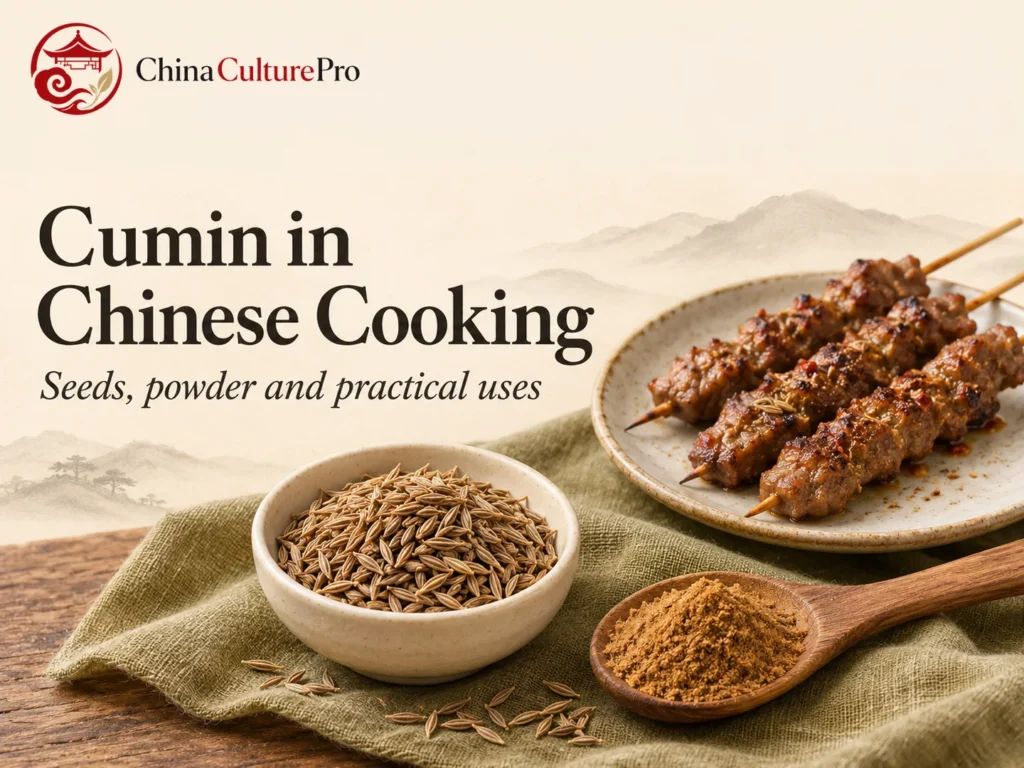

Quick Answer: Where Does Cumin Fit in Chinese Food?
Cumin, called ziran (孜然, zīrán) in Chinese, brings a warm, earthy, pungent aroma to food. It is especially familiar in Xinjiang-style lamb skewers and cumin-seasoned meat dishes.[1][3]
- Whole seeds add visible spice and texture; crushing them makes a coarse seasoning.[2]
- Ground cumin spreads readily through rubs and spice mixtures, including those used on lamb.[2][4]
- Chili, salt and other seasonings may accompany cumin, but they are separate ingredients.[3][4]
Cumin is one spice, not a ready-made Chinese barbecue blend or a seasoning required in every Chinese dish.

If a Chinese recipe calls for cumin, check whether it wants seeds, powder or a prepared mix before you reach for the jar. That small choice changes the texture and how you season the rest of the dish.
Recognize Cumin’s Flavor and Regional Role
The slender, ridged brown seeds sold as cumin are the dried fruits of Cuminum cyminum. Their strong, earthy fragrance is different from the sweeter, licorice-like scent of fennel.[1][7]
In Xinjiang’s food culture, cumin has a particularly recognizable relationship with lamb. Uyghur-style skewers are a clear example: cumin powder joins chili powder and salt on grilled meat. That regional association is useful context, without treating one seasoning mixture as a description of all Chinese cuisine.[3]
Choose Seeds, Ground Cumin or a Seasoning Blend
| Форма | Что даёт | When it is useful |
|---|---|---|
| Whole or coarsely crushed seeds | Visible flecks and a more noticeable seed texture | Toasting, crushing fresh or coating grilled food |
| Ground cumin | Fine spice that distributes through a mixture | Rubs, marinades and cumin-seasoned stir-fries |
| Cumin-based seasoning blend | Cumin plus the blend’s other ingredients | A convenient prepared seasoning when its salt and chili suit the dish |
Whole and ground cumin are forms of the same spice. A blend changes more than texture: read its ingredients before adding separate salt or chili. Recipes for cumin lamb can combine cumin powder with chili and Sichuan pepper, while a skewer seasoning may be simpler. Follow the mixture you intend to make rather than treating every cumin-labeled packet as plain cumin.[2][3][4]
You can also use both forms: cumin potatoes may fry whole seeds with the aromatics, then add ground cumin with the potatoes and other seasonings.[9]
Chinese Dishes That Put Cumin to Work
- Lamb skewers: Cumin makes a fragrant coating alongside salt and chili. Ground cumin is an established option, not merely a substitute for whole seeds.[3]
- Cumin lamb stir-fry: Dry spices coat the meat and aromatics rather than relying on a thick stir-fry sauce. Adding the spice mixture near the finish is one effective approach.[4]
- Baked breads and buns: Xinjiang examples include cumin with onion in flatbread and cumin powder in a lamb-and-onion bun filling.[5]
- Griddled tofu and potatoes: A cumin-and-chili seasoning can give browned tofu or pan-fried potatoes a street-food-style finish. Griddled tofu offers a connection to the broader food scene in Xi’an.[6][9]
These examples show why cumin need not be reserved for meat. On mild ingredients such as tofu or potato, it becomes a prominent part of the dish’s flavor rather than a background spice.
Toast and Crush Whole Cumin
- Warm the seeds. Put whole cumin in a dry pan and stir over controlled heat until fragrant; watch closely rather than leaving the pan unattended.[1][2]
- Remove from the heat. Transfer the seeds out of the hot pan so they stop toasting, and let them cool before grinding.[1]
- Crush to suit the dish. Use a mortar and pestle for a coarse texture, or a spice grinder for a finer powder.[2]
This is an optional preparation for whole seeds, not a requirement to toast every purchased powder. Ground-spice recipes can add cumin with the finishing seasonings instead.[4]
Buying and Storing Cumin
Look for plain cumin seeds or ground cumin in the spice aisle; Asian and Indian groceries are also useful sources of whole seeds. Buy a seasoning blend only when you want its additional ingredients.[1]
Keep cumin tightly closed, away from heat, moisture and direct sunlight. A cupboard away from the stove is better than a warm shelf above it. Use a dry spoon and avoid shaking the jar directly over a steaming pan. Follow the product’s best-by guidance; aroma fades with storage, especially after grinding.[1][8]
FAQs About Cumin in Chinese Cooking
Is cumin the same as fennel?
No. Cumin is Cuminum cyminum; fennel is Foeniculum vulgare. Fennel’s sweeter, licorice-like aroma will change a cumin-led dish.[7]
Can ground cumin replace whole cumin seeds?
Often, when the main purpose is flavor, but it will not supply the same seed texture. Use the form and amount specified by the recipe rather than assuming every whole-to-ground swap is identical.[2]
Does cumin make a dish hot?
Its warmth and pungency are different from chili heat. In cumin lamb and skewer seasonings, chili is a separate component that you can consider independently.[1][3][4]
Can cumin work in meat-free Chinese dishes?
Yes. Griddled tofu and cumin potatoes are practical examples. Check the rest of the seasonings if you need the finished dish to be vegetarian or vegan.[6][9]
Источники
[1] The Woks of Life. Cumin Seeds
[2] McCormick Science Institute. Кумин
[3] Ili Kazakh Autonomous Prefecture Government. Grilled Lamb Skewers
[4] Omnivore’s Cookbook. Xinjiang Cumin Lamb
[5] Xinjiang Department of Culture and Tourism. Flavors of Xinjiang
[6] The Woks of Life. Spicy Griddled Tofu Steaks
[7] Beijing Science Center. Cumin and Other Spices Called Hui Xiang
[8] McCormick. Frequently Asked Questions
[9] The Woks of Life. Cumin Potatoes