


Quick Answer: What Is Chinese Shrimp Paste?
Chinese shrimp paste(虾酱,xiājiàng)is a concentrated condiment made from salted, fermented shrimp. English labels may call it shrimp paste or shrimp sauce, even when the contents are thick rather than pourable. It contributes a strongly savory seafood flavor to other ingredients. [1][4]
- Base: A simple product may list fermented shrimp and salt. [1]
- Form: Soft jarred pastes and firmer blocks exist; cooked mixed sauces are another product category. [2][3][5]
- Use: It can season vegetables, clay-pot dishes or a marinade used before steaming. [4][6][7]
- Label: Added chili, oil and other ingredients can change the finished condiment. [5]
A jar of cooking paste and a sauce explicitly labeled ready to eat should not be treated as identical.
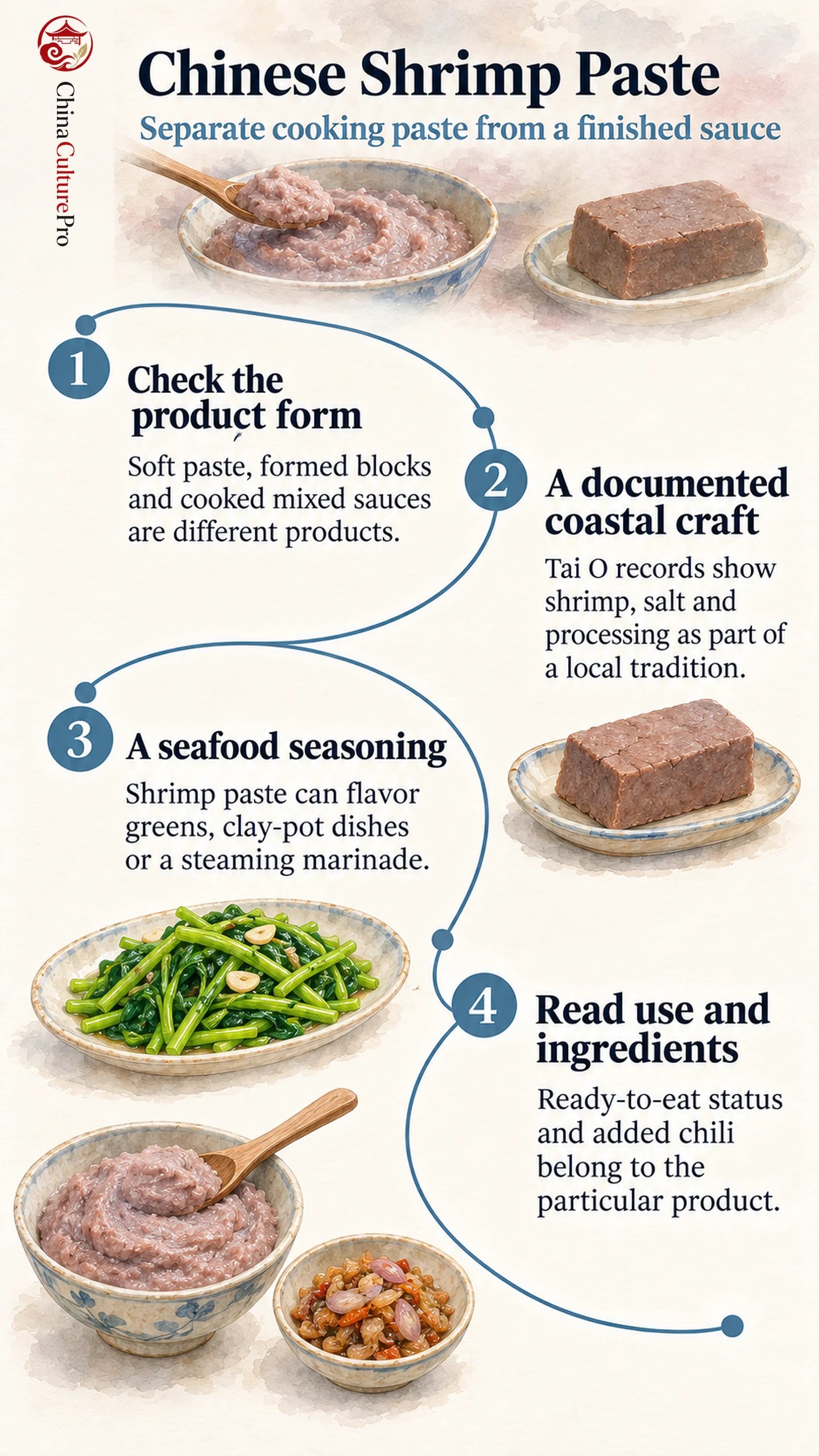
A spoonful of grayish-pink paste can give a vegetable dish a noticeable seafood flavor without leaving any recognizable shrimp on the plate. Another jar may contain a cooked relish with dried shrimp and chili oil. The similar English names conceal important differences in preparation and use.
Jarred Paste, Shrimp Blocks and Cooked Mixed Sauces
Start with the product’s physical form and intended use. These categories help identify what you are buying, but do not establish one fixed color, salt level or aroma for every producer. [1][4][5]
| Product form | Главное отличие |
|---|---|
| Jarred fermented paste | A soft or thick cooking condiment; a simple formula can consist of fermented shrimp and salt. |
| Shrimp paste blocks(虾膏,xiāgāo) | A firmer formed product, documented alongside shrimp paste in coastal food-making traditions. |
| Cooked mixed shrimp sauce | A finished seasoned preparation that may include dried shrimp, shallots, sugar, chili oil and other oil. |
One cooked sauce from Tai O is explicitly described as requiring no further cooking and suitable for mixing with rice, noodles or other foods. It includes traditional shrimp paste as one ingredient, alongside dried shrimp and additional seasonings. That makes it different from a basic fermented-shrimp paste with the same broad English description. [5]
A formed block and a soft jarred paste can differ in texture and how they combine with other ingredients. Confirm the recipe’s intended form and the product directions before assuming they behave identically. [3][4]
Salt, Fermentation and a Coastal Food-Making Craft
Crushing small shrimp, adding salt and processing the mixture are part of documented shrimp-paste making. In Tai O, descriptions of the local craft include breaking down silver shrimp and sunning the material to produce cooking ingredients. This places the condiment within a wider group of Chinese fermented foods. [2]
The recorded craft includes active handling as well as processing the salted shrimp. Field reporting from one family business records repeated stirring, forming blocks and packing products, together with adjustments to tools over successive generations. These are observations of a specific working craft, not a universal production schedule. [3]
Modern production can also differ. One commercial fermented-shrimp product describes drying in an indoor sunshine room. Outdoor sunning is therefore a documented method, not a requirement that every modern jar must meet. [1]
Hong Kong’s heritage materials identify shrimp-paste and block-making as a local food craft. The Cantonese shrimp paste tradition is a useful regional focus, without implying that all Chinese or Southeast Asian shrimp pastes share one recipe or origin story. [2][4]
How Shrimp Paste Is Used in Chinese Cooking
Shrimp paste acts as a seasoning that spreads through the rest of a dish. In Cantonese cooking, documented household examples include clay-pot preparations with eggplant or tofu. The fermented seafood flavor becomes part of the dish’s sauce rather than remaining a separate seafood portion. [4]
A concrete vegetable example uses water spinach(空心菜,kōngxīncài). In one water spinach stir-fry, shrimp paste and garlic flavor the oil before the greens and other seasonings are added. Dried chili supplies a separate hot note, while chicken powder and wine are additional ingredients in that preparation. A plate of greens can therefore contain more than plant ingredients. [6]
Steaming offers another use. One chicken preparation mixes shrimp sauce with wine, oil, sugar and cornstarch, then combines it with chicken, bean vermicelli, vegetables and tofu puffs before steaming. The shrimp ingredient seasons a chicken dish; it does not turn the dish into a plate of whole shrimp. [7]
These examples also explain why shrimp paste is not always a finishing sauce. Some products enter the food before heating, while a separately cooked mixed condiment may be intended for direct serving. [5][6][7]
Choosing a Product and Checking Ingredients
Read three details: the named product, whether it is intended for cooking or ready to eat, and its complete ingredients. If a recipe specifies a fine jarred shrimp paste, do not automatically replace it with a firmer block or a cooked chili relish. Their saltiness, texture and additional seasonings can differ. [1][4][5]
For flavor, distinguish fermentation from added heat. A plain product can contain shrimp and salt, while a mixed cooked sauce can contain chili oil. Strong fermented aroma and chili heat are separate properties, so the name “shrimp paste” alone does not tell you the spice level. [1][5]
Shrimp is a crustacean shellfish allergen. [8] One product also declares naturally present sulphites. Check the actual label, especially when a sauce has several ingredients; a short traditional formula cannot establish the contents of every jar or finished dish. [1][5]
For vegetarian ordering, ask about the seasoning even if the main ingredient is a vegetable. The water-spinach preparation above contains both shrimp paste and chicken powder. Removing visible shrimp would not remove seafood already incorporated into a paste or sauce. [6]
FAQs About Chinese Shrimp Paste
Is Chinese Shrimp Paste the Same as Malaysian Belacan?
They are related fermented-shrimp condiments, but the names refer to different culinary contexts. Malaysian belacan commonly comes in firm blocks; Chinese jarred pastes may have a different texture and seasoning strength. [4]
Can Every Shrimp Paste Be Eaten Straight from the Jar?
No. Some are cooking ingredients, while some cooked mixed sauces are explicitly labeled ready to eat. Follow the particular product’s directions rather than assuming that fermentation means it is a table sauce. [1][5][7]
Can a Vegetable Dish with Shrimp Paste Be Vegetarian?
It contains shrimp even if no whole shrimp is visible. Other seasonings may also include animal ingredients, as in a water-spinach preparation that adds chicken powder. [6]
Источники
[1] Lee Kum Kee. Fine Shrimp Sauce: original product formula
[2] Hong Kong Intangible Cultural Heritage Office. ICH Highlight Tours: Islands District (2025), shrimp paste craft
[3] Jasmine Lam, Varsity at the Chinese University of Hong Kong. Keeping the Tradition Alive: Shrimp Paste Making in Tai O (2023)
[4] Leung family. Shrimp Paste and Shrimp Sauce: original kitchen guide
[5] Cooking Mart, Tai O Yick Cheong cooked sauce. Cooked Shrimp Sauce: original own-made product description
[6] Lee Kum Kee. Water spinach stir-fried with shrimp paste: original preparation
[7] Lee Kum Kee. Steamed Chicken with Shrimp Sauce: original preparation
[8] US Food and Drug Administration. What is a major food allergen?