


Quick Answer: What Are Chinese Preserved Vegetables?
Chinese preserved vegetables are a family of salted, fermented, dried or otherwise seasoned vegetables used as ingredients and accompaniments. Three common names describe substantially different products:
- Suancai: Suancai(酸菜,suāncài)is sour preserved leafy cabbage or mustard greens.
- Zha cai: Zha cai(榨菜,zhàcài)is a firm, crunchy preserved mustard stem.
- Mei gan cai: Mei gan cai(梅干菜,méi gān cài)is a dried preserved leafy vegetable, often mustard greens.
They are not interchangeable simply because an English package calls each one “preserved vegetable.” Check the plant part, moisture, seasoning and intended cooking use.
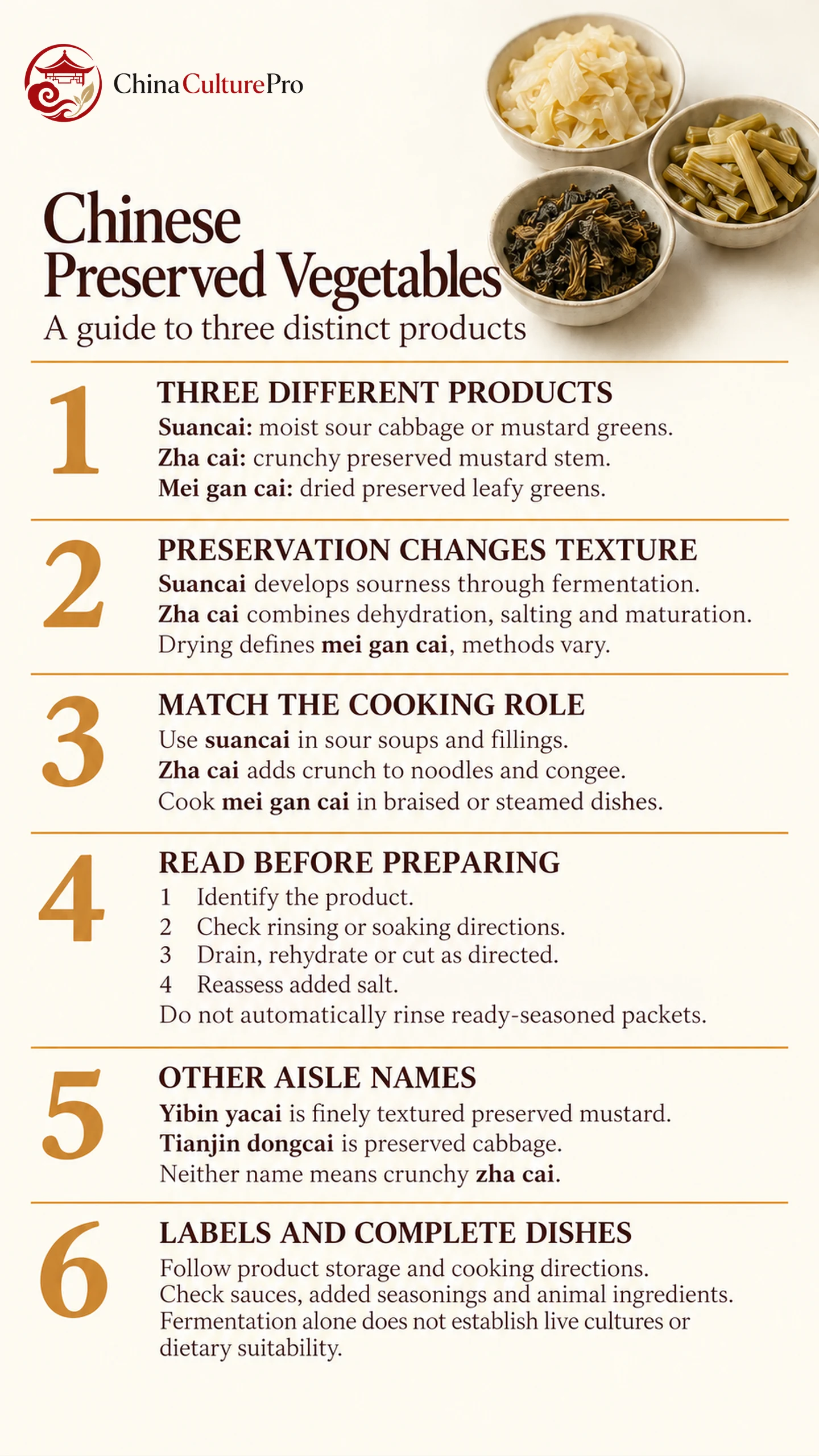
A packet of crunchy mustard strips, a bag of sour cabbage and a bundle of dark dried greens can occupy the same grocery aisle. Their jobs in a meal differ: one adds crunch, another sourness, and another a concentrated savory flavor that develops during cooking.
Three Preserved Vegetables Compared
The Chinese name is a better starting point than a broad English translation. Even within one name, regional ingredients and retail preparation vary.
| Тип | Ingredient and texture | Typical cooking role |
|---|---|---|
| Suancai | Napa cabbage in northeastern versions; mustard greens in many southern versions. Moist leaves and ribs with a sour taste.[1][4] | Soups, stews, dumpling fillings and stir-fries. |
| Zha cai | The swollen above-ground stem of a mustard plant, rather than its root. Dense and crunchy, sold whole, sliced or shredded.[2] | A small accompaniment or crunchy ingredient in noodles and other dishes. |
| Mei gan cai | Dried preserved greens, commonly mustard varieties. Dark, shriveled leaves and stems soften during preparation.[3] | Braised or steamed dishes, where greens absorb cooking juices. |
How Preservation Changes the Vegetable
Suancai develops its characteristic sourness through vegetable fermentation. Northeastern production uses napa cabbage, while Taiwanese Hakka traditions use mustard greens. The shared name describes sour preserved greens, not a single vegetable species or one nationwide formula.[1][4]
Traditional Fuling zha cai processing combines dehydration, salting, trimming, washing, seasoning and maturation. Pressing and moisture removal help explain its compact texture; chili is a seasoning choice, not the defining plant ingredient. Current products include both plain and spicy versions.[2][7]
For mei gan cai, drying is central. Shaoxing accounts describe salted greens followed by drying, with further steaming in some preparations. Hakka preserved mustard traditions also combine salting, fermentation and drying. These overlapping processes belong within Chinese food preservation, but they do not make every dried vegetable the same product.[3][4]
Using Suancai, Zha Cai and Mei Gan Cai
Choose suancai when the dish needs substantial leafy vegetable and a sour broth or filling. Its moist leaves and ribs can become a substantial part of the dish; finely cut portions can also be used as accompaniments. The northern and mustard-green versions can produce noticeably different results even when a recipe uses the same English name.
Zha cai works where concentrated seasoning and a firm bite are welcome. Ready-seasoned strips can accompany Chinese congee; chopped or shredded stems also appear in pork noodle soup. They are a familiar optional filling in savory cifantuan breakfast rolls.[6]
Mei gan cai is especially associated with pork belly, but its role extends to steamed tofu, fish, chicken and other cooked dishes. The dried greens take up fat and liquid while lending a deep preserved-vegetable aroma. They are an ingredient to cook with, rather than a direct replacement for crisp packet pickles.[3][4]
Preparing the Product You Actually Bought
Preparation should follow the actual package and recipe. A ready-seasoned condiment and an unprepared dried ingredient need different treatment.
- Identify the product: find its Chinese name and check whether it is dried, whole and salty, or already seasoned for eating.
- Read preparation instructions: rinse or soak only when the product or recipe calls for it. Rinsing a finished condiment removes its intended seasoning.
- Prepare for the dish: drain wet greens; clean and rehydrate dried greens as directed; slice whole stems or use ready-cut strips.
- Reassess seasoning during cooking: preserved vegetables contribute salt, and sour greens may also alter the balance of the liquid. Add other salty sauces cautiously.
Other Names in the Pickle Aisle
Yacai(芽菜,yácài), especially finely chopped preserved mustard from Yibin, is a separate preserved ingredient. Its small, dark pieces season dishes such as dan dan noodles and dry-fried green beans. It should not be confused with the larger, crunchy pieces of zha cai.[5][6]
Dongcai(冬菜,dōngcài)literally means winter vegetable; Tianjin preserved vegetable is a salted, dried and fermented cabbage product used in soups, steamed dishes and stir-fries. Read the regional product name rather than treating “winter vegetable” as a universal recipe.[5]
Comparing these products with fresh Chinese vegetables helps separate the original plant from the texture and flavor created by preservation.
Labels, Storage and Dietary Checks
Check whether the product is ready to eat or requires cooking, and follow its unopened and opened storage directions. A sealed packet that belongs on a shop shelf does not establish how its contents should be kept after opening. Use clean utensils and keep the packaging instructions.
The vegetable itself may be plant-based, but added oils, sauces and flavorings determine the finished product. Prepared dishes can contain pork or seafood. Check wheat-containing soy sauce and other listed allergens when relevant, rather than inferring dietary suitability from the vegetable name.
Fermentation also does not guarantee a live-culture product: later processing differs. This guide treats fermented foods as a culinary category and makes no probiotic claim.
FAQs About Chinese Preserved Vegetables
Are Chinese Preserved Vegetables All Fermented?
No. Preservation includes salting, drying and other treatments, often combined. Many traditional examples involve fermentation, but an English “pickled” label alone does not identify the process.
Can You Substitute One Type for Another?
Only with a change in the dish. Sour leafy suancai, crunchy stem zha cai and dried mei gan cai contribute different moisture, texture and flavor; adjust the whole preparation rather than swapping equal amounts.
Is Zha Cai Always Spicy?
No. Both non-spicy and chili-seasoned versions are sold. Choose by the package description rather than assuming all mustard-stem pickles contain chili.
Are Preserved Vegetables Vegetarian?
Some are. Check added seasonings and the complete dish: a plant-based preserved vegetable may be cooked with meat, seafood or animal-based stock.
Источники
[1] Xunke County Government. Napa cabbage processing in Hongfeng Village
[2] Chongqing Archives. Fuling zha cai: raw material and traditional processing
[3] Shaoxing Association for Science and Technology. The savory flavor of dried preserved greens
[4] Hakka Affairs Council. Stewed pork belly with preserved vegetables
[5] The Woks of Life. Dried, cured and pickled ingredients
[6] The Mala Market. Cooking with yacai and zhacai
[7] Fuling Zhacai Group. Product range: plain and spicy preserved mustard stems