

Quick Answer: What Is Chee Hou Sauce?
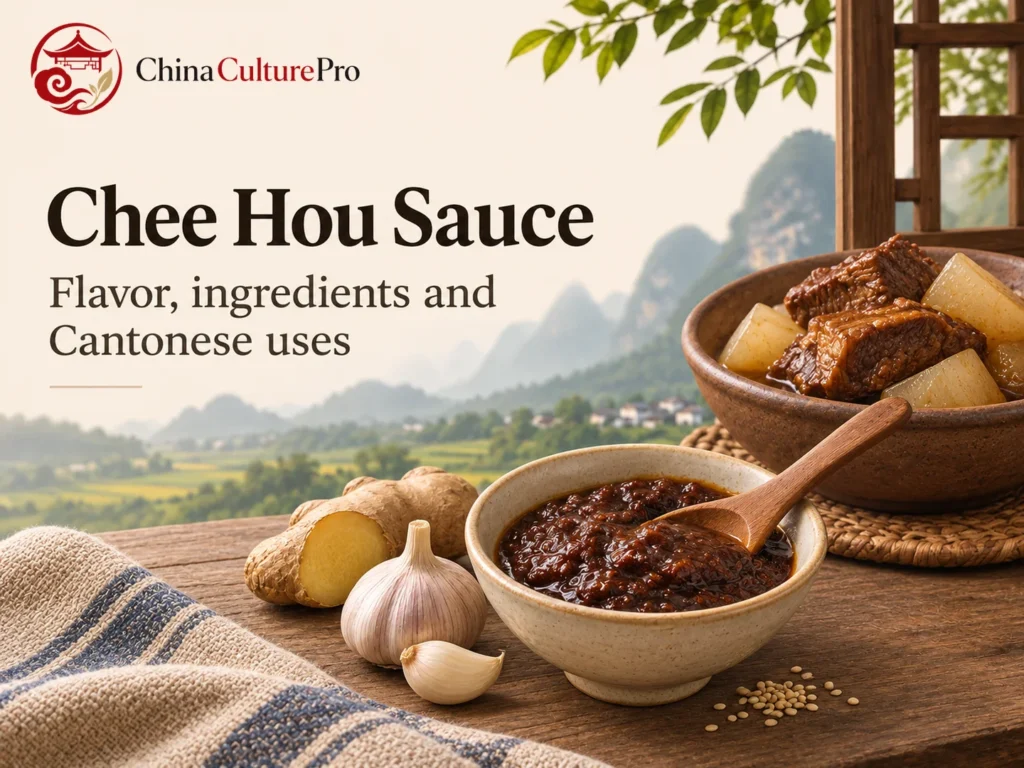
Chee Hou sauce(柱侯酱,zhùhóu jiàng), also sold as Chu Hou paste, is a thick Chinese cooking sauce associated with Cantonese braises. It combines a fermented soybean base with sweetness, aromatics and other seasonings. [3][4]
- Flavor: Sweet, salty and savory, with aromatic details that vary by formulation.
- Ingredients: Soybean paste, sugar, sesame, garlic and other components appear in documented products.
- Uses: Beef and root-vegetable braises are familiar applications; other dishes use it too.
- Identity: Similar-looking brown sauces are not automatically the same condiment.
Treat the jar as a composite seasoning, not as a plain bean paste or a universal finished braising liquid. Ingredients differ between products, so the name alone cannot establish dietary suitability. [7]

A spoonful of dark paste can give a beef-and-radish braise much of its savory character. Chee Hou sauce supplies a prepared seasoning base, while the cook still shapes the finished dish. Understanding its place in Cantonese cuisine begins with distinguishing the jar from the meal.
Inside the Jar: A Fermented Base and Other Ingredients
The soybean base is one layer of the sauce. Sugar, aromatics, sesame and other ingredients add further flavor and body. It belongs alongside other Chinese fermented foods, but the final jar is a formulated sauce rather than simply fermented beans. [1][3]
Actual labels show why one ingredient list cannot represent the category. One formulation includes fermented bean curd(腐乳,fǔrǔ), ginger and sesame paste. Another includes salted plum, salted lemon and rice vinegar alongside its soybean and sesame ingredients. These examples establish variation, not compulsory ingredients for every jar. [1][2]
A third producer describes a brewed bean base with mixed spices for braised meats. The useful common idea is a seasoned cooking base; a precise flavor profile still depends on the product. [3]
What Chee Hou Sauce Tastes Like
Expect a combination of sweetness and salty savoriness, with garlic, sesame, fermented or spiced notes depending on the recipe. A formulation containing salted fruit and vinegar may have a different aromatic balance from one using fermented bean curd. That does not create a universal ranking of better and worse versions. [2][7]
The thick paste also differs from the liquid surrounding cooked meat. In a stew, it becomes one component of a larger sauce, along with the dish’s liquids and other ingredients. The final consistency comes from the preparation rather than from the jar’s thickness alone. [4]
Flavor strength is therefore a reason to check the recipe’s overall seasoning. Additional sauces or salty ingredients are part of the same dish, not separate from its final taste.
Braises, Marinades and Stir Fries
Braised beef with turnips or radish is a familiar Cantonese application. The sauce seasons both the beef and the root vegetable, which contribute different textures. This association is well documented, but it is not the condiment’s only use. [2][4]
A published brisket preparation uses the paste as a flavor base and finishes with a stew-like consistency. Another documented dish combines beef strips, peppers and onion in a stir-fry, with the paste mixed into a looser sauce. These are different cooking jobs for the same kind of condiment. [4][5]
The distinction also explains why paste quantity alone does not define the result. Ingredients, added liquid and the cooking method work together.
Chee Hou Sauce vs Hoisin Sauce
Hoisin sauce(海鲜酱,hǎixiān jiàng)can share a sweet, savory soybean character with Chee Hou sauce. The overlap does not make the two names synonyms. Original ingredient records show distinct formulations, and their typical uses overlap without being identical. [6][7]
| Соус | Важное различие | Cooking implication |
|---|---|---|
| Chee Hou sauce | A composite seasoning particularly associated with Cantonese braises | Choose it for the flavor expected in a Chu Hou style dish |
| Hoisin sauce | A distinct sweet, savory sauce also used for marinades, stir-fries and dipping | Substitution changes the dish’s seasoning balance |
Hoisin can be part of an adaptation, but it is not an exact replacement by definition. Compare the actual products and the role they play before assuming the result will taste the same. [6][7]
The oyster sauce and hoisin comparison covers another easily confused pair. Similarly, soy sauce is a separate condiment rather than a thinner version of this paste.
Choosing a Jar and Checking the Whole Dish
Check both the English name and the Chinese label, then read the current ingredient list. Chee Hou, Che Hau and Chu Hou are spellings used for this sauce family. Similar names do not guarantee identical recipes. [2]
Soybeans, wheat and sesame appear in the product records examined here. Anyone avoiding these ingredients needs to check the particular package rather than rely on the sauce’s color or a brief shelf description. [1][2]
Also distinguish the sauce from its application. The dietary status of the sauce does not establish that of the finished dish: check the meat, stock and additional seasonings. Ask about the full preparation when ordering, including additional sauces and broth.
FAQs About Chee Hou Sauce
Are Chee Hou Sauce and Chu Hou Paste the Same Thing?
They are alternative English names for this sauce family. The spelling difference alone does not indicate a different ingredient category, though formulations vary. [2]
Is Chee Hou Sauce Always Spicy?
No universal heat level follows from the name. Check the actual formulation and any chili added to the finished dish.
Is Chee Hou Sauce Vegetarian or Gluten Free?
Check the individual label and the whole dish. Documented products contain soybean, wheat and sesame ingredients; a meat or stock-based preparation adds further considerations. [1]
Источники
[1] Lee Kum Kee. Chu Hou Paste: US Product Ingredient Record
[2] Koon Chun Sauce Factory. Chee Hou Sauce: Ingredients and Cantonese Uses
[3] Amoy Foods. Chu Hou Sauce: Product Characteristics
[4] Lee Kum Kee. Chu Hou Paste Beef Stew Recipe for Brisket
[5] Lee Kum Kee. Stir Fried Beef in Chu Hou Paste
[6] Lee Kum Kee. Hoisin Sauce: US Product Ingredient Record
[7] Judy Leung. Chee Hou Sauce: Original Ingredient Guide