


Quick Answer: What Is Bitter Melon?
Bitter melon(苦瓜,kǔguā), also called bitter gourd, is the fruit of Momordica charantia, usually harvested immature and cooked as a vegetable. Its characteristic flavor is bitter rather than sweet like a dessert melon. [1][2]
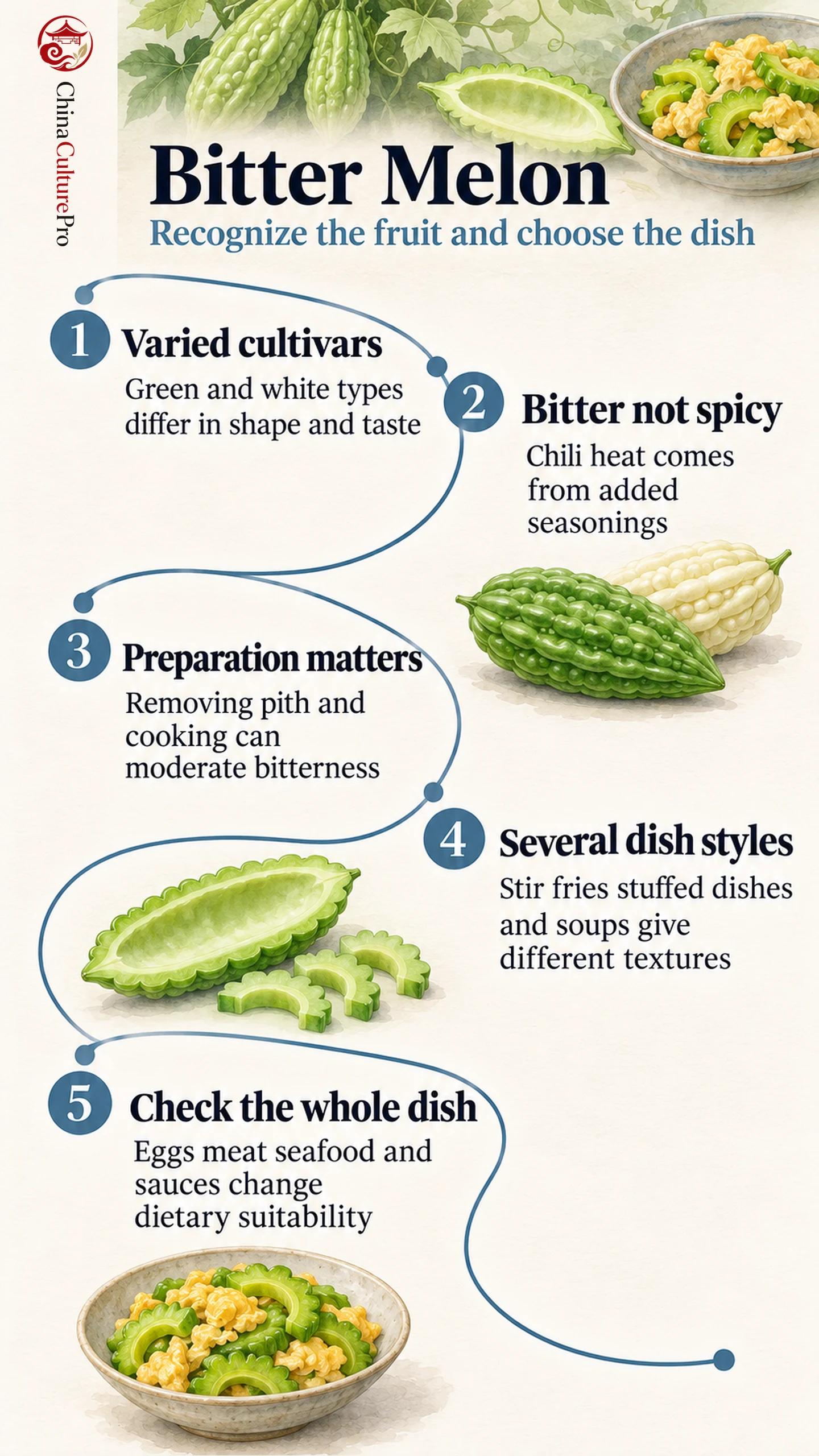
- Appearance: Cultivars range from green to pale white, with ridged or knobbly surfaces.
- Texture: Prepared flesh can retain a crisp bite or soften in a braise or soup.
- Preparation: Cooks commonly remove the seeds and inner pith before slicing or stuffing.
- Chinese uses: Stir-fries, egg dishes, stuffed preparations and soups offer different ways to enjoy it.
Bitter does not mean spicy, and no single color or preparation method predicts exactly how every fruit will taste. [3][7]
A spoonful of bitter melon can contrast sharply with soft eggs, savory black beans or a rich broth. The attraction is often that contrast, rather than an attempt to disguise the vegetable completely. Among Chinese vegetables, its taste is especially distinctive.
Recognizing Green, White and Other Bitter Melons
Chinese market types often have broader, rounded ridges and bumps, while types associated with Indian markets tend to have more pointed projections. These are useful market descriptions, not a claim that only two cultivars exist or that each belongs exclusively to one country’s cooking. [1][2]
Taiwanese agricultural guidance, for example, distinguishes several white and green cultivars. White jade bitter melon(白玉苦瓜,báiyù kǔguā)is one pale form; other locally named varieties differ in size, surface and flavor. White types are described as generally milder within that comparison, not guaranteed to be free of bitterness. [3]
Pale white skin can be a cultivar trait. Orange coloring and splitting, by contrast, are signs of later ripening in the plant’s fruit cycle. Do not confuse a white variety with an overripe green one. [2]
What Bitter Melon Tastes Like
Expect a clear bitter taste with a fresh vegetable character. It can provide contrast to richer ingredients rather than the sweetness associated with melon slices. In a stir-fry with eggs, the soft, rich egg and the vegetable’s firmer bite offer different sensations in the same mouthful. [7]
Bitterness is one taste category discussed within the Chinese five flavors. Chili heat is a different sensation: a dish can be bitter without any chili, or both bitter and hot if the cook adds it.
Variety and preparation can moderate bitterness, without making every plate taste identical. [3]
Preparation Changes the Bite and Bitterness
A common starting point is to wash the fruit, split it lengthwise and scoop away the seeds and spongy interior. The remaining flesh can become thin slices for a stir-fry or larger sections for stuffing. Skin-on preparation preserves the characteristic outer shape. [1][7]
Salting and rinsing is one approach used to moderate the bitter taste. Blanching is another: agricultural guidance describes removing the inner membrane and blanching before further preparation. These are choices about taste and texture, not a universal requirement to perform every treatment on every fruit. [3][8]
Cooking changes texture too. Slices can retain a distinct bite, while braised or soup-cooked pieces may become softer. The cooking method should follow the dish, not a rule that bitterness must always be eliminated.
How Chinese Cooks Use Bitter Melon
Eggs offer a familiar contrast: tender scrambled curds accompany sliced melon without changing its identity. Garlic and meat are other established partners. [1][7]
Douchi(豆豉,dòuchǐ), fermented black soybeans, contributes salty, fermented savoriness. It is a seasoning partner rather than a reason to call the bitter melon itself fermented. [1]
In Cantonese cooking, bitter melon also appears in soups with soybeans and pork ribs. Stuffed versions hold a meat filling inside sections of the vegetable. Here the filling, broth and flesh perform separate jobs, and the finished texture differs from a plate of stir-fried slices. [5]
Seafood is another option. One documented preparation combines melon with dried shrimp and soy, oyster and sesame seasonings. That is a specific example, not a compulsory set of ingredients for all bitter melon dishes. [6]
Choosing a Dish and Checking Other Ingredients
For buying fresh produce, agricultural guidance favors plump, intact fruit with a fresh stalk and no signs of damage, insect scarring or excessive ripening. Compare a fruit with the expected appearance of its cultivar rather than treating every pale specimen as old. [3][4]
At a restaurant, ask about both texture and partners. Do you want firm slices with eggs, a softer stuffed preparation or a broth-based dish? If bitterness is unfamiliar, ask whether the kitchen can moderate it, while allowing for the choices the dish supports.
Also check the whole recipe. A green vegetable dish may include dried shrimp, pork, eggs or an animal-based sauce. An egg version may also include oyster sauce, while the eggs themselves already exclude it from a vegan meal. [6][7]
For dietary restrictions, ask about the actual sauce ingredients and preparation. The separate guide to oyster and hoisin sauces explains why familiar sauce names should not be treated as interchangeable.
FAQs About Bitter Melon
Is Bitter Melon Spicy?
Not inherently. Its defining taste is bitterness. Chili or other hot seasonings can make a particular preparation spicy, but they are added ingredients.
Can You Remove All the Bitterness?
You can moderate it through cultivar choice and preparation, but complete removal is not a dependable promise. Many dishes retain some bitterness as part of their character. [3][8]
Do You Need to Peel Bitter Melon?
Common Chinese preparations leave the skin on while removing the seeds and inner pith. The flesh is then sliced or cut to suit the dish. [7]
Источники
[1] University of Florida IFAS Extension. Bitter Melon: An Asian Vegetable Expanding in Florida
[2] National Parks Board. Bitter Gourd, GardeningSG
[3] Ministry of Agriculture. Bitter Melon Selection and Common Taiwan Varieties
[4] Ministry of Agriculture. Points to Check When Selecting Bitter Melon
[5] Zhou Ying, Chinese CDC Nutrition Institute. Food Traditions at Great Heat
[6] Lee Kum Kee. Dried Red Shrimp with Bitter Melon
[7] Sarah Leung. Bitter Melon with Eggs
[8] National Parks Board. Momordica charantia Plant Record