

Quick Answer: What Is Song Brocade?
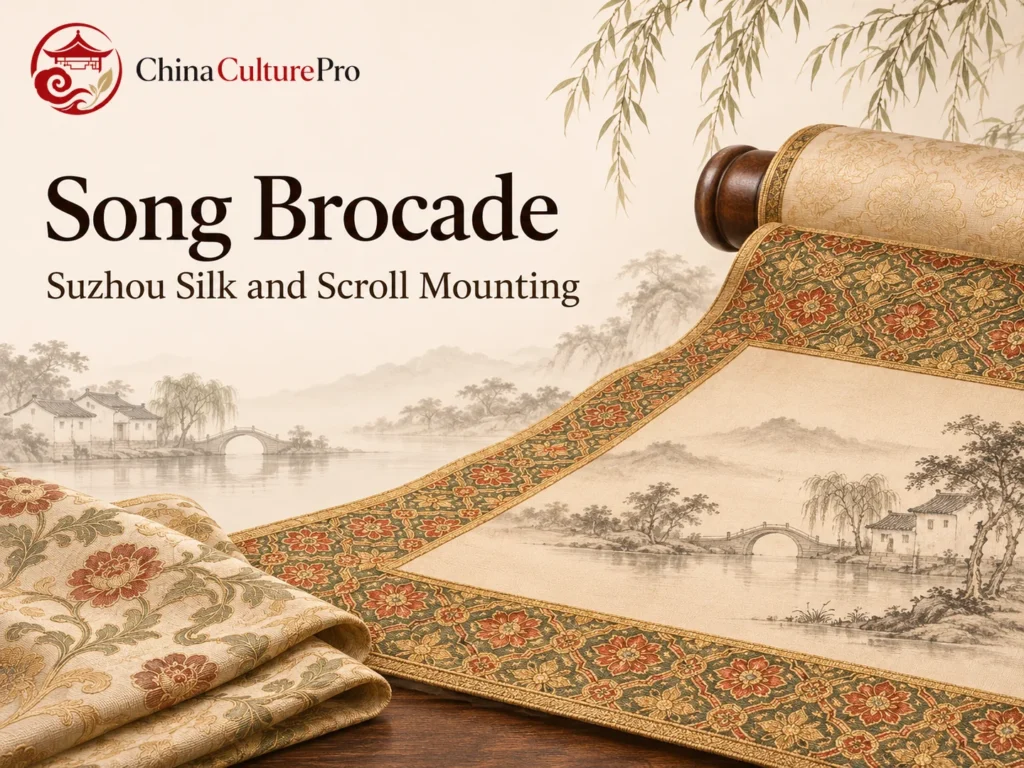
Song brocade (宋锦, Sòngjǐn) is a patterned silk weaving tradition associated with Suzhou. Museum descriptions use the name for Song-style brocades made in later periods, including fabrics from the Ming and Qing dynasties. Threads running lengthwise and crosswise can work together to create a design in the weave.[1][2][3]
- Material: Traditional examples use silk, with differences in yarn and weight for different purposes.[1][2]
- Structure: In one documented structure, two sets of warp threads contribute to the ground and to binding the weft.[2]
- Use: Makers supplied fabrics for clothing, scroll mounts, furnishings and cases.[1][3]
Read the term as a textile name. Use the object record to establish a date.
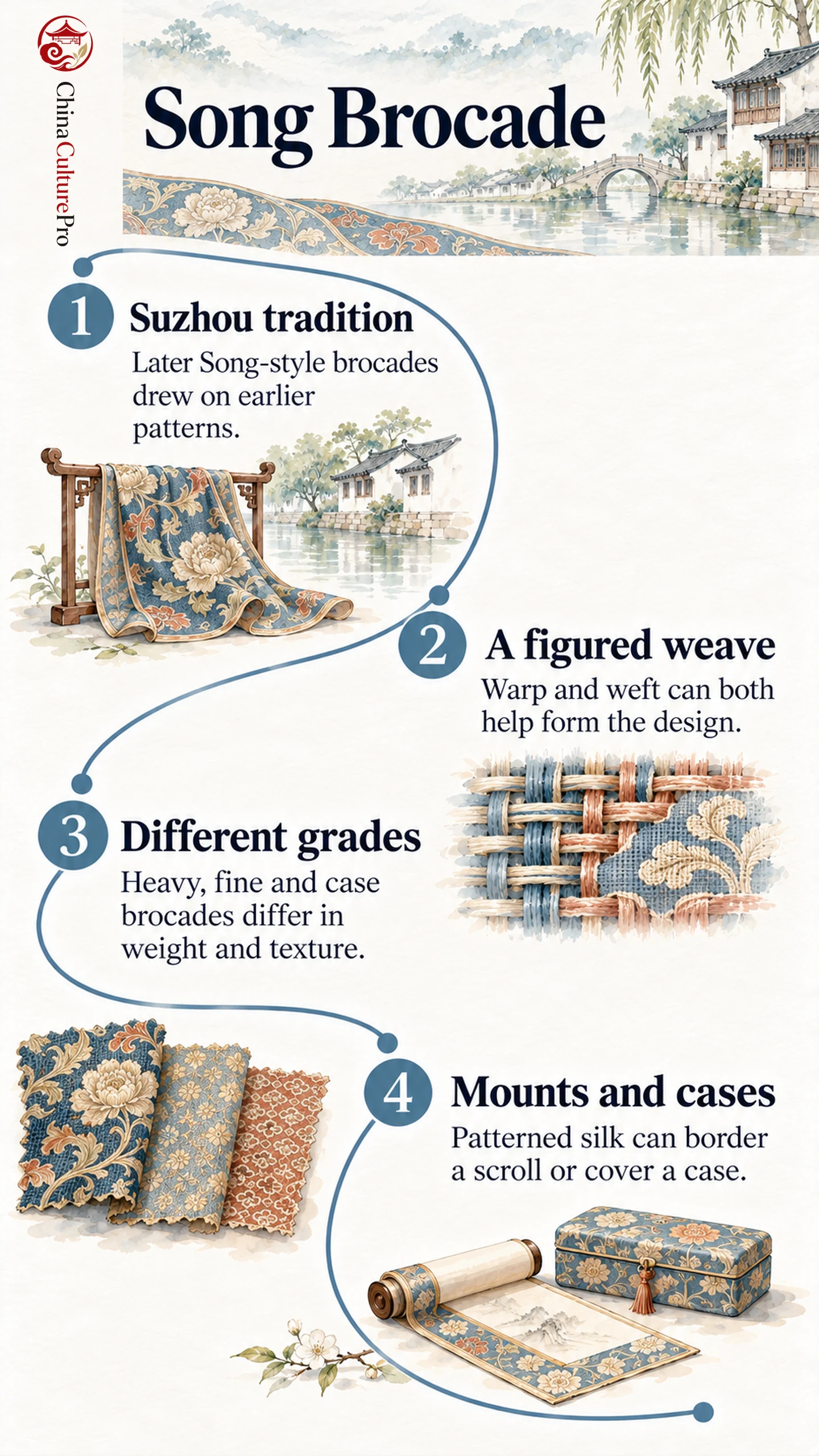
The patterned silk at the edge of a painting can be part of its mount, while the painting itself occupies a separate surface. The border is one of the places to look for Song brocade. A broad hanging scroll and a small box call for different kinds of fabric.
Song-Style Silk and Its Place in Suzhou
The national heritage entry traces Suzhou brocade weaving through the city’s long history as a silk center. The China National Silk Museum distinguishes Song-period fabrics from the later cloths commonly called Song brocade today. Its account distinguishes later Suzhou cloth that draws on Song patterns from earlier examples that use weft-patterned structures of a Liao type. The pattern and the way the cloth was built can have different histories.[1][3]
The distinction matters when reading a museum label. Song-style describes the textile tradition or the model used. A date of manufacture depends on the object and its evidence. A brocade may also have been added as a mount at a different time from the artwork, which is one reason to read the object and its presentation separately.[1][3]
How Warp and Weft Form the Design
In weaving, the warp runs along the length of the cloth and the weft crosses it. The China National Silk Museum describes a Song-style structure with a three-end twill, two sets of warp and three sets of weft. The ground warp contributes to the background. A second, finer warp binds the visible runs of weft so the design is held into the cloth.[2]
The warp and weft can both contribute visible color. A binding warp keeps longer runs of weft in place without covering the whole figure. The result is part of the woven structure. The sheen on a piece of Chinese silk satin comes from another way of arranging and exposing threads. A silk textile can be both lustrous and figured. Follow the interlacings, or look for a weave description in the catalogue, to tell how the pattern was made.[1][2]
Which Song Brocade Was Used for Mounting?
The China National Silk Museum distinguishes three grades by thread, weight and use. The classes help explain why a fabric for a large hanging might differ from a cloth for a small case. A soft case fabric can carry a close-set repeat scaled to a small surface.[1]
| 等級 | Typical character | 有文獻記載的用途 |
|---|---|---|
| Heavy brocade (重锦, zhòngjǐn) | Heavier fabric | Large hanging scrolls or display furnishings |
| Fine brocade (细锦, xìjǐn) | Finer silk and a less dense weave | A lighter grade within the Suzhou tradition |
| Case brocade (匣锦, xiájǐn) | Thin and soft, often with small geometric designs | Cases for mounted painting and calligraphy |
Brocade can also serve as the surface of a work. The National Museum of China reported acquiring a 21-meter hand-painted Silk Road scroll on Song brocade in 2020. The example shows why the catalog should say whether the textile is the painted ground, a border, or a case. The guide to Chinese painting explains how those parts fit into scroll viewing.[4]
FAQs About Song Brocade
Does the name date a textile to the Song dynasty?
The name can describe a later Suzhou textile in a Song-derived style. A dated record or other object evidence is needed to determine when the particular cloth was made.[1][3]
Is Song brocade the same as silk satin?
Song brocade names a figured textile tradition. Satin describes a weave structure whose long floats can give it a smooth face.[1][2]
Is Song brocade on UNESCO’s heritage list?
Suzhou Song brocade weaving entered China’s national list in 2006. Heritage documentation includes it under the broader sericulture and silk craftsmanship of China element inscribed by UNESCO in 2009.[3][5]
資料來源
[1] China National Silk Museum. What Are Ling, Luo, Chou and Duan? Part Two
[2] China National Silk Museum. Silk Brocade Exhibition and Weave Descriptions
[3] China Intangible Cultural Heritage Digital Museum. Song Brocade Weaving and Safeguarding
[4] National Museum of China. Hand-Painted Silk Road Scroll on Song Brocade
[5] UNESCO. Sericulture and Silk Craftsmanship of China