

Quick Answer: What Is Mala Xiang Guo?
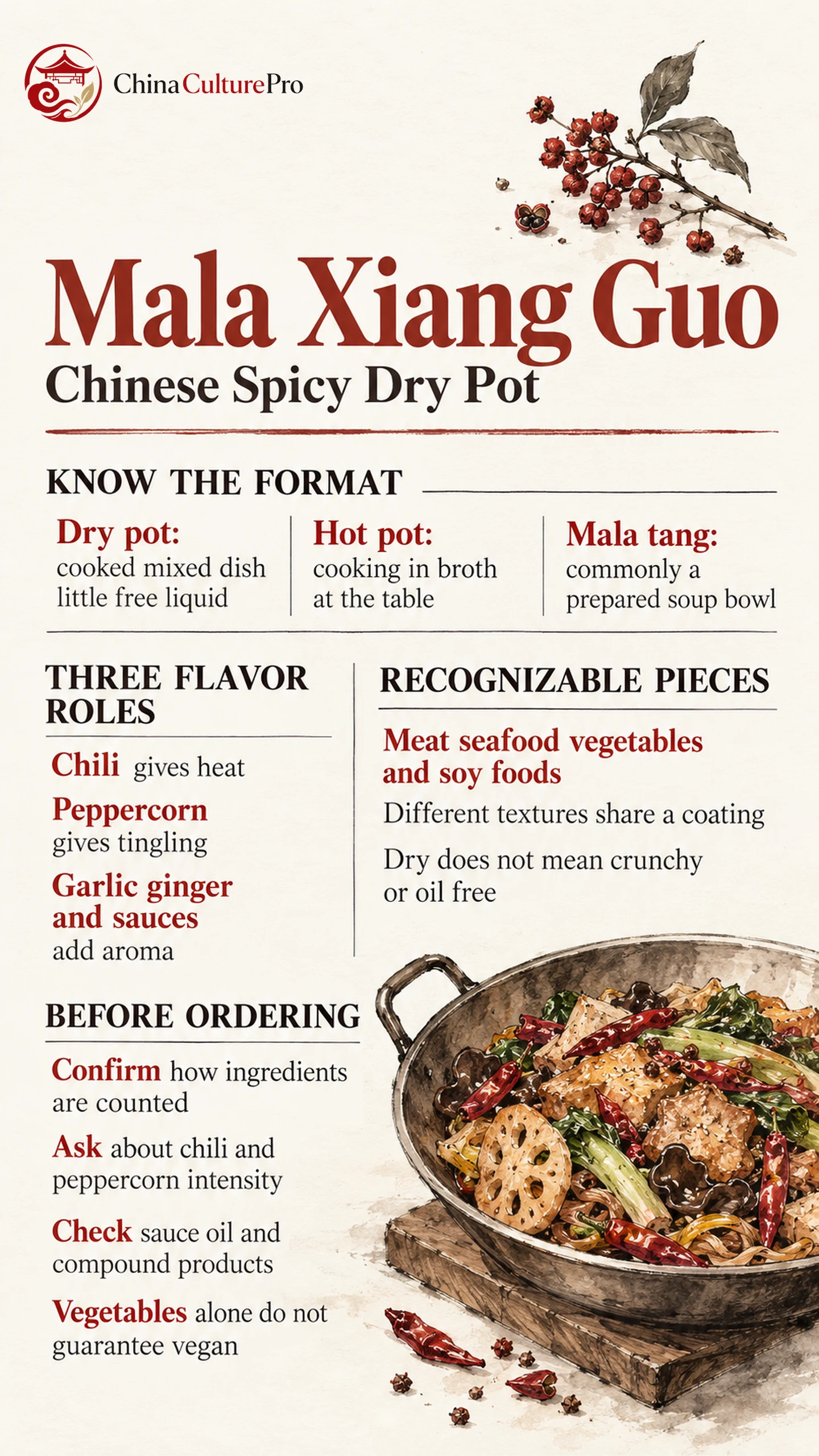
Mala xiang guo(麻辣香锅,málà xiāngguō)is a mixed Chinese stir-fried dish often called spicy dry pot. Vegetables, soy foods, meat or seafood are combined with aromatic seasoning and served already cooked.
- Flavor: Mala(麻辣,málà)combines chili heat with peppercorn tingling, alongside savory and aromatic notes.
- Format: The food carries a concentrated coating rather than sitting in a large serving of broth.
- Choice: Many restaurants let diners select ingredients and a house spice level before the kitchen cooks them.
Dry describes the serving format. It does not mean oil-free, unseasoned or necessarily crisp, and it does not identify one fixed recipe.
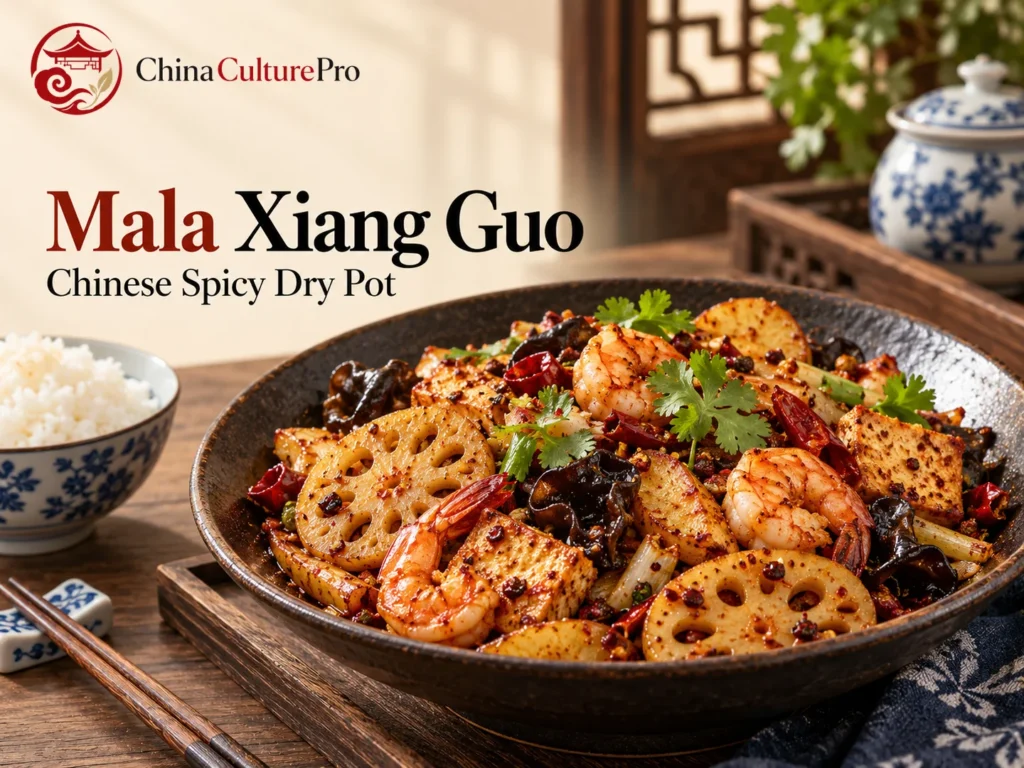
A large bowl arrives crowded with lotus root, mushrooms, meat and tofu, all carrying the same glossy seasoning. Unlike a bubbling table pot, it is ready to share when it arrives. Mala xiang guo belongs to the wider flavor world of Sichuan cuisine, with a flexible ingredient selection and a distinctive dry presentation.
Dry Pot, Hot Pot and Mala Tang
Mala tang(麻辣烫,málàtàng)is another name diners may encounter beside dry pot. The ingredients can overlap, but the cooking and serving arrangements differ. Check the actual menu because English terms such as spicy pot are broad. A current restaurant example describes selected ingredients cooked in bone broth or spicy soup.[6]
| Dish or format | Usual cooking arrangement | What arrives at the table |
|---|---|---|
| Mala xiang guo | Kitchen combines and finishes selected ingredients in seasoning | A cooked mixed dish with little free liquid |
| Chinese hot pot | Food cooks in heated broth at the dining table | Broth with ingredients added during the meal |
| Mala tang | A vendor or kitchen cooks the selected ingredients | Commonly a prepared individual bowl with broth; menu variations exist |
The Chinese hot pot guide explains table cooking, while the mala tang guide focuses on the prepared bowl. Dry pot borrows familiar ingredient choices and flavor associations without requiring diners to cook raw food themselves.[1]
A small amount of sauce or oil at the bottom is compatible with dry pot. The important distinction is that the meal is not presented as ingredients immersed in a large soup base.
Chili Heat, Peppercorn Tingling and Fragrant Seasoning
Chilies provide heat and their own aroma. Sichuan peppercorns add a separate tingling sensation. The two effects can be adjusted independently, so asking for less chili may not reduce the peppercorn character.
Garlic, ginger and other aromatics can round out the seasoning. Doubanjiang(豆瓣酱,dòubànjiàng), a fermented chili bean paste, is used in some preparations, alongside other sauces or a prepared spicy base. These are examples of a seasoning system, not a requirement that every kitchen use the same collection of condiments.[2]
The fragrant part of the dish comes from the combined aromas carried through the coating. A very red appearance does not measure heat reliably: chili variety, amount, sauce composition and the restaurant’s chosen level all matter. Ask what mild means in that kitchen.
Ingredients and the Finished Texture
The range can include sliced meat, shrimp, squid, fish balls, mushrooms, leafy vegetables, lotus root, potato and several soy products. A culinary example can use pork, firm vegetables and mushrooms together; another kitchen can choose a different combination.[3]
Selection by texture is useful. Firm vegetables, springy seafood products, chewy bean curd sheets and tender meat make different contributions. The hot pot ingredients guide helps identify these foods even though dry pot finishes them differently.
Dry pot does not imply that every ingredient begins raw in the same wok at the same moment. Some foods may be blanched, fried or otherwise prepared separately before the final combination. The wok cooking guide explains that finishing stage without turning this page into a recipe.
The result should preserve recognizable pieces under a shared seasoning. A potato slice can remain soft inside while a bean curd sheet stays chewy; neither needs to become crunchy because the English name says dry. The exact amount of coating varies by kitchen.
Ordering a Bowl and Checking the Sauce
Some restaurants display ingredients for selection; others use a printed or digital menu. Confirm how the order is counted or weighed before choosing, particularly when different food groups are charged differently. Confirm the house’s counting or weighing method.[1]
State the desired chili and peppercorn intensity, and ask whether rice or another staple is separate. A shared bowl can suit a group, while an individual portion depends on the restaurant. All selected ingredients share the final seasoning, so explain restrictions before the bowl is cooked.
- Sauce and oil: Ask about animal fat, chicken seasoning, oyster sauce or other animal ingredients. One published enterprise dry-pot base formula includes animal seasonings, demonstrating that vegetable selections alone do not establish vegan suitability.[5]
- Compound foods: Fish balls, filled products and processed meats may contain additional ingredients beyond the menu name.
- Allergens: Soy, wheat, sesame, peanut and seafood need checking where relevant. One commercially labeled vegan mala sauce still contains soy and wheat.[4]
Use the vegetarian food guide to check the vegetables, sauce and oil together. Picking meat out after cooking does not remove what has already mixed into the dish.
FAQs About Mala Xiang Guo
Does dry pot mean oil-free?
No. It describes a dish served without a large broth base. Oil and sauce can still coat the ingredients and collect at the bottom.
Can mala xiang guo be mild?
Many kitchens offer adjustable spice levels. Ask about chili heat and peppercorn tingling separately; mild has no universal measurement.
Is a vegetable dry pot vegan?
Only if the entire preparation meets that requirement. Check the base, seasoning sauces, oil and compound ingredients as well as the visible vegetables.
資料來源
[1] Maggie Zhu. Ma La Xiang Guo
[2] Elaine. Mala Dry Hot Pot
[3] The Hutong. Fragrant Spicy Pot
[4] Lee Kum Kee. Mala Sauce Ingredients
[5] Pingliang Zhengyi Foods. Hot Pot and Dry Pot Base Product Classifications
[6] YGF Daly City. Malatang Bowl Description