

Quick Answer: What Is Mongolian Cuisine Like in Inner Mongolia?
Mongolian food traditions in China’s Inner Mongolia Autonomous Region include dairy foods, salted milk tea (奶茶, nǎichá) and dishes of mutton. These examples come from Mongolian foodways within the region, and some of these traditions, such as milk tea, are also found across the border in the country of Mongolia.[1][2][4][5][6][8]
- Dairy: Herding households made fresh and dried dairy products, especially during the summer milking season.[2][3]
- Tea: Brick tea and milk make a light brown drink. Some households add salt or serve it with toasted millet.[4][6]
- Meat: Boiled bone-in mutton can be shared at an everyday meal. Whole roast sheep is a banquet dish.[5][6]
Herding, farming and city life all contribute to the region’s food today. Meals in Hohhot or a farming district may look quite different from one in a pastoral household.[2][7]
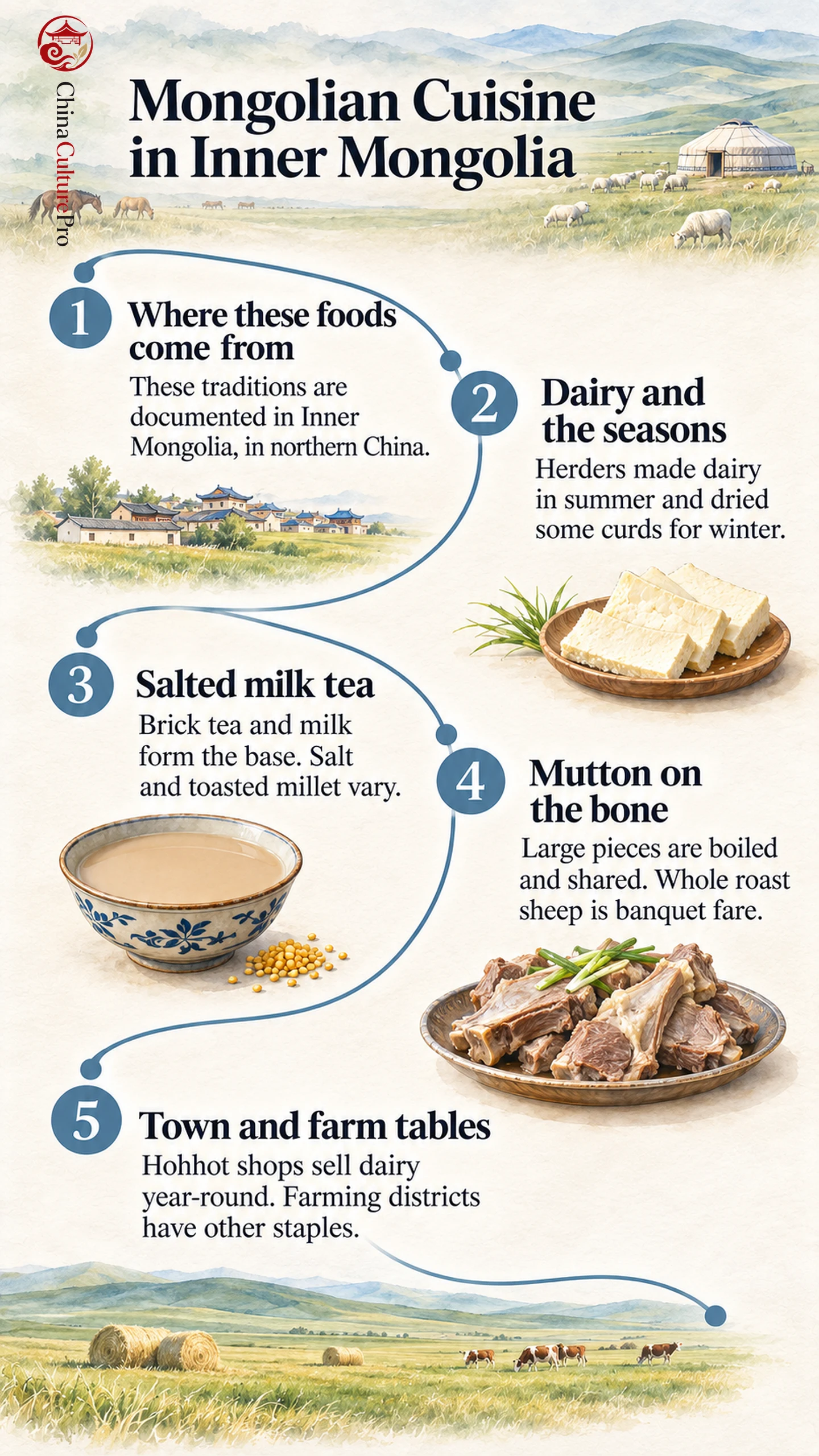
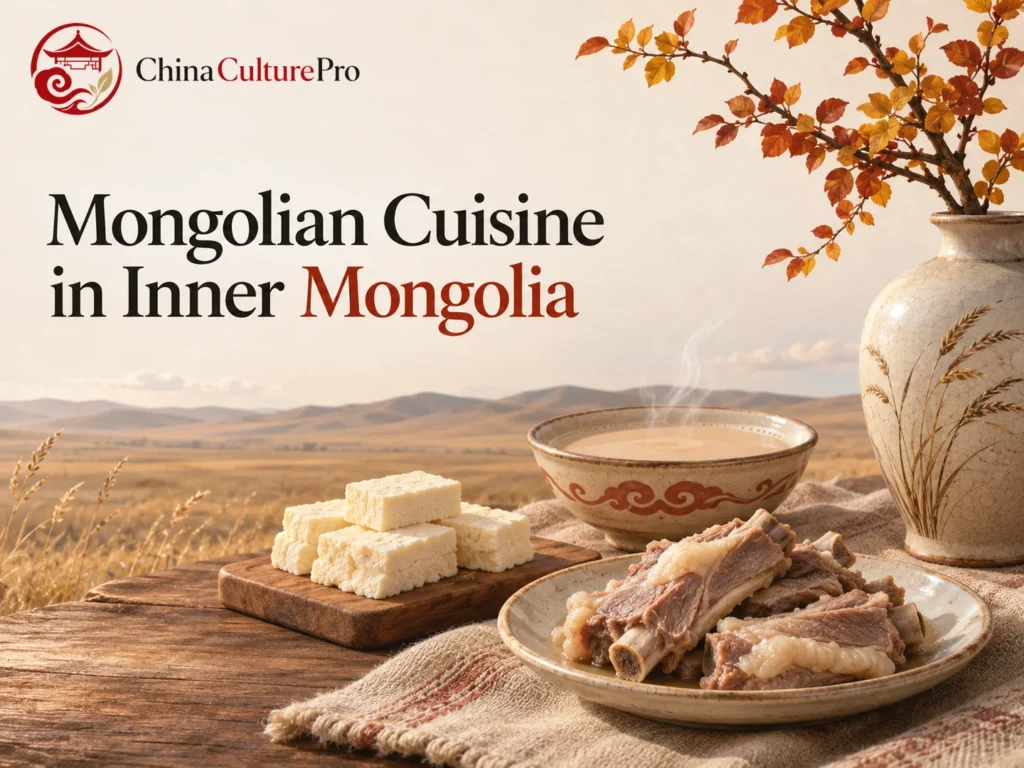
A hot bowl of salted tea, a piece of firm white dairy and a platter of boiled mutton can all be part of a Mongolian meal in Inner Mongolia. Each tells you something about how herding households used milk and meat, and what they offered visitors.[2][4][5][6]
Milk Curd and the Seasonal Dairy Calendar
The traditional category called “white foods” includes milk skin, yoghurt, firm curds and dried curds. One regional example is milk curd (奶豆腐, nǎidòufu). The name literally means “milk tofu,” referring to its shape. The firm dairy curd is made from milk and can taste slightly sour or sweet.[2][3]
Summer was a productive time for making dairy foods in pastoral households. Some products were eaten fresh, and drying made it possible to store curds for colder months. Merle Schatz also describes how households in Hohhot can buy traditional dairy products throughout the year and serve them to guests. A seasonal practice can remain part of hospitality even when families shop for dairy instead of making it.[2]
How Salted Milk Tea Is Served
In a version recorded by Inner Mongolia’s local gazetteers, the base is a brew of pressed brick tea mixed with milk and sometimes a little salt. The same source describes tea prepared with millet or toasted grain, or served with dairy additions such as milk skin. A bowl can accompany a meal or welcome a visitor. In an Ordos account, the host sets out tea with toasted grain, dairy foods and meat.[4][6]
Why Mutton Is Often Served on the Bone
For hand-cut mutton (手把肉, shǒubǎ ròu), cooks boil large pieces on the bone and bring them to the table on a platter. Diners can cut pieces from the bone as they eat. This preparation leaves the taste of the meat prominent. A whole roast sheep is a different dish associated with formal meals and important guests.[5][6]
In a local account of Ordos food traditions, herding households put meat aside for winter and spring. Keeping dairy from the summer and meat for the cold season is one way households made seasonal supplies last.[2][6]
How These Foods Fit Into the Region
Inner Mongolia stretches across northern China. Research from its potato-growing areas highlights farm and town foodways that a menu of dairy and mutton alone would miss. A broader guide to Chinese regional cuisines places Inner Mongolia among other traditions, while the guide to Mongolian culture in China offers more context for pastoral and urban practices.[1][7]
FAQs About Mongolian Cuisine in Inner Mongolia
Is all Inner Mongolian milk tea salty?
Salt is a familiar option. A regional source describes varying the amount of milk and adding salt to taste. Recipes with grain or dairy additions give the drink different textures as well.[4]
Is Inner Mongolia the same place as Mongolia?
Inner Mongolia is an autonomous region of China bordering the country of Mongolia. The examples of dairy, tea, meat and hospitality on this page are documented in Inner Mongolia.[1][2][4][5][6]
資料來源
[1] National Ethnic Affairs Commission of China. Overview of Inner Mongolia
[2] Merle Schatz. White Food and Identity in Inner Mongolia
[3] Horqin Left Rear Banner People’s Government. Milk Curd
[4] Inner Mongolia Local Gazetteers. Mongolian Tea Drinks
[5] Ministry of Agriculture and Rural Affairs of China. List of 100 Rural Foods
[6] Hanggin Banner People’s Government. Ordos Mongolian Food Culture
[7] Jakob Klein. Ambivalent Regionalism and the Promotion of a New National Staple Food
[8] Ulaanbaatar Tourism Department. Ulaanbaatar Travel Guide, Mongolian cuisine