
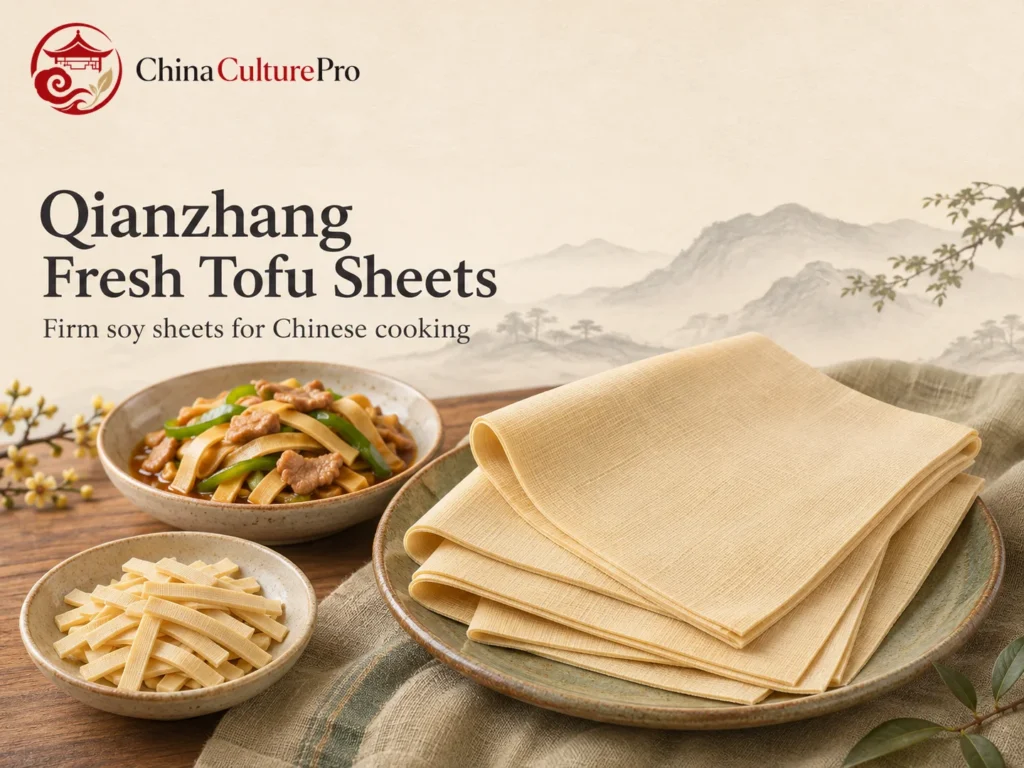

Quick Answer: What Are Qianzhang Tofu Sheets?
Qianzhang (千张, qiān zhāng) are thin sheets of pressed tofu curds. They are firm enough to slice into strips, yet flexible enough for soups, stir-fries and braises. Unlike skins lifted from hot soy milk, they are made by coagulating and pressing the curds.[1][2]
- Look for dense, pliable sheets rather than brittle dried sticks.
- Use their firm bite in sliced salads, stir-fries or broth dishes.[2][4]
- Prepare the fresh product as directed; do not automatically apply a dried bean-curd stick’s long soaking method.
Qianzhang contains soy. Fresh sheets need refrigerated storage and prompt use according to their label.[6]

The most useful shop-counter question is whether you are buying pressed tofu or a soy-milk film product. Both may carry an English label such as “tofu skin,” but they behave differently in the kitchen.
Recognize Pressed Sheets and Similar Soy Products
Baiye (百页, bǎi yè) is another regional name for pressed tofu sheets. Doufupi (豆腐皮, dòufu pí), often translated as tofu skin, is a less reliable shopping label because it can refer to different products.[1][2]
| 產品 | How it is made | What that means for cooking |
|---|---|---|
| Qianzhang | Coagulated tofu curds pressed into thin, firm sheets.[1] | Slice into strips or pieces for a substantial tofu bite. |
| Soy-milk film sheets, often sold as yuba | A surface film is lifted from heated soy milk.[5] | A different skin product; follow its own preparation instructions. |
| Fuzhu (腐竹, fǔ zhú), or dried bean curd sticks | Soy-milk film is gathered into sticks and dried.[5] | Rehydrate the dried product before using it as the recipe directs. |
These are related soy ingredients, but “sheet” describes a shape rather than a single manufacturing process. Check the product itself and the recipe’s requested form before substituting.
What Qianzhang Tastes and Feels Like
Plain sheets have a mild soy flavor and a firm, resilient bite. They hold their shape when sliced into noodle-like strips; thickness varies, so some packets feel more substantial than others.[3][4]
Plain and spiced versions are both sold. If you buy seasoned sheets, taste the cooked product before adding the full amount of salty sauce requested for a plain version.[3]
Prepare Fresh Tofu Sheets for Cooking
Work from the packet instructions and the chosen recipe. Fresh pressed sheets do not need the lengthy rehydration used for a dry, brittle soy-milk skin.
- Check the packet: confirm that it contains pressed sheets, note whether they are plain or seasoned, and read any cooking directions.
- Separate the layers: peel the sheets apart before cutting so that a stack does not remain stuck together. If necessary, use the recipe’s brief warm-water softening or blanching step.[3]
- Cut for the dish: make narrow strips for salads and stir-fries, or larger pieces for a braise.[4]
- Finish as directed: cook the pieces in the dish, or follow a tested blanching step before dressing a cold salad. A refrigerated packet should not automatically be assumed ready to eat.[4][6]
Softening is a texture choice rather than proof that the food is safe. Follow the product’s handling instructions and keep fresh sheets cold before preparation.
Four Ways to Use Qianzhang in Chinese Dishes
- Pork-and-pepper stir-fry: sliced sheets, pork, garlic and peppers make a home-style combination associated with Hubei cooking. The sheet’s firm bite contrasts with the meat and vegetables.[3]
- Dressed tofu-strip salad: blanch the strips as the recipe directs, then dress them with ingredients such as vinegar, soy sauce and garlic.[4]
- Red braise: cut the sheets into larger pieces and simmer them in a seasoned sauce. A braise with eggs is one option when you want a more substantial dish.[4]
- Soups and hot pot: add sliced sheets to broth for a firm tofu texture. Our hot pot guide explains the wider meal format and serving context.[2]
Buying, Storage and Soy Allergens
Look in the refrigerated tofu section for intact packets of pliable sheets. Check the use-by date, storage instructions and ingredient list; the English product name alone may not distinguish pressed sheets from soy-milk skins.[2]
Keep fresh sheets at 4°C or below and use them promptly after opening. Do not give every fresh product the same number of refrigerator days: source, packaging and handling differ. People with a soy allergy should avoid them and check labels carefully.[6]
A plain soybean product can fit a meat-free dish, but a finished plate may include pork, meat broth or other animal ingredients. Choose both the sheets and their accompanying recipe accordingly.
FAQs About Qianzhang
Do fresh tofu sheets need a long soak?
Usually not the long rehydration intended for dried bean curd sticks. Fresh pressed sheets may only need separation, with brief softening or blanching if the recipe calls for it.[3]
Can qianzhang be used like noodles?
Yes, in the sense that narrow strips can be dressed or stir-fried as tofu “noodles.” They keep their firm soy-based texture.[4]
Can I use dried bean curd sticks instead?
They can suit similar soups or braises, but they are a different product made from soy-milk film. Rehydrate them correctly and expect a different texture.[5]
Can I freeze fresh tofu sheets?
Yes, where the packet permits it. Thaw them in the refrigerator before use and allow for a possible texture change after freezing.[2][6]
資料來源
[1] Shenzhen Municipal Government Gazette. 2006 Technical Specifications for Non-Fermented Soy Products, Including Thin Pressed Tofu Sheets
[2] The Woks of Life. Tofu Skin
[3] The Woks of Life. Chinese Tofu Sheet Stir-Fry
[4] Chinese Cooking Demystified. The Most Underrated Tofu: Tofu Sheets, Three Ways
[5] The Woks of Life. Bean Curd Sheets, Fresh and Dried
[6] Centre for Food Safety. Bean Curd: A Traditional Vegetarian Food Produced from Soybeans