

Quick Answer: Which Chinese Dried Chilies Should You Choose?
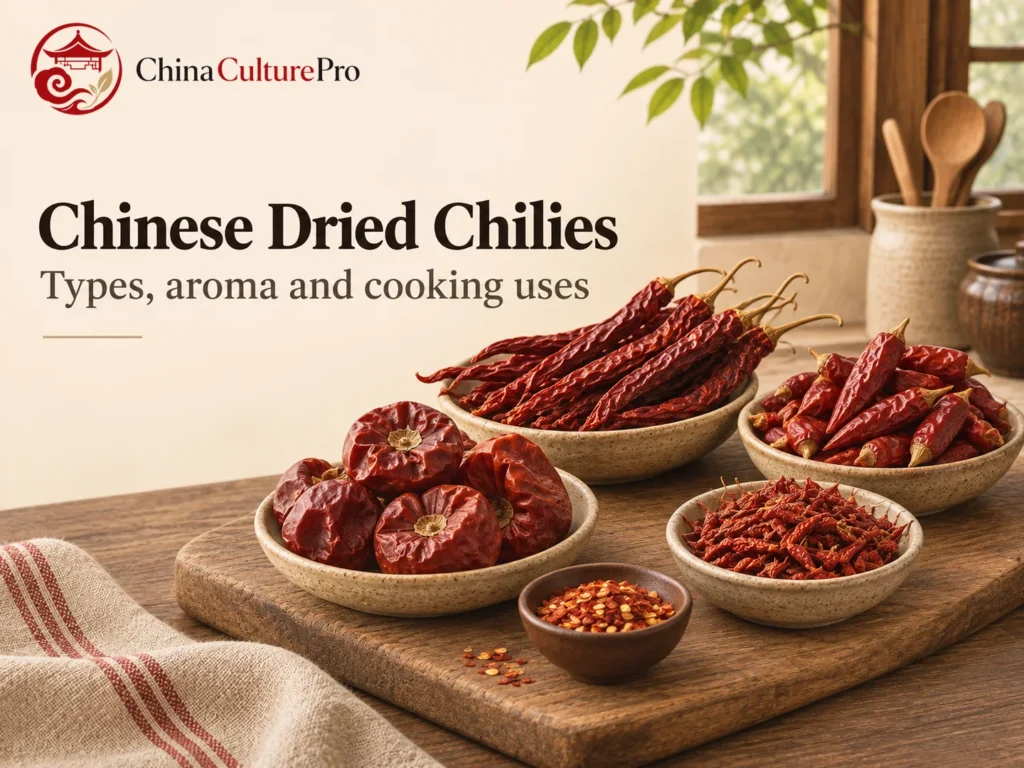
Chinese dried chilies(干辣椒,gānlàjiāo)are selected for fragrance and red color as well as heat. A useful starting point is to match the pepper to its job:
- For fragrance: Long erjingtiao(二荆条,èrjīngtiáo) pods offer a fruity aroma and generally mild-to-moderate heat.
- For everyday heat: Facing heaven chilies(朝天椒,cháotiānjiāo) include compact, pointed or bullet-shaped peppers.
- For rounded aromatic pods: Dried red lantern chilies(灯笼椒,dēnglóngjiāo) supply fragrance and color.
- For a stronger kick: Small xiaomi chilies(小米辣,xiǎomǐlà) are a hotter option in the comparative range described here. [1][2]
These are common market categories, not a complete list of Chinese chilies or a guaranteed heat scale for every supplier.

A bag of dried red peppers can conceal very different ingredients. Long, wrinkled pods, squat round ones and tiny pointed chilies contribute different balances of scent, color and heat. Knowing their names helps you choose a pepper for the dish rather than its appearance alone.
Four Common Chinese Dried Chili Types
The names below identify useful buying categories. Relative heat descriptions summarize commonly sold examples; they are not laboratory ratings for every harvest. [1][2]
| 種類 | Shape and usual flavor role |
|---|---|
| Erjingtiao(二荆条,èrjīngtiáo) | Long, slender pods valued for fruity fragrance, red color and relatively gentle heat. |
| Facing heaven chilies(朝天椒,cháotiānjiāo) | An umbrella name associated with upward-growing fruit; supplied types vary, including compact bullet-shaped peppers with more pronounced heat. |
| Lantern chilies(灯笼椒,dēnglóngjiāo) | Broad, rounded dried red pods used for aroma and color, often milder than hotter small chilies. |
| Xiaomi chilies(小米辣,xiǎomǐlà) | Small, narrow pods that contribute substantial heat; do not replace a larger mild chili by count. |
Erjingtiao is especially useful when fragrance matters. Facing heaven chili is a broader label: zidantou(子弹头,zǐdàntóu), meaning a bullet-shaped type, is one example sold under it. The round lantern chili used in Chinese cooking should not be confused with a sweet bell pepper simply because both can be described as lantern-shaped. [1][2]
The growing location and the cuisine using the pepper are separate facts. Chilies grown in Guizhou, for example, are also sold for use in Sichuan dishes. A regional cooking label does not establish a pod’s farm origin. [1]
Why Heat, Aroma and Red Color Are Different Qualities
A chili can provide a rich scent and vivid oil without being the hottest pepper in the bowl. Conversely, adding a very hot small chili may increase burning heat more than it increases fruity fragrance. This helps explain why cooks combine types rather than simply choosing the strongest one. [1][3]
Heat comes from capsaicinoids. In a study comparing 21 cultivars, the seed-bearing inner tissue contained the highest capsaicinoid concentrations among the fruit parts examined; seeds and outer flesh also contained measurable amounts. Removing loose seeds therefore does not make the remaining pepper reliably mild. [4]
Neither redness nor size is a dependable heat test by itself. Pigment and capsaicinoid measurements describe different characteristics: even a university database records separate values for two erjingtiao entries. A measured sample cannot establish the strength of an untested supermarket packet. [4][5]
Chili heat is also different from the tingling sensation of Sichuan peppercorns. The two ingredients often appear together in Sichuan cuisine, but one is not a substitute for the other. [6]
Whole Pods, Cut Chilies and Flakes in Cooking
Whole pods can perfume oil and remain visible in a finished dish. Breaking or cutting them opens the interior and changes how their heat enters the food. The amount appropriate for intact pods may be excessive when the same peppers are chopped. [6]
Cut sections are commonly cooked with aromatics such as garlic or ginger. They lend a toasted scent to stir-fries and also appear in braised dishes. The aim is fragrant chili, not blackened, bitter fragments; ventilation matters when cooking with them. [3]
Flakes and ground chili serve a different role in Chinese chili oil, where the dispersed pepper becomes part of the condiment rather than a few removable pieces. Choose the type and grind for that preparation, rather than assuming every packet marked “chili powder” has the same strength. [3][6]
A dish such as Chongqing chili chicken can contain many visible pods. Their presence is part of the presentation and seasoning, not an instruction to eat every pepper. [6]
Buying and Substituting Dried Chilies
Look for an actual type name, not only “Chinese red chili.” Deep color, a noticeable pepper aroma and some flexibility are useful quality clues for whole pods. A small first purchase helps you assess an unfamiliar batch before using it in a chili-heavy dish. [3][6]
For a substitute, decide whether you need fragrance, heat or both. Dried guajillo or japones peppers are options used by Chinese home cooks when the preferred Chinese types are unavailable. They change the flavor, so treat them as practical alternatives rather than identical replacements. [3]
Avoid translating a recipe’s pod count directly between long aromatic chilies and tiny hot ones. Buy the original type when its particular fragrance is central; when substituting, adjust according to the replacement’s known strength and the dish’s role for chili. [1][3]
FAQs About Chinese Dried Chili Types
Are Facing Heaven and Erjingtiao the Same Chili?
No. Erjingtiao describes long, slender peppers. Facing heaven refers to upward-growing types and includes several forms; a packet of bullet-shaped facing heaven chilies is not simply erjingtiao under another name. [2]
Does Removing the Seeds Remove All the Heat?
No. The inner seed-bearing tissue is especially important, and capsaicinoids also occur elsewhere in the fruit. Shaking out loose seeds changes the preparation but cannot guarantee a mild dish. [4]
Do You Eat the Whole Dried Chilies in a Dish?
You can leave them aside. Whole pods often season the surrounding oil and food; biting into one delivers a more concentrated pepper experience. Whether to eat it is a preference, not a required dining custom. [6]
資料來源
[1] The Mala Market. Sichuan Dried Chili Collection: importer descriptions of four supplied types
[2] Sarah Leung and Choy Division. How to Grow Chili Peppers: field collaboration and cultivar descriptions
[3] Hannah Che. Dried red chilies: original culinary uses and substitution guidance
[4] Tilen Zamljen and colleagues. Influence of intra and inter species variation in chilies on metabolite composition of three fruit segments (2021)
[5] Nanjing University of Finance and Economics spice research team. Erjingtiao: measured pigment and capsaicinoid components
[6] The Woks of Life. Dried Chili Peppers: original household use and handling guide