
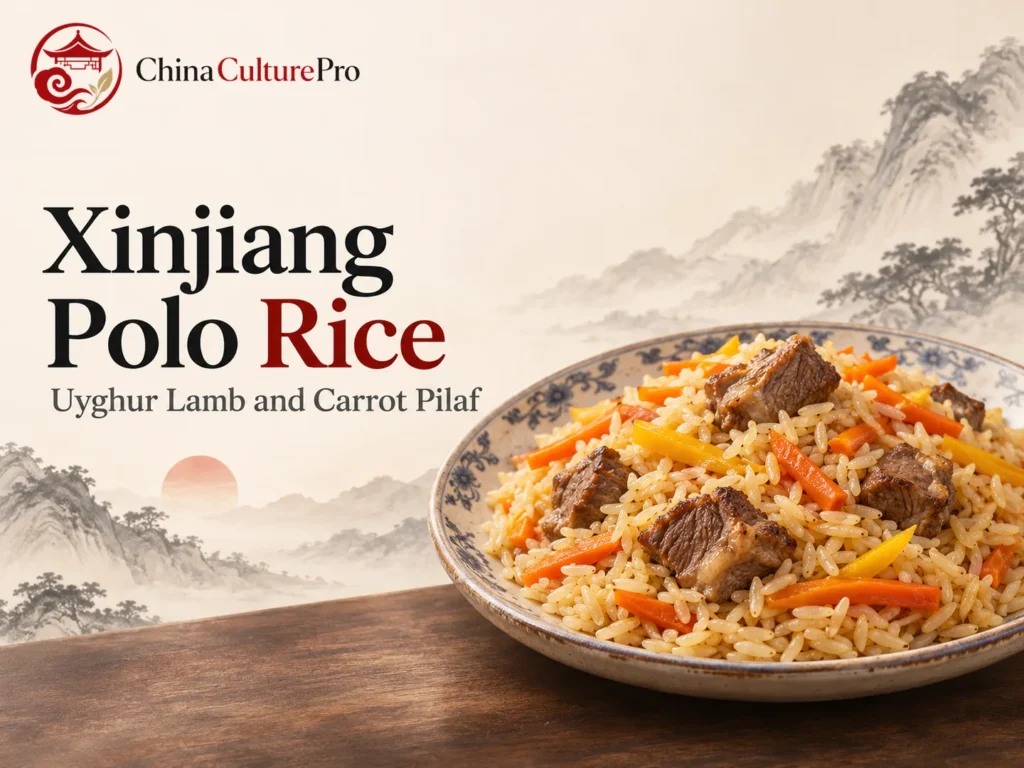

Quick Answer: What Is Xinjiang Polo Rice?
Xinjiang polo is a Uyghur-style rice pilaf, often listed as zhuafan (抓饭, zhuāfàn) on Chinese menus. Rice cooks with lamb, carrots and onion, taking on flavor from the meat and its cooking liquid. The grains should be tender and separate, with carrot and meat distributed through the finished dish.[1][2][3]
- Base: Lamb, onion and carrots are cooked before the rice goes into the pot.[1][2][3]
- Method: The rice absorbs the seasoned liquid as it cooks.[1][2]
- Variation: Local versions change the cut of meat, the carrots or the dried fruit.[1][3][4]
The rice gains its flavor during cooking, which gives polo a different texture and taste from wok-fried cooked rice.[1][2]
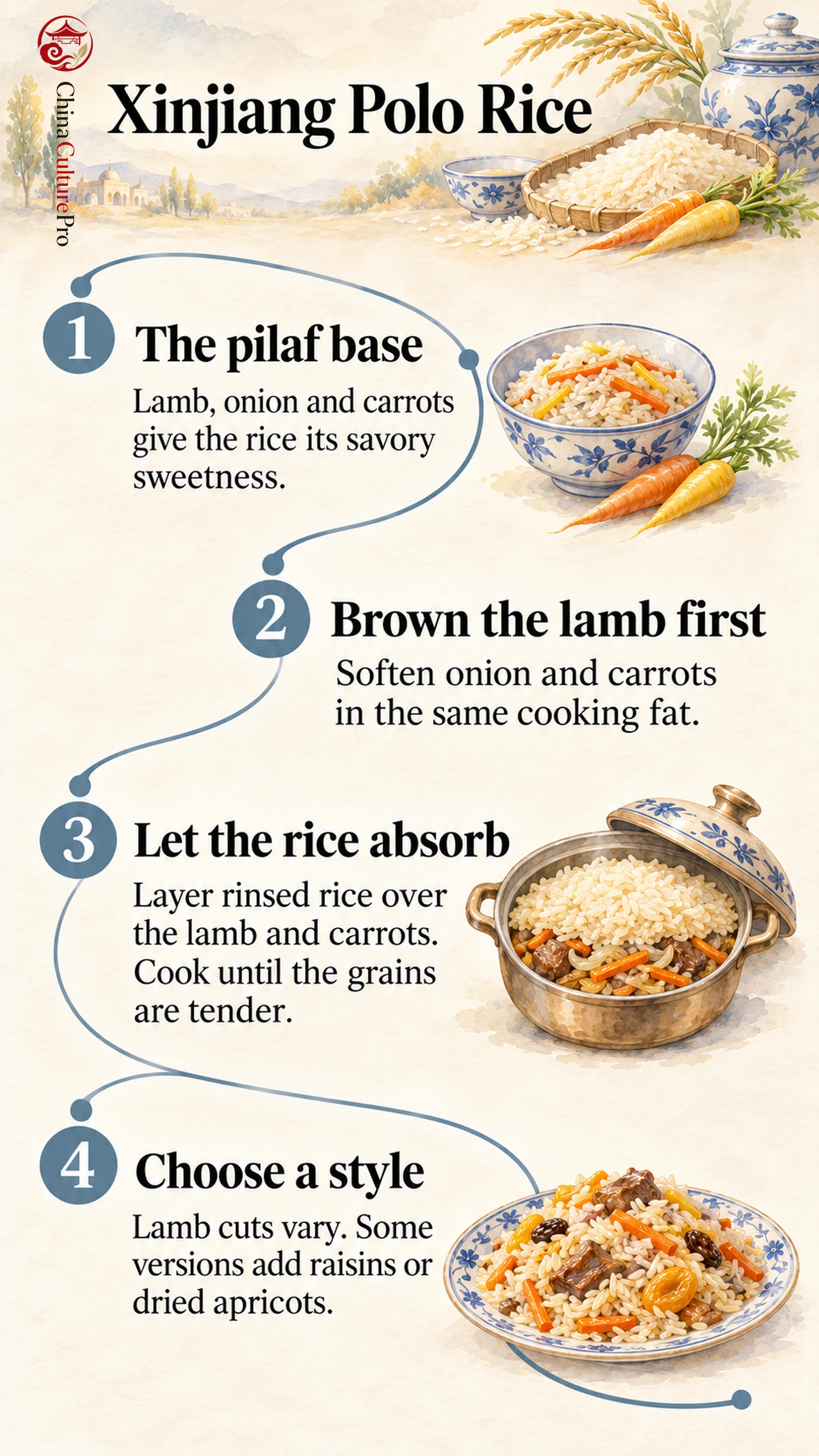
A plate of polo carries the sweetness of carrots and onions through the rice. The scale can vary from a household pot with cubed lamb to a large iron cauldron with big bone-in pieces. Both versions depend on cooking the grain with the meat and vegetables.[1][2][3]
What Gives Polo Its Flavor
The usual base has lamb, rice, onion, carrots and oil. Yellow carrots appear in local preparations, while orange carrots also work in a documented Uyghur home version. Long strips soften in the pot and keep the carrot visible when the rice is turned out. A particular home recipe seasons the liquid with cumin, but the flavor of lamb, carrot and onion is recognizable without it.[1][2][3]
Polo belongs to a wider Central Asian family of pilafs. The names polu and plov may appear in different languages or English spellings, while the choice of meat, vegetables, fruit and cooking method varies. In Uyghur practice, polo is also associated with hospitality and gatherings.[3]
How Rice Cooks Over the Lamb and Carrots
- Brown the lamb: Cook lamb pieces in oil at the start. Add onion and carrot and let them soften before the rice goes in.[1][2][3]
- Add the rice and liquid: Rinse the rice, soak it if the recipe calls for it, and drain it. In a layered method, spread it over the seasoned lamb and vegetables with enough cooking liquid for the grains to absorb.[1][2]
- Cover until the rice is tender: Finish over controlled heat. Mix the rice gently with the carrot and lamb after cooking, or serve the meat on top. The goal is cooked grains that still hold their shape.[1][2][3]
Browning the lamb first gives its cooking liquid time to develop flavor before the rice absorbs it. Frequent stirring through all the layers is unnecessary in a covered pilaf, where the grains absorb flavor as they soften.[1][3]
Lamb, Dried Fruit and Regional Polo Styles
| Стиль | What changes |
|---|---|
| Lamb and carrot polo | Lamb can be cubed for a home pot or cooked in larger bone-in pieces.[1][2] |
| Dried-fruit polo | Raisins or dried apricots lend sweetness. Some documented sweet versions omit meat.[1][3] |
| Hotan chopped-meat example | One restaurant version puts finely cut meat with the rice and finishes with raisins and pomegranate seeds.[4] |
Polo is one of several starch-based staples in Xinjiang cuisine. Compare it with Xinjiang lagman, where the noodles are cooked separately from the topping, or Xinjiang nang bread, which is baked against an oven wall.
FAQs About Xinjiang Polo Rice
What is polo called on a Chinese menu?
Look for zhuafan (抓饭) on a Chinese menu. The name refers to the traditional practice of picking the rice up by hand.[1]
Are yellow carrots essential?
No. Regional versions use yellow carrots, and a documented Uyghur home recipe uses ordinary orange carrots.[1][2]
Do you have to eat polo with your hands?
Hand-eating is a documented tradition and explains the Chinese name. A spoon is also used today.[1]
Источники
[1] China National Radio, Xinjiang. Lamb polo, ingredients and serving customs
[2] Ayijili Abdukadeer, USC community cookbook. Traditional Uyghur polo home recipe
[3] Maria Cristina Cesaro, University of Kent. Consuming identities: the culture and politics of food among the Uyghur in contemporary Xinjiang
[4] Urumqi Media Center. Xinjiang polo variants shown at a regional tasting