

Quick Answer: What Are Xinjiang Ding Ding Noodles?
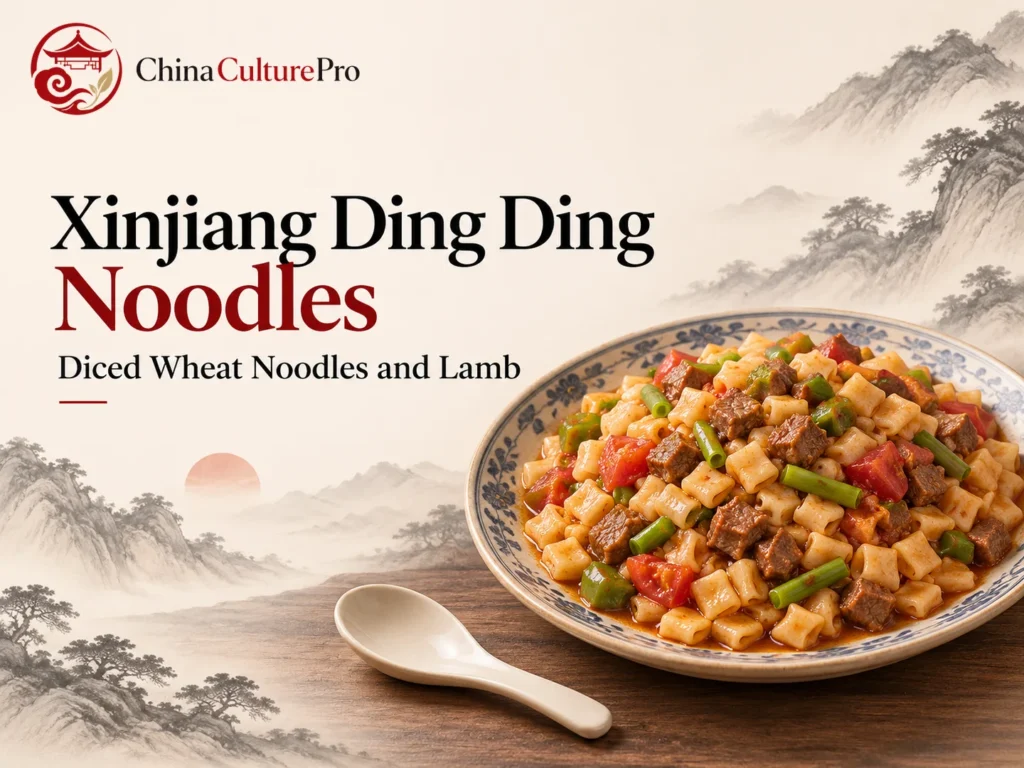
Xinjiang ding ding noodles (丁丁炒面, dīngdīng chǎomiàn) are short pieces of wheat noodle stir-fried with meat and diced vegetables. A typical plate pairs lamb and garlic shoots with onion, peppers and tomato. The finished pieces are small enough to gather together with a spoon.[1][2]
- Shape: Pulled noodle strands are cut into small pieces.[1][2]
- Flavor: Tomato contributes acidity and juice, while garlic shoots and peppers add bite.[1][2]
- Finish: The cooked noodles go back into the wok with the other ingredients.[1][3]
The noodle shape and the wok finish distinguish the dish from long noodles served under a topping.[1][2]

Ding ding noodles can look like a plate of diced vegetables from across the table. Up close, the paler, chewy pieces are wheat noodles. Matching their size to the rest of the ingredients makes it possible to scoop up noodle, lamb and tomato together.[1][2]
Why the Noodles Are Cut Into Dice
A common starting point is latiaozi (拉条子, lātiáozi), the long pulled wheat noodles used for other Xinjiang dishes. Cutting a strand crosswise turns it into small, plump pieces with the chew of wheat dough. The vegetables are cut small as well, so a spoonful carries several ingredients and a little of the sauce.[1][2]
A home cook can also roll the dough into ropes and cut those directly. Rolling the dough to an even thickness gives the dice a more uniform shape. For the full stretching method, see how hand-pulled noodles get their shape from rested wheat dough.[3]
How the Noodle Dice and Sauce Come Together
- Cut and boil the noodle pieces: Cut the narrow wheat dough ropes or strands into small pieces. Boil them separately, then drain so the wok finish does not turn into a soup.[1][3]
- Build the stir-fry: Cook diced lamb with small-cut vegetables. Onion, garlic shoots and red or green peppers are common. Fresh tomato contributes juice, and some versions add tomato paste for a fuller flavor.[1][2]
- Toss the noodles with the sauce: Add the drained noodle pieces to the wok and turn them through the meat, vegetables and juices. The juices cling to the pieces, leaving a plate you can eat with a spoon.[1][2][3]
Ding Ding, Lagman and Other Xinjiang Noodles
| Порядок | Как подают |
|---|---|
| Ding ding noodles | Diced wheat noodles go into the same wok as the meat and vegetables. |
| Xinjiang lagman | Long pulled noodles receive a separate cooked topping. |
| Big plate chicken | Wide noodles can be added to the chicken and potato sauce. |
Choose Xinjiang lagman if you are after the chew of long strands and a spooned topping. With big plate chicken, broad noodles collect the sauce at the bottom of the serving dish. Ding ding belongs to the wok-finished side of that range in Xinjiang cuisine.[1][2]
FAQs About Xinjiang Ding Ding Noodles
What does ding ding mean on a menu?
It points to the diced shape. On this dish, the noodle and most of the vegetables are cut small enough to eat by the spoonful.[1][2]
Are the noodles made from rice?
The small pieces are cut from wheat noodle dough. Their short shape can make them resemble grains or diced vegetables at first glance.[1][3]
Do ding ding noodles always contain lamb?
Lamb is a common choice in regional accounts. Some home versions use beef, and the vegetables also vary.[1][2][4]
Источники
[1] People.cn, Yecheng food feature. Ding ding fried noodles
[2] Xinjiang Pomegranate Cloud. Xinjiang noodle dishes and their ingredients
[3] Meishichina. A home method for rolling, cutting and cooking noodle dice
[4] Xiachufang. A Xinjiang-style home preparation with lamb or beef