
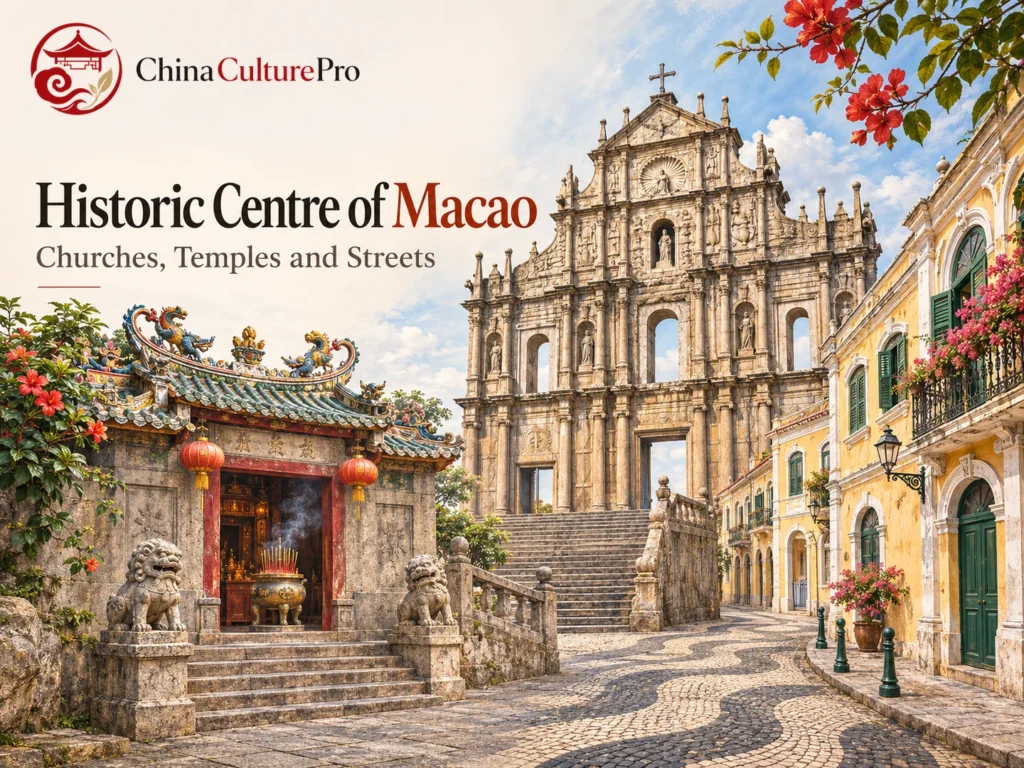

Quick Answer: What Is the Historic Centre of Macao?
The Historic Centre of Macao (澳門歷史城區, Àomén Lìshǐ Chéngqū) is a UNESCO World Heritage ensemble of streets, squares, religious buildings and other landmarks tied to a trading port. It includes A-Ma Temple (媽閣廟, Māgé Miào), churches associated with Portuguese Macao and civic spaces such as Senado Square. [1][2]
- Faith: Chinese temples and Catholic churches record different communities’ religious lives within the same city. [1][2]
- Public life: Squares, residences and streets help connect religious buildings to activities such as trade and administration. [1]
- Seaward setting: Fortifications, a lighthouse and surviving views give clues to the port, even where reclamation changed the coastline. [1]
The inscription covers a specific historic ensemble. Its buildings make sense in relation to their shared streets.
The famous church façade is a good place to look closely, but the lane beside it tells a different story. A Chinese temple, a square and a line toward the harbor put the monument into a much larger urban setting.
Four Ways to Read the Historic Centre
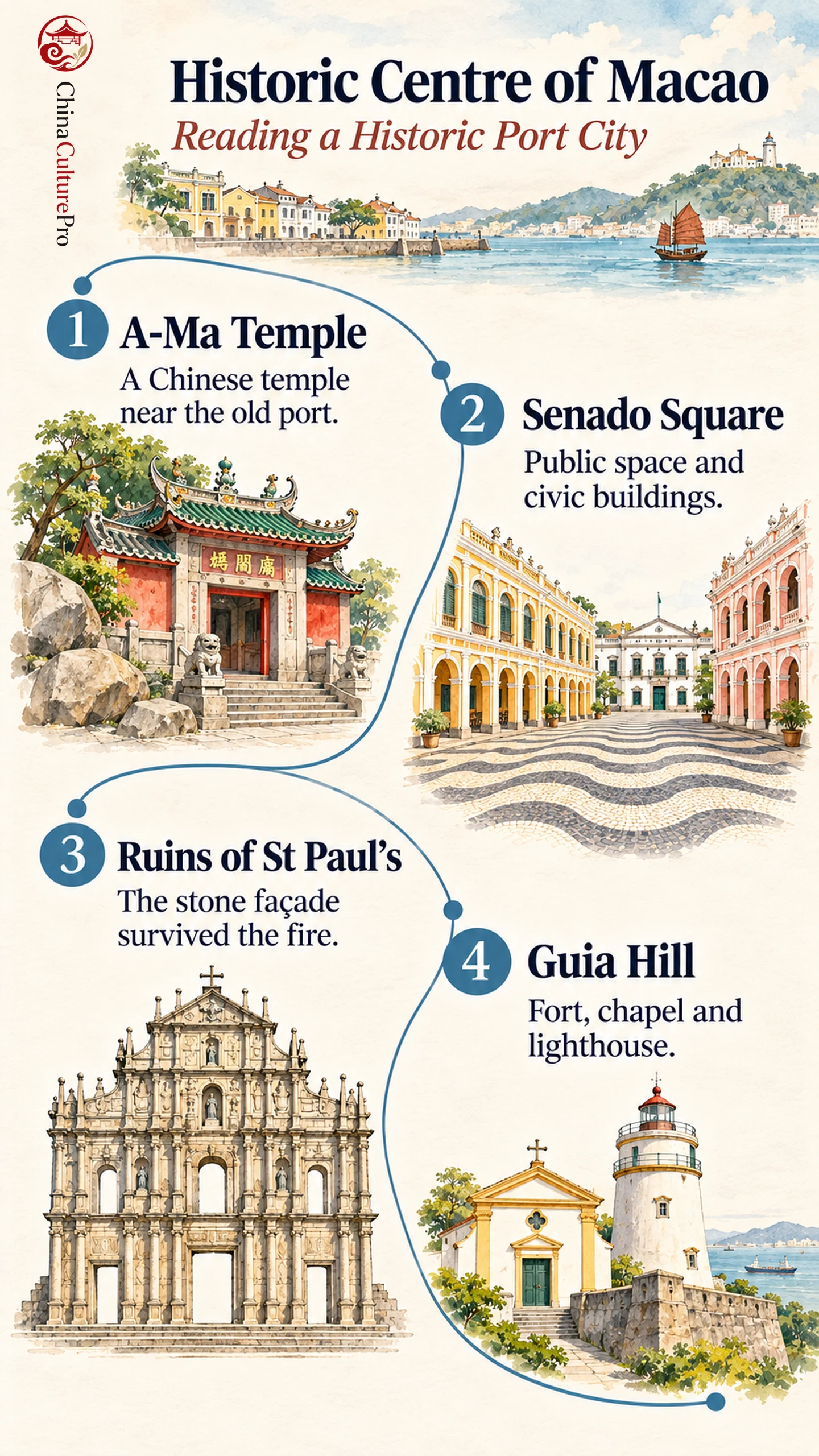
| Место | What survives | What the setting explains |
|---|---|---|
| A-Ma Temple and Barra Square | A Chinese temple ensemble near the historic port. [1][2] | Worship formed part of a maritime city’s public life. [1] |
| Senado Square | A public square close to the former Leal Senado building. [1][2] | The civic center relied on open spaces and their connections to streets around it. [1] |
| Ruins of St Paul’s and Mount Fortress | The surviving church façade and associated remains, near a Jesuit-built fortress. [2][3] | Religious structures and defensive buildings could occupy nearby prominent sites. [3] |
| Guia Hill | A chapel, a fortress and a lighthouse. [1][2] | The hill retains a visual relationship with the harbor. [1] |
Lanes and squares connect buildings used for worship, government, trade and protection. UNESCO recognizes this relationship as part of the property. For the wider history of this trading city and its communities, see Macao culture. [1]
How Temples and Churches Share the Streets
Look at what surrounds each building. A-Ma Temple helps recall the older Chinese port. Near St Paul’s are other cultural structures, including Na Tcha Temple. The surviving stone front stands where the Church of Mater Dei once stood. The Macao cultural heritage record notes that the church and neighboring college were destroyed by fire in 1835. Today the stone façade marks the former church. [1][2][3]
UNESCO describes continuing traditions of worship and procession in some spaces. That living use is different from the city’s surviving masonry, but both help explain why the ensemble includes public spaces and surroundings. [1]
Why the Port Still Matters
Land reclamation altered the historic shoreline. UNESCO identifies important visual connections between A-Ma Temple, Mount Fortress, Guia Lighthouse and the water. These links help explain the positions of temples and defenses in a port setting even when a modern street no longer follows the old coast. The cultural World Heritage guide offers context for reading a city ensemble alongside other property types. [1]
FAQs About the Historic Centre of Macao
Are Macao and Macau different places?
Both spellings refer to the same city. UNESCO uses Macao in the English name of the property. [1]
Is St Paul’s an intact church?
The main visible feature is the stone façade of the former Church of Mater Dei. Other remains include traces of the former college. [3]
When was the Historic Centre inscribed?
UNESCO inscribed it in 2005. The listing covers a historic ensemble rather than every building in Macao. [1][2]
Источники
[1] UNESCO World Heritage Centre. Historic Centre of Macao
[2] Cultural Affairs Bureau of the Macao SAR. Macao World Heritage Site Buildings and Squares
[3] Cultural Affairs Bureau of the Macao SAR. Ruins of St Paul’s