

Quick Answer: What Is Yangzhou Wensi Tofu?
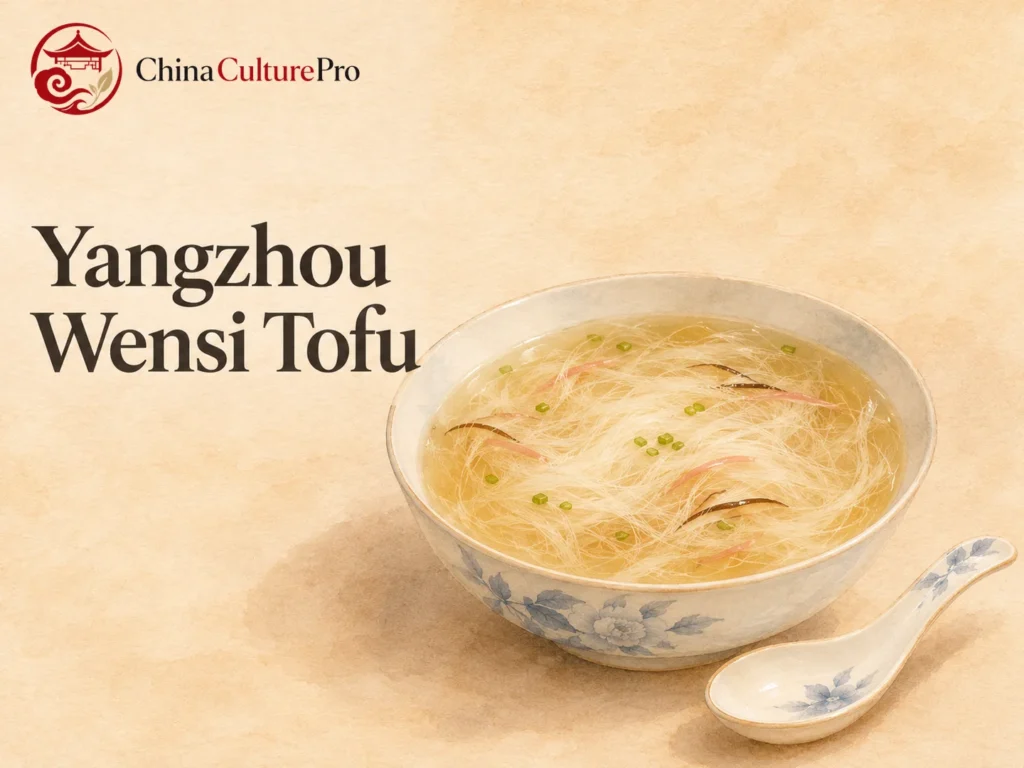
Yangzhou Wensi tofu (文思豆腐, Wénsī dòufu) is a soup of soft bean curd cut into hair-fine threads. It belongs to Huaiyang cuisine (淮扬菜, Huáiyáng cài). In the bowl, the fine white strands fan out through the broth and settle softly on the spoon.[1]
- Tofu: A high-moisture block makes strands that yield almost at once when eaten.
- Knife work: The cook cuts thin slices, then cuts across them to make threads that separate in water.[1][2]
- Soup: A clear chicken stock is a documented base. Some versions add finely cut mushrooms, bamboo shoots or ham.[1][3][4]
The name is connected to a monk recorded in a Qing-era account of Yangzhou. The text gives the association without specifying a modern recipe.[5]

The first thing you notice in a bowl of Wensi tofu is how the tofu moves. Its strands drift apart in liquid like fine white fibres. A spoonful explains the point of the knife work: the threads almost melt, leaving the broth to carry the flavour.
Why Soft Tofu and Knife Work Matter
Cooks choose a tender, high-moisture block from the range of Chinese tofu types. They slice it in one direction and then cut the slices very finely across. Wetting and separating the fragile strands in water helps them open up without being pulled apart by hand. In the end, the tofu is fine enough to fan out visibly when the bowl moves.[1][2]
There is no need to count the cuts to identify the dish. Look for distinct filaments that spread through the liquid. Tofu crumbs or recognisable matchsticks produce a different appearance and a noticeably coarser mouthfeel.
The Broth and What Goes Into It
A clear chicken stock is a documented Yangzhou preparation. Its light colour shows the threads and its flavour gives the mild bean curd depth. Published preparations also include mushrooms, bamboo shoots, shredded chicken or ham. Fine cutting gives the additions a similar scale so they mingle with the tofu.[1][3]
Other published versions gently thicken the soup with starch. That changes how easily the threads move, while leaving the fine cut central to the dish.[4] At a restaurant, ask which stock and garnishes are used if these ingredients matter to your order.
What the Qing Record Says About Wensi
In the fourth chapter of his Qing-era account of Yangzhou, Li Dou describes a monk named Wensi who lived in a precinct connected to Yangzhou’s Tianning Temple. The account says he made tofu soup and a sweet porridge and that people imitating his method used the name Wensi tofu.[5]
That establishes a link between the name, the monk and tofu soup in the historical record. Li Dou gives no directions for cutting the tofu into hair-fine threads and no stock recipe. Today’s knife work and garnishes are documented through contemporary Yangzhou cooking accounts.[1][2][5]
Wensi Tofu vs Yangzhou Boiled Tofu Shreds
Both dishes demonstrate the knife work of Yangzhou. In big boiled tofu shreds, dense pressed tofu holds a slightly firmer matchstick shape once it is cooked in stock. Wensi strands come from softer tofu and are much finer. If both appear on the same menu, choose Wensi for a silkier soup and the boiled shreds for a more distinct bite.
FAQs About Wensi Tofu
Is Wensi Tofu Soup Always Vegetarian?
Some cooks make vegetable-based versions, but chicken stock and ham are documented in modern preparations. Ask about the broth as well as the visible ingredients.
Why Does the Tofu Look Like Hair?
The tender block is first cut into very thin slices and then cut across into threads. In water and broth, the threads separate and fan out.
Was Wensi Tofu Named After a Real Person?
Li Dou’s Qing-era account identifies a monk called Wensi and ties the dish’s name to people following his method. It leaves the exact preparation unspecified.
資料來源
[1] See Yangzhou. 文思豆腐
[2] Xinhua Daily. A journey through Chinese culture: flavours of Jiangnan (文化中国行·长江之歌⑦)
[3] The Paper. A map of how China eats tofu (中国人吃豆腐地图)
[4] China Today. Wensi Tofu
[5] Li Dou. The Pleasure Boats of Yangzhou, chapter 4 (扬州画舫录卷四)