


Quick Answer: What Is Wuhan Duck Neck?
Wuhan duck neck (武汉鸭脖, Wǔhàn yābó) is a snack made by braising duck neck in a seasoned liquid and serving it in short, bone-in pieces. It is closely associated with the Jingwu Road area of Hankou, part of Wuhan.[1][4]
- 滋味: Jingwu-style duck neck is prominently hot and numbing. Another Wuhan style tastes sweet up front before the chilli builds.[2]
- Texture: A thin layer of firm, chewy meat clings to the neck bones.[1]
- How to eat it: Take small bites around each piece and leave the bones.[3]
The name identifies the cut and its Wuhan association. Check the listed seasoning for the heat profile, because shops can sell more than one flavour.[2][5]
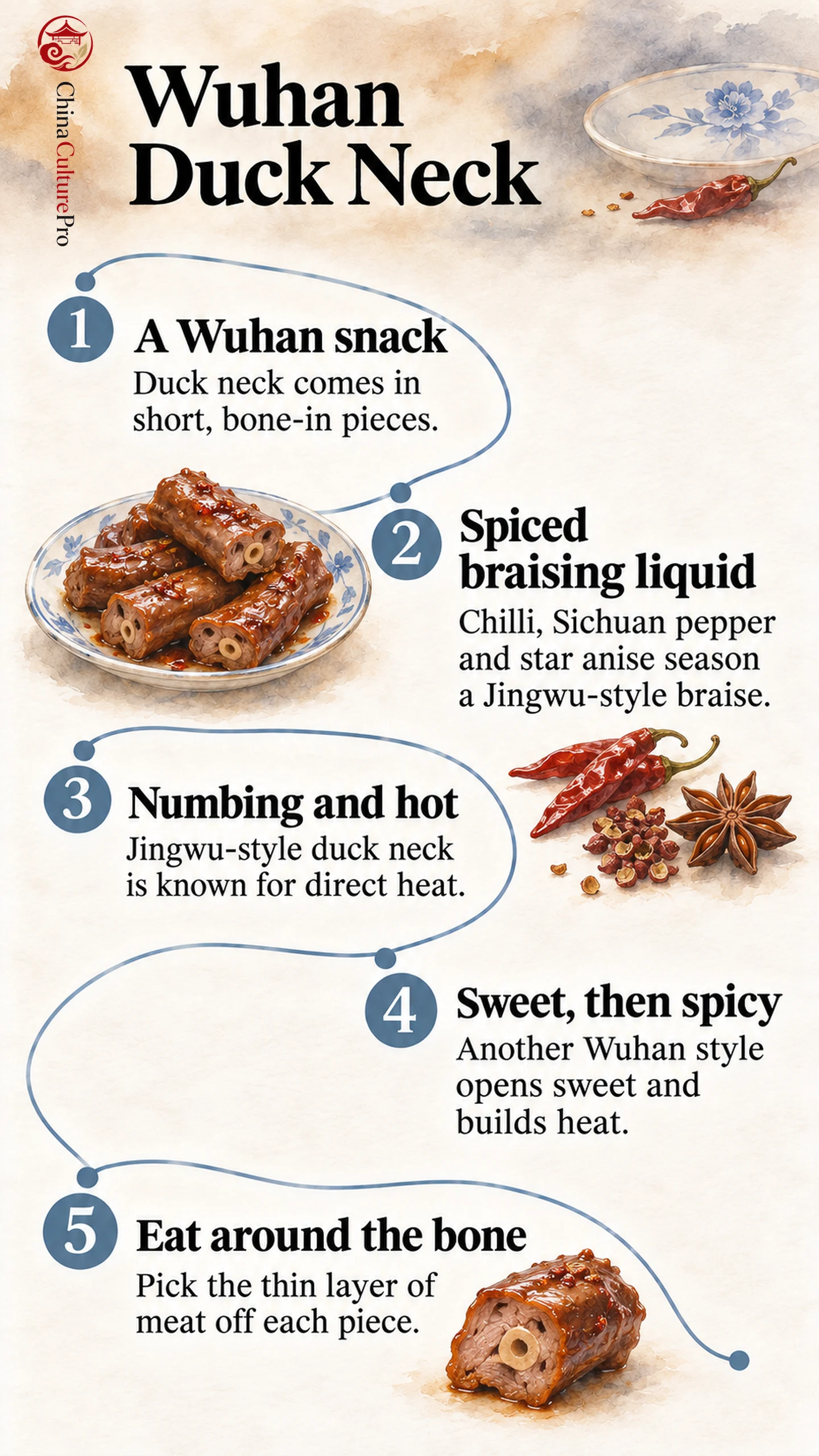
At a Wuhan snack counter, a pile of dark, chopped duck neck can look more substantial than it is. Most of each piece is bone. The appeal is the thin, chewy layer of meat and the way its chilli, spice and sweetness change with the braise.
What Goes Into the Braise?
The Hubei foreign affairs office’s account of Jingwu duck neck names dried red chilli, Sichuan pepper and star anise among the seasonings. Chilli supplies heat, Sichuan pepper gives the tingling sensation, and star anise lends a sweet aroma. The combined sensation of heat and tingle is often called mala (麻辣, málà).[1]
The seasonings go into a liquid braise. Chinese master stock offers a broader look at the aromatic cooking liquids used for Chinese braised foods. With duck neck, the narrow cut means each bite takes in a little seasoned surface along with the meat.
How Wuhan Duck Neck Is Prepared and Eaten
The necks cook in a spiced liquid and are served cut crosswise into short sections with the bones still inside. The finished pieces have a seasoned surface and only a thin layer of meat around each bone.[1][3]
Hold one end of a piece and work the meat off the outside. Turning it lets you reach thinner strips between the contours of the bone. The short segments give the snack its familiar shape and make it easy to share.[3]
Jingwu-Style and Sweet-Then-Spicy Duck Neck
Wuhan’s commerce bureau draws a distinction between two local examples. Jingwu-style duck neck leans distinctly hot and numbing. The Zhou Hei Ya profile opens with sweetness, then becomes spicy. Both are Wuhan styles, and neither label gives a reliable heat rating for every shop.[2]
Hubei accounts connect Jingwu Road sellers with a Sichuan-style seasoning approach adapted in Wuhan. Several origin stories circulate. The 2002 film “Life Show” helped bring the snack to an audience beyond the city. It sits alongside Wuhan hot dry noodles as one of the foods closely identified with the city.[1][3][4]
At a Wuhan shop, look for duck neck alongside other luwei (卤味, lǔwèi), the broad category of seasoned braised foods. Duck collar is a separate cut sold at the same sort of counter. Duck neck is available loose as well as in sealed portions. Some sellers offer several flavours, including fragrant chilli and five-spice. If you want the sweet-and-hot version, look for sweet-chilli seasoning on the label or ask the seller.[2][5]
FAQs About Wuhan Duck Neck
Is Wuhan duck neck always very spicy?
Heat varies with the preparation. Jingwu-style duck neck is known for a pronounced numbing heat, while a sweet-first Wuhan version can still build to a spicy finish.[2]
Do you eat the bones in Wuhan duck neck?
Eat the meat around the neck bones and discard the bones. Each crosswise piece has a small amount of meat close to the bone.[1][3]
Is Wuhan duck neck dried or braised?
Wuhan’s signature preparation is braised in a seasoned liquid. The meat can be firm and chewy, but it gets its seasoning from the braise.[1][4]
資料來源
[1] Foreign Affairs Office of Hubei Province. Jingwu Duck Neck
[2] Wuhan Municipal Commerce Bureau. Wuhan Braised Snack Styles
[3] Foreign Affairs Office of Hubei Province. Wuhan Duck Neck
[4] Wuhan Municipal Government. Wuhan Local Food Specialties
[5] Wuhan Yangtze River New Area. Local Braised Snack Retail and Flavours