

Quick Answer: What Is Peruvian Chifa?
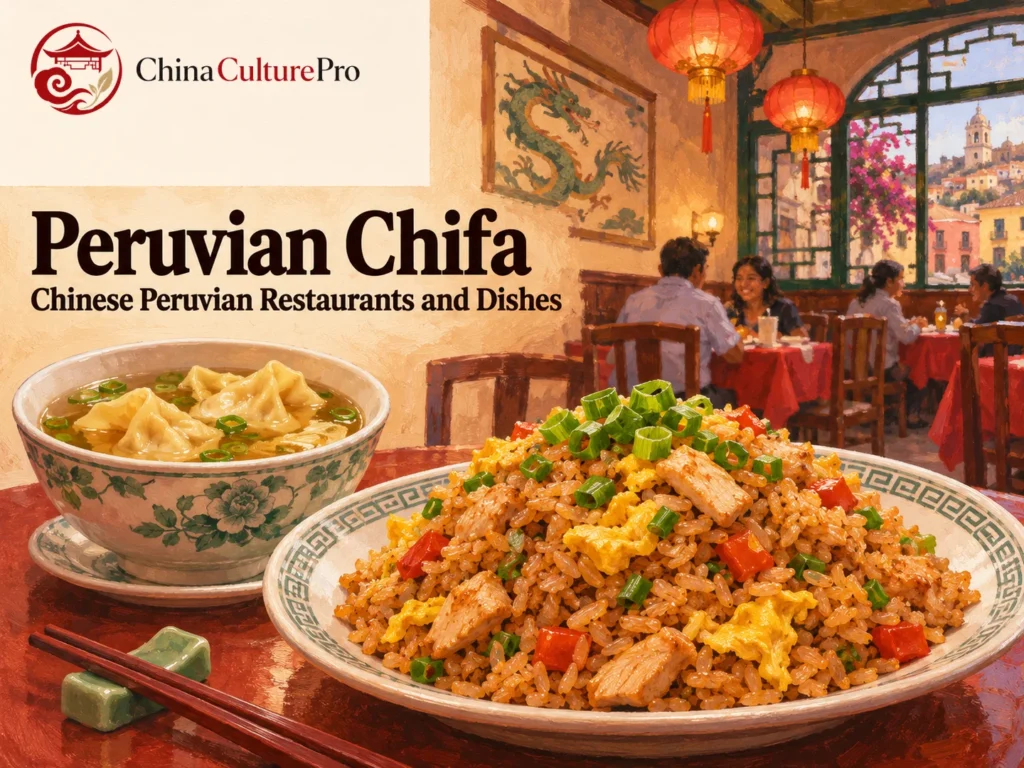
Peruvian chifa is a Chinese Peruvian cooking and restaurant tradition. The term also refers to a restaurant serving that food. In Lima, Chinese-run eateries and later restaurants on Calle Capón served dishes shaped by Cantonese cooking and Peruvian ingredients and tastes. Common menu names include arroz chaufa, or fried rice (炒饭, chǎofàn), tallarines saltados, or stir-fried noodles, and sopa wantán, or wonton soup. [1][2][3][4]
- History: Small eateries preceded the well-known Calle Capón restaurants of the 1920s. [1][2]
- Menu: Chaufa, stir-fried noodles and wonton soup are different dishes within the tradition. [1][3][4]
- Evidence: A cookbook published in 1954 documents several established dishes and techniques. [1]
A chifa menu may include several styles of dish. Use the dish name to distinguish what each menu item offers.
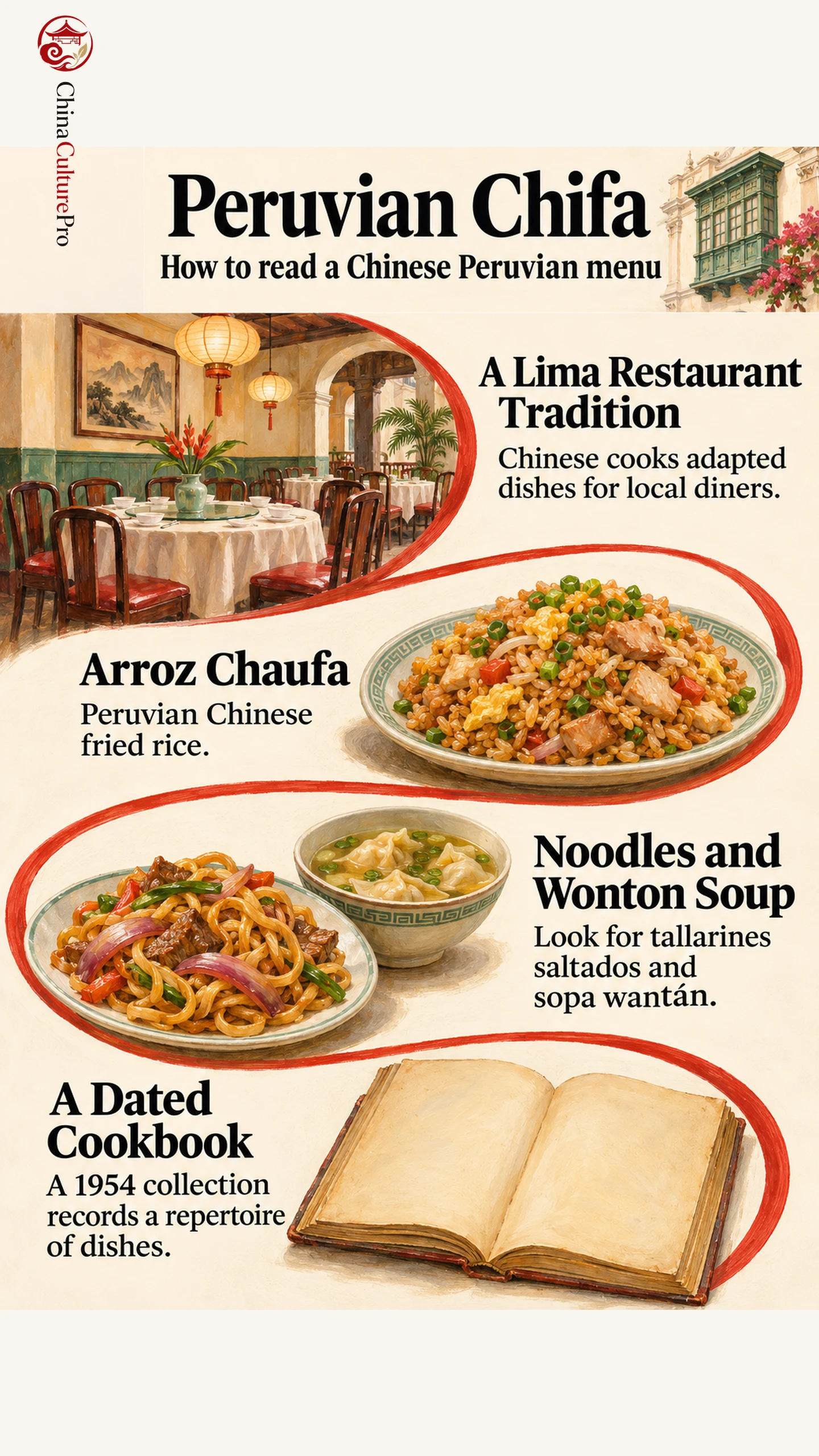
In Lima, chifa can name the food on the menu or the restaurant serving it. To see how that usage developed, look at the city’s earlier eateries, the restaurants on Calle Capón and the recipes later put into print. Together they show how a community’s cooking became part of Peruvian dining. [1][2][3]
From Lima’s Fondas to Calle Capón
Chinese migration to Peru grew in the nineteenth century. Over time some migrants and their descendants worked in neighborhood food businesses. Historical accounts use fondas for small eateries. Chinese cooks served local customers there and adapted what they offered to available ingredients and local preferences. See Chinese migration to Latin America for the earlier labor and settlement routes. [2][3][5]
A Peruvian Ministry of Culture decision identifies Kuong Tong, opened in 1921, and San Joy Lao, opened in 1927, as pioneering chifas on Calle Capón in Lima’s Chinatown. Those examples anchor the restaurant history in a street and decade. They followed an earlier period of small eateries, so the history of Chinese cooking in Lima extends beyond the opening date of any one restaurant. [1][2][3]
Arroz Chaufa and the Name on the Menu
Arroz chaufa is Chinese Peruvian fried rice. The Chinese expression associated with chaufa is fried rice. A Peruvian museum publication describes versions made with pork, beef, fish or seafood. Cooks can also vary the egg, scallions and seasonings. The menu may add a second word to tell you which meat or seafood goes in the rice. [1][3][4]
The guide to Chinese fried rice explains the wider dish family. The Peruvian name and the versions described in local sources reflect chifa’s history in Peru. A restaurant might offer several chaufas rather than one fixed version of the dish. [3][4]
Other Chifa Dishes: Noodles, Soup and Roasts
Tallarines saltados are stir-fried noodles. Sopa wantán is wonton soup. Chifas may also offer roasts, including duck, and dishes cooked with a quick stir-fry. A 1954 recipe collection cited by Peru’s Ministry of Culture records fried rice, stir-fried noodles, roast duck, soups and sauces. The recipe collection gives noodles, roasts and soups their own place in the repertoire. [1][4]
Chinese cooking also influenced dishes outside the narrow label chifa. A Peruvian culinary history connects the stir-frying used in lomo saltado with Chinese influence. That tells you something about how the technique entered broader Peruvian cooking. For the southern Chinese context of some of these techniques, see Cantonese cuisine. [1][2]
What a 1954 Cookbook Can Tell Us
Peru’s Ministry of Culture describes Chifa: recetas de arte culinario chino, published in 1954, as a record of Chinese cooking adapted to Peru. It notes techniques such as quick wok cooking and ingredients such as ají, herbs and seafood. The book dates one documented collection of dishes and techniques. It cannot by itself establish where each dish was first cooked. [1]
A menu and a cookbook preserve different things. A menu shows what diners could order at a particular restaurant. A cookbook records recipes someone chose to write down. The Cuban Chinese food culture guide offers another example of how local restaurants developed their own dishes. The Chinese diaspora culture guide connects those differences to migration and community life. [1][2][4]
FAQs About Peruvian Chifa
Does chifa mean a restaurant or a cuisine?
It can mean both. It refers to Chinese Peruvian food and to a restaurant that serves it. [1][2][3]
Is arroz chaufa the same as every kind of Chinese fried rice?
It is the Peruvian Chinese fried-rice tradition. Chifa menus can offer several versions with different meats, seafood or other ingredients. [1][3][4]
Why is lomo saltado mentioned in histories of chifa?
Peruvian culinary histories connect its stir-frying technique with Chinese influence. Lomo saltado also belongs to the broader repertoire of Peruvian cooking. [2][3]
資料來源
[1] Ministry of Culture, Peru. Resolución Viceministerial 047-2026-VMP CIC-MC
[2] Ministry of Culture, Peru. La cocina peruana en la historia
[3] Revista del Correo General de Perú. Mestizaje culinario: el arroz chaufa
[4] José Manuel Iglesias. Cocina asiática en Perú
[5] Biblioteca Nacional del Perú. Los retratos de la inmigración del siglo XIX