

Quick Answer: Who Were the Fifth Generation Chinese Directors?
The Fifth Generation (第五代, dì wǔ dài) is a label for mainland Chinese filmmakers associated with the Beijing Film Academy’s first graduating class after the Cultural Revolution, in 1982. Chen Kaige, Zhang Yimou and Tian Zhuangzhuang are prominent examples. Their work in the 1980s developed different ways to use landscape, color and stories about the past.[1][2][3]
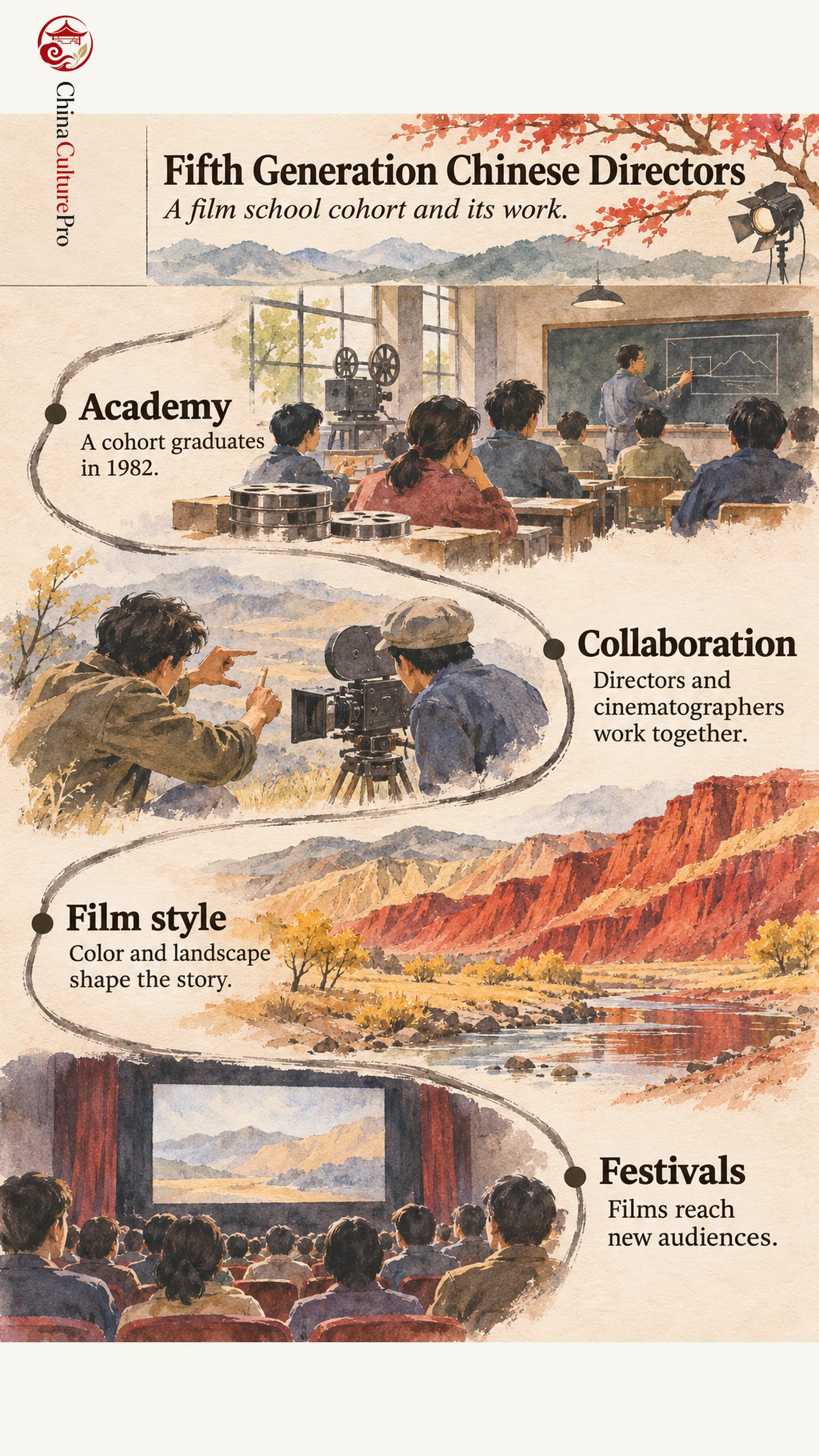
- Cohort: Shared training gave the label its starting point.[1][2]
- Collaboration: Some filmmakers worked as cinematographers before directing their own features.[2][4]
- Reception: Festival awards helped their films reach audiences abroad.[4][5]
Start with a film’s credits before treating a generation as one style.
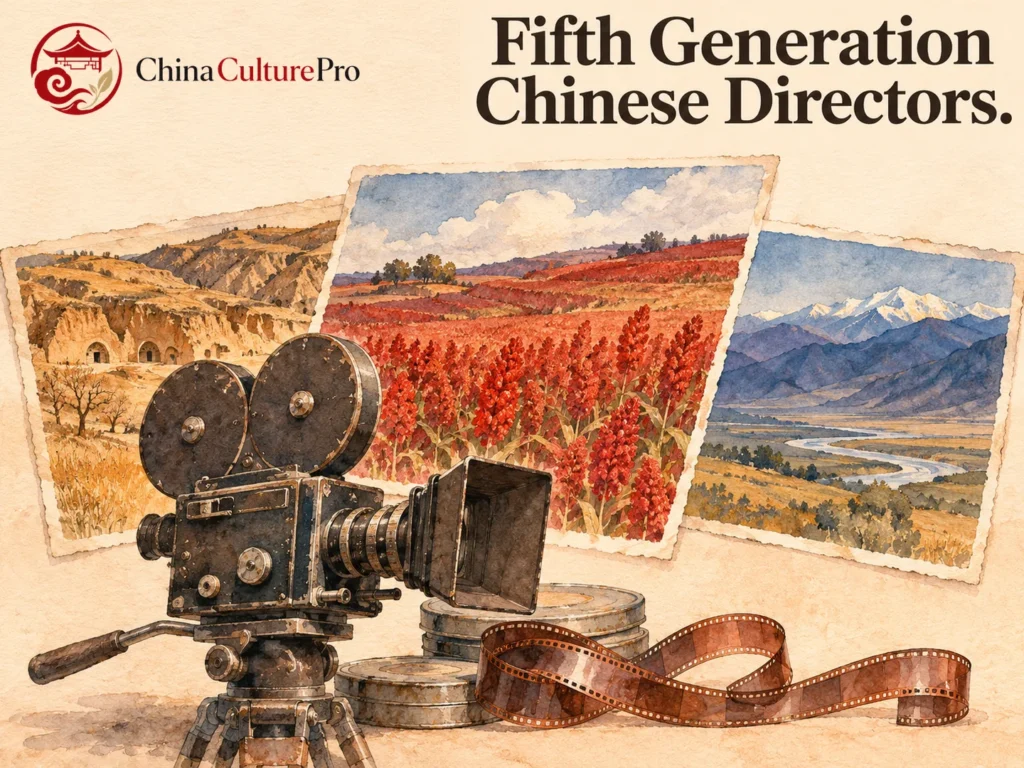
A broad earth-colored landscape, saturated red fields and an expansive Tibetan setting can all appear in discussions of the Fifth Generation. Watch how each film uses the space around people to give the setting a role in the story.[2][3][4]
The Academy Class Behind the Label
The Beijing Film Academy resumed admitting students in 1978 after the interruption of the Cultural Revolution. Its 1982 graduates included future filmmakers who worked across different production roles. The Fifth Generation name became a way to situate those careers in mainland film history. The broader guide to Chinese New Wave cinema places that development alongside the distinct movements in Hong Kong and Taiwan.[1][2]
Training was only one part of the opportunity. Studio support mattered after graduation, and the filmmakers worked with producers, actors and technicians who were outside the class. The cohort is a way to trace those early careers, while the individual credits help explain who made any given film.[1][2]
Chen Kaige, Zhang Yimou and Yellow Earth
Chen Kaige directed Yellow Earth (黄土地, Huáng Tǔdì, 1984), and Zhang Yimou was its cinematographer. The landscape often occupies much of the picture. A small figure within a broad frame lets the land carry some of the meaning normally supplied by dialogue or action. The film’s credits show how that visual approach came from a collaboration.[2]
Different Paths Through Red Sorghum and The Horse Thief
Zhang went on to direct Red Sorghum (红高粱, Hóng Gāoliang), which used saturated color and an expressive rural setting. It won the Golden Bear at Berlin in 1988. The vivid fields help organize the film’s color and place its characters within the landscape.[2][4]
Tian Zhuangzhuang’s The Horse Thief (盗马贼, Dàomǎzéi, 1986) gives extensive attention to place and ritual. Its Tibetan setting and its attention to the scale of the landscape offer a different way to watch a film from the same cohort.[2][3]
What Festivals Added to the Story
Chen’s Farewell My Concubine (霸王别姬, Bàwáng Bié Jī, 1993) follows Peking opera performers across several decades. It shared the Palme d’Or at Cannes that year. Opera shapes the characters’ lives and the story’s view of history. Chinese opera films follow a related but distinct subject, the adaptation of stage performance itself.[5]
FAQs About Fifth Generation Chinese Directors
Were the Fifth Generation All Directors at First?
Zhang Yimou worked as a cinematographer on Yellow Earth before his directorial debut, Red Sorghum. The label includes a period of collaboration across roles.[2][4]
Which Fifth Generation Film Won the Palme d’Or?
Chen Kaige’s Farewell My Concubine shared the 1993 Palme d’Or.[5]
Where Should I Start With Fifth Generation Films?
Start with Yellow Earth to see Chen’s direction and Zhang’s cinematography together. Then compare Zhang’s Red Sorghum with Tian’s The Horse Thief.[2][3][4]
資料來源
[1] Ni Zhen. Memoirs from the Beijing Film Academy
[2] The Criterion Collection. Revisiting Chinese Cinema
[3] British Film Institute. Modern Chinese-language film directors
[4] Berlinale. Hong Gaoliang: Red Sorghum
[5] Festival de Cannes. Farewell My Concubine