


Quick Answer: What Is Erjingtiao Chili Good For?
Erjingtiao (二荆条, èrjīngtiáo) is a long chili associated with Sichuan cooking, valued for fragrance, red color and moderate pungency. It belongs to Capsicum annuum.[1][4]
- Choose fresh peppers for vegetable-like uses or preparations that specify fresh chili.[7]
- Choose dried pods or flakes for aromatic seasoning and chili oil.[5][6]
- Treat its familiar mild-to-moderate reputation as a guide, not a guarantee for every bag.[2]
The chili itself is not a finished fermented bean paste, and it does not supply Sichuan pepper’s numbing sensation.[3][8]
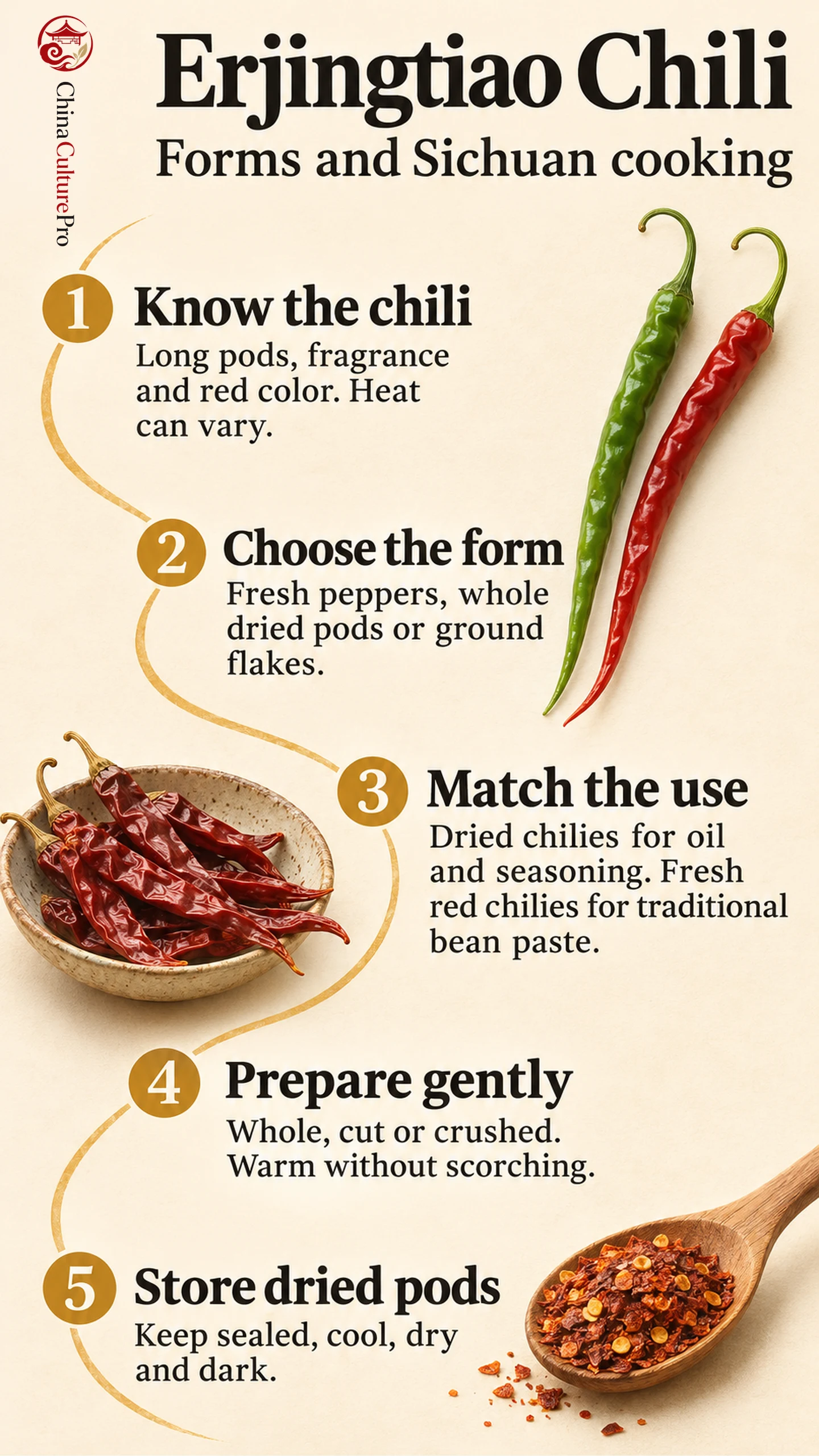
A recipe may need chili aroma and color as much as heat. Erjingtiao is useful when you want that balance, but the form you buy still matters: a fresh pepper, a dried pod and a jar of fermented paste do different work.
Recognize the Long, Aromatic Chili
Look for a slender, tapering pepper, often with a curved or hooked tip. Fresh peppers appear green before ripening red; dried ones have a wrinkled red skin. The name may be spaced as er jing tiao on English packaging.[2][4]
The appeal is a fragrant, sometimes fruity chili character rather than extreme heat alone. Blending different chilies in an oil changes its pungency and color. That is a useful reason to choose a chili for its whole flavor contribution, not simply the biggest heat rating.[1][2]
Fresh, Whole Dried or Ground
| 表現形式 | What it brings | Match it to |
|---|---|---|
| Fresh green or red pepper | Juicy chili flesh and a fresh vegetable texture | Stir-fries or recipes that specify fresh peppers |
| Whole dried pod | Dried chili aroma, with the option to leave whole or cut | Stir-fries and braises |
| Dried flakes or powder | Chili distributed through a seasoning or oil | Chili oil, dry seasoning and spice mixtures |
Do not replace a fresh pepper with the same weight of dried chili without adjusting the recipe. Water content and texture have changed. Likewise, a bag of plain erjingtiao flakes is different from a seasoned blend with salt or other spices.[2][5][7]
Its Roles in Sichuan Cooking
- Chili oil: Dried chilies provide color, fragrance and heat. Erjingtiao can be combined with hotter chilies when the cook wants a stronger kick without losing its aromatic role.[1][6]
- Stir-fries and braises: Whole or cut dried pods season the dish; fresh peppers can act more like a cooked vegetable ingredient.[2][7]
- Fermented chili bean paste: Fresh red erjingtiao is associated with traditional Pixian doubanjiang (郫县豆瓣酱, píxiàn dòubànjiàng), where salted chilies are combined with fermented broad beans.[3][4]
That last preparation is a transformation, not simply dried chili stirred into a jar. Fermentation, beans and salt contribute a flavor that a plain pepper cannot replace. Keep that distinction in mind when a Sichuan cooking guide calls for bean paste.[3][4]
Prepare Dried Chilies for the Dish
- Decide the cut. Keep pods whole for a visible aromatic addition, or snip them into sections to expose more of the interior.[2]
- Toast if the recipe calls for it. Warm the chilies with a little oil, stirring and watching closely so they become fragrant rather than burned.[5]
- Crush when needed. Grind toasted dried pods into flakes for chili oil or dry seasoning; use a finer grind only when the intended texture calls for it.[5]
Making chili oil requires a complete recipe with controlled oil temperatures. Do not interpret “use hot oil” as an instruction to pour smoking oil onto any chili mixture: the flakes should toast, not scorch.[6]
Buying and Storage
Check the chili name on the bag. Faded, discolored, brittle dried pods may be old. A prepared chili mix can contain several varieties, not just erjingtiao.[2][6]
Keep dried chilies sealed, cool, dry and away from light. Follow the seller’s directions for longer storage, which may include freezing. Use the relevant label for fresh peppers or prepared sauces.[2]
FAQs About Erjingtiao Chili
How hot is erjingtiao chili?
It is commonly mild to moderately hot, but some batches have a noticeable bite. Use less initially if you do not know the product rather than relying on a universal Scoville number.[1][2]
Is erjingtiao the same as facing-heaven chili?
No. Facing-heaven chili (朝天椒, cháotiānjiāo) is a different named chili group. Typical erjingtiao pods are long and slender; facing-heaven pods sold for cooking are generally shorter. Heat still varies by the specific product.[6][7]
What can replace erjingtiao chili?
For dried applications, a fragrant, relatively gentle dried chili can preserve the dish’s balance better than an extremely hot one. Byadgi is one possible compromise for color, but its aroma differs. Adjust the amount and expect a changed result.[7]
Is it the same as Sichuan pepper?
No. Sichuan pepper, or huajiao (花椒, huājiāo), is a citrus-family spice used for its tingling, numbing character. Erjingtiao is a chili pepper; the two supply different sensations.[8]
出典
[1] Yang, F., et al. Quality Characteristics and Volatile Components of Chili Oil Prepared from the Combination of Shuanla and Erjingtiao Peppers
[2] The Mala Market. Er Jing Tiao Chili
[3] Chengdu Intangible Cultural Heritage Protection Center. Traditional Pixian Douban Making
[4] Chengdu Shucheng Seasoning. The Traditional Craft of Pixian Douban
[5] Fly By Jing. Erjingtiao Chilis
[6] The Mala Market. Sichuan Chili Oil Recipe
[7] Clovegarden. Chinese Chilis
[8] The Mala Market. Sichuan Flower Pepper