


Quick Answer: Which Sesame Oil Should You Use?
Toasted sesame oil supplies roasted aroma; untoasted oil is milder. Zhi Ma You (芝麻油, zhī ma yóu) means sesame oil; check the processing description.[1][2]
- Toasted: Made from roasted seeds, with aroma that varies by roast level.[1]
- Untoasted: Made from unroasted seeds; its flavor and cooking applications depend on processing.[1][3]
- Chinese seasoning: A small amount of toasted oil can flavor dressings, marinades and a dish’s final stage.[2]
- Label check: Pure can describe an oil made from roasted seeds; it does not automatically mean untoasted.[5]
Toasting, refining and blending describe different aspects of an oil. None alone supplies every instruction for using the bottle.
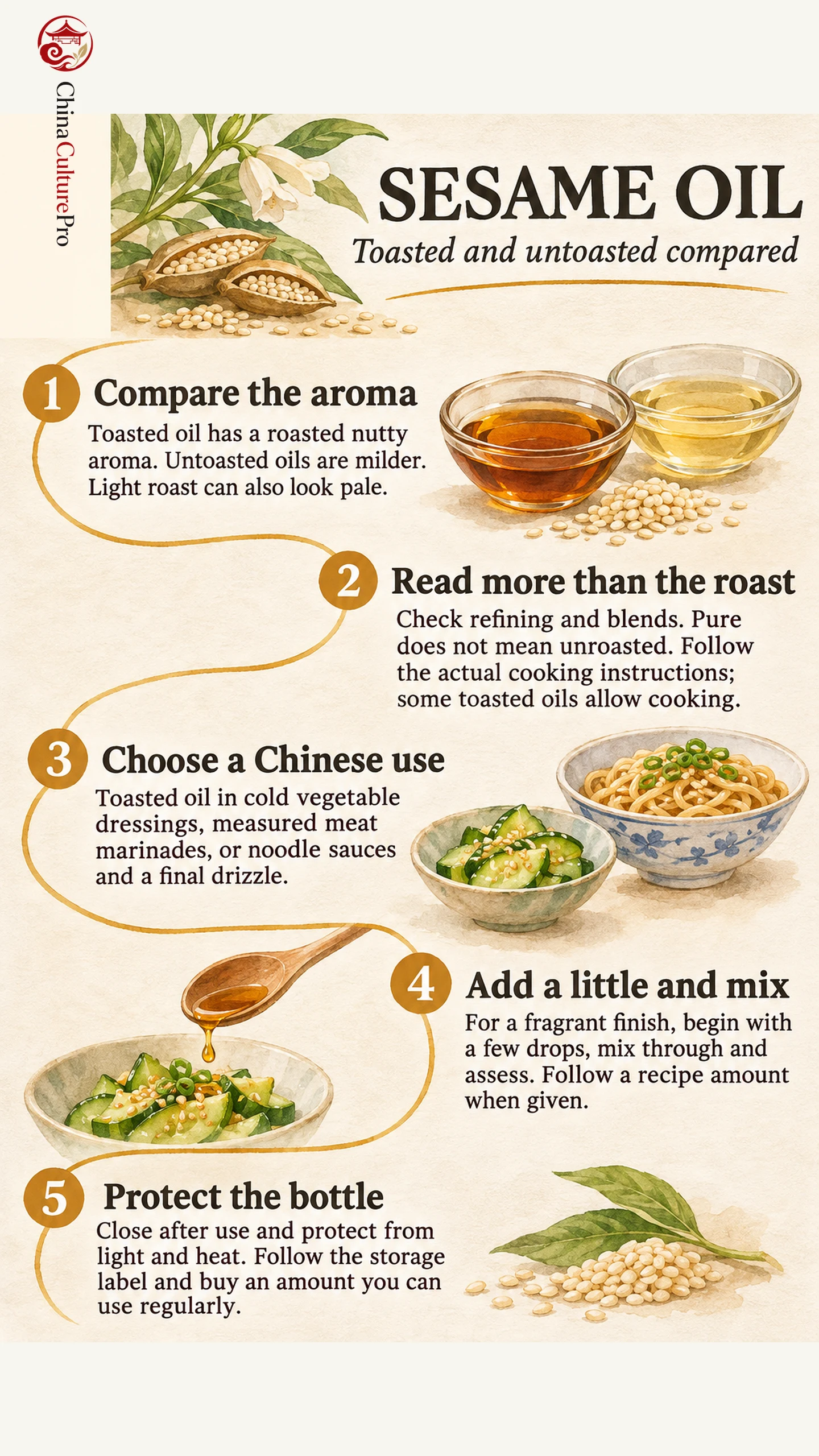
Start with the job in the recipe. Adding a fragrant finish to noodles is different from choosing the oil that will occupy a hot pan throughout cooking.
Toasted and Untoasted Sesame Oil Compared
| 種類 | 定義 | Flavor and typical role |
|---|---|---|
| Toasted sesame oil | Oil extracted from sesame seeds roasted before extraction | Nutty and aromatic; useful for seasoning, with lighter and darker roast styles.[1] |
| Untoasted sesame oil | Oil extracted from unroasted sesame seeds | Generally milder; suitable applications depend on the product’s processing and directions.[1][3] |
Lightly roasted oils can be paler and milder than dark-roasted oils; pale does not automatically mean unroasted.[1]
Heat, Refining and Blended Oils
Refining is separate from roasting. Some untoasted products are refined; check the intended cooking use rather than assuming all have the same processing.[1][3]
Do not turn the useful finishing-oil distinction into a blanket ban on heating toasted oil. Actual products include one recommended for low-to-medium-heat cooking and another whose directions allow roasting or shallow frying. Use the particular bottle’s instructions; prolonged high heat can still spoil the aroma you wanted.[3][4][8]
Blending is different again. A sesame-and-soybean oil blend can be made using roasted sesame seeds. Read the ingredient list to distinguish it from a product listing sesame oil alone; roasted does not mean unblended, and pure does not mean raw.[5][6]
Three Uses in Chinese Cooking
- Cold dressings: Toasted sesame oil adds a nutty accent to cucumber and other vegetable dressings, often alongside vinegar and other seasonings. Measure it rather than letting the fragrance overwhelm the dish.[2]
- Meat marinades: A little can be mixed into the seasoning before cooking. Half a teaspoon in a stir-fry meat marinade is one published cooking example, rather than a universal dose for every portion.[2]
- Noodles and a final drizzle: Add the roasted aroma to a noodle sauce or use a few drops just before serving a suitable dish. The many styles of Chinese noodles need different sauces; sesame oil supplies aroma, not a complete sauce by itself.[5][8]
Untoasted oil cannot reproduce that roasted scent. Where the purpose is simply a mild cooking fat, choose a product explicitly suitable for the recipe’s cooking method.[3]
Choosing and Adding Sesame Oil
For a finishing use, keep the amount small and easy to adjust.
- Match the purpose: Read the roast description, ingredients and cooking directions; match them to the recipe.[1][3][6]
- Add a small amount: For roasted sesame aroma just before serving, begin with a few drops rather than pouring freely.[5]
- Mix and assess: Distribute the oil through the sauce or food before deciding whether it needs more. Follow a recipe’s measured amount when one is given.[2]
This is a seasoning method, not an instruction to use a few drops as the entire frying fat.
Buying and Storing the Bottle
Check three things: roast description, ingredient list, and recommended use. A bottle can be both toasted and pure, or toasted and blended. Choose a quantity you can use regularly instead of assuming every sesame oil has the same strength or keeping period.[5][6][7]
Light, air and heat gradually affect oil quality. Close the bottle after use and follow its storage label, keeping it away from direct light and heat. One manufacturer’s one-to-two-month opened-use suggestion is a quality guideline for its products, not a universal expiry rule.[7]
FAQs About Toasted and Untoasted Sesame Oil
Does pure sesame oil mean untoasted?
No. Pure sesame oil can be made from roasted seeds. Check the roast description separately from the ingredient list.[5]
Can I heat toasted sesame oil?
Some products allow cooking, including low-to-medium heat or specified frying uses. Follow the actual product; adding it late is useful when aroma is the priority.[3][4][8]
Can untoasted oil replace toasted oil?
It supplies oil with a milder flavor, rather than recreating the roasted fragrance.[1]
Can I toast pale sesame oil in a pan to make it toasted?
No. The seeds are roasted before extraction; heating extracted oil does not repeat that process.[1]
出典
[1] Takemoto Oil and Fat, Maruhon. Sesame Oil Products and Production
[2] The Woks of Life. Sesame Oil
[3] Dipasa. Sesame Oil: Refined, Toasted and Virgin
[4] Roland Foods. Toasted Sesame Oil
[5] Lee Kum Kee USA. Pure Sesame Oil
[6] Lee Kum Kee USA. Sesame Oil Blended with Soybean Oil
[7] Kadoya Sesame Mills. Frequently Asked Questions
[8] Just One Cookbook. Sesame Oil