


Quick Answer: What Is Fuzhu?
Fu Zhu (腐竹, fǔ zhú), commonly written fuzhu, consists of dried sticks made from the film that forms on heated soy milk. The film is lifted, folded into rough tubes and dried.[1]
- Flavor: Mild soybean flavor lets a braising liquid or sauce do much of the seasoning.[1]
- Texture: Properly rehydrated sticks are layered and pleasantly chewy.[5]
- Uses: Try vegetable braises, meat stews or prepared pieces in hotpot.[1][5][6]
- Preparation: Soften dried sticks evenly, drain, cut and cook; soaking is not the whole cooking method.[5]
Tofu skin is an ambiguous English label. Thin soy-film sheets and pressed tofu sheets are different products from dried fuzhu sticks.[2][3]
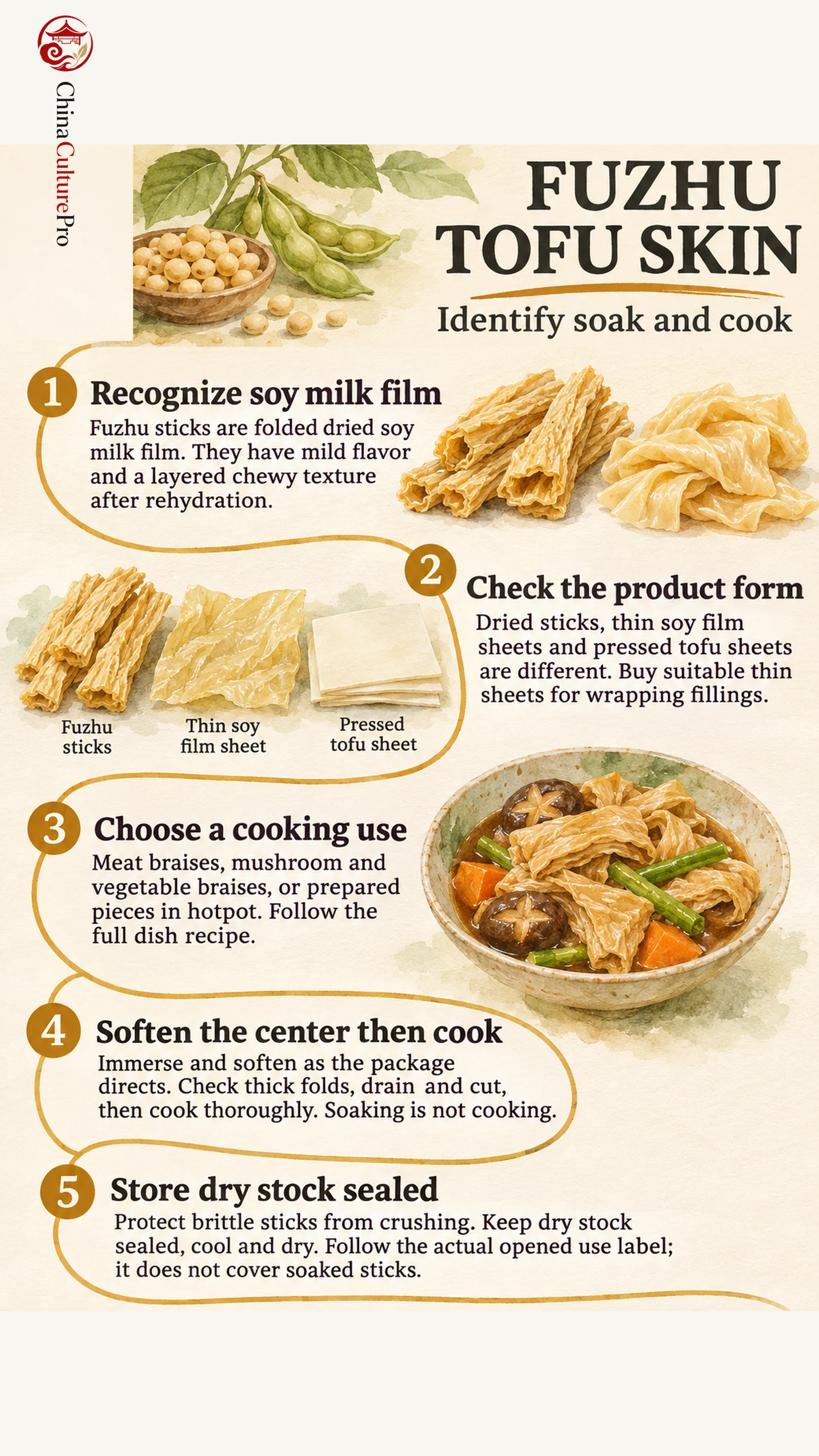
Choose the product form before choosing a cooking time. A delicate sheet intended as a wrapper and a thick folded stick cannot be handled as if they were identical.
Soy Milk Film, Mild Flavor and Chew
Fuzhu is folded soy-milk film, not sliced tofu. Its layered creases hold sauce and produce a chewy texture after rehydration.[1][5]
Three Products Sold as Tofu Skin
| 製品 | 定義 | 見分けるポイント |
|---|---|---|
| Dried fuzhu sticks | Soy-milk film folded and dried into sticks or rough tubes | Rehydrate the thicker folds evenly before cutting and cooking.[1][5] |
| Thin bean-curd sheets | Fu Pi (腐皮, fǔ pí): sheets made from soy-milk surface film | Suitable sheets can be layered or wrapped around fillings; dried sheets need their own rehydration method.[2] |
| Pressed tofu sheets | Tofu curds compressed into thin sheets | A different manufacturing process and texture, despite sharing the tofu-skin label.[3] |
Look at the package photograph, ingredient description and preparation instructions together. The English name alone may not tell you whether you are buying a wrapper, dried sticks or a pressed sheet.
Three Chinese Cooking Uses for Fuzhu
- Braised meat dishes: The folds catch sauce in pork-rib stews or Hong Kong-style lamb casseroles. Prepare the sticks before following the dish’s braising sequence.[1]
- Mushroom and vegetable braises: Soaked sticks can be sectioned, tied into knots and cooked with Chinese black mushrooms, green beans and carrot in a seasoned sauce. This gives the soy ingredient a distinct role alongside the vegetables.[6]
- Hotpot: Use softened pieces and follow their cooking instructions; dense sticks differ from thin fresh sheets. The hotpot guide helps plan the other ingredients.[5]
A vegetable-based ingredient does not make every finished dish vegetarian: the broth, meat and sauces still determine the whole dish.
How to Rehydrate and Prepare Dried Fuzhu
Start with the actual package’s directions and enough time to soften the center.
- Portion and immerse: Put the sticks in enough cool or lukewarm water to cover them. If they float, a clean plate can hold them submerged.[4][5]
- Soften evenly: Follow the product’s time and temperature. One pack specifies about an hour in warm water; another specifies 20 minutes in cold water followed by 10 minutes of boiling. Neither is a universal instruction for all fuzhu.[7][8]
- Check and cut: Check the thicker folds. Rushing with boiling water can leave a mushy outside and hard center. Once evenly pliable, drain and cut.[4][5]
- Cook the dish: Cook the prepared pieces thoroughly following the recipe; soaking does not make them ready to serve.[5]
Buying and Storing It
Choose intact sticks for distinct pieces in the dish. Protect the brittle folds from crushing and store dry stock sealed in a cool, dry place.[1]
Check the actual ingredients and opened-use instructions. One commercial pack allows four weeks after opening when kept airtight and dry; that is a product-specific period. It does not describe storage of sticks already soaked in water.[7]
FAQs About Tofu Skin Fuzhu
Why is the middle still hard after soaking?
The outside may soften before a thick fold hydrates. Keep the pieces submerged and allow the center to soften; boiling water is an unreliable shortcut.[4]
Can I use a block of tofu instead?
It will change the dish. A solid tofu block does not reproduce the folded soy-film structure that holds the sauce.[1]
Can dried sticks wrap a filling?
For a wrapped roll, buy the suitable thin sheets the recipe specifies. Rehydrated sticks do not become a broad, flat wrapper.[2]
Does soaking replace cooking?
No. Softened sticks still need the cooking specified by the recipe and product.[5]
出典
[1] The Woks of Life. Dried Bean Curd Sticks
[2] The Woks of Life. Bean Curd Sheets, Fresh and Dried
[3] The Woks of Life. Pressed Tofu Skin
[4] Anyang Shuangqiang Bean Goods. Soaking Dried Bean Curd Sticks
[5] Longki Foods. Dried Bean Curd Sticks Product and Preparation
[6] Hong Kong Department of Health. Bean Curd Sticks with Mushrooms and Green Beans
[7] Wai Yee Hong. Yudou Dried Beancurd Sticks
[8] Wai Yee Hong. Way-On Bean Curd Sticks