


Quick Answer: What Is Chinese Sesame Paste?
Chinese sesame paste (芝麻酱, zhīmajiàng) is a thick ground-sesame condiment, usually referring in savory cooking to a strongly roasted white-sesame style. It supplies both aroma and body to sauces.[1][2]
- Flavor: Pronounced toasted-sesame aroma.
- Texture: Dense and creamy, sometimes with separated oil.
- Forms: Pure sesame products and blends that can include peanuts.
Check the ingredient list rather than inferring the formula from the English product name.[3][4]
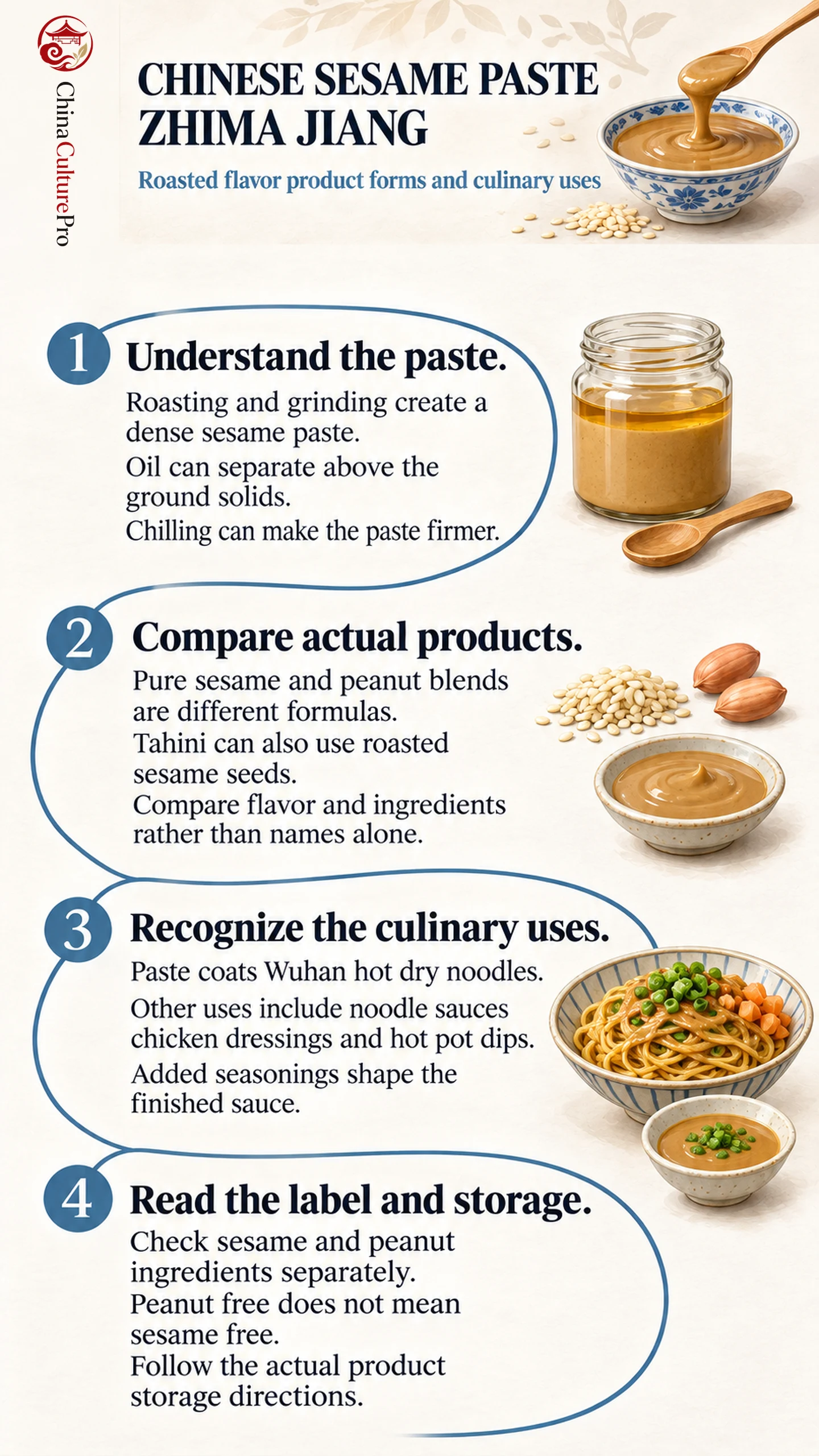
The brown paste stirred into a noodle sauce carries both aroma and body. A jar, a peanut-sesame blend and a ready-mixed dip may look similar, but their ingredient lists explain why they behave and taste differently in a meal.
Roasted Seeds, Dense Texture and Separated Oil
Roasting and grinding create the familiar tan or brown paste. Black-seed pastes also exist, often for desserts; savory recipes usually mean the roasted white-seed style.[2]
Oil can separate above the ground solids. Stirring recombines the layers; chilling can make the paste firmer.[1]
Pure Sesame, Peanut Blends and Tahini
| 製品 | Ingredient or processing distinction |
|---|---|
| Pure sesame paste (纯芝麻酱, chún zhīmajiàng) | A documented product lists sesame paste alone. |
| Sesame-peanut blend | A documented sachet combines sesame paste, peanut paste and peanut protein. |
| Tahini | A related sesame paste; roasted-seed versions exist, so it is not uniformly raw. |
Chinese roasted sesame paste usually tastes stronger than mild tahini. Roasting, seed treatment and consistency vary; compare products rather than assuming every tahini is raw.[1][5]
Noodle Sauces, Hot Pot Dips and Other Uses
Sesame paste adds a creamy, nutty layer to noodle sauces. Hot dry noodles (热干面, règānmiàn) are one familiar example; the Wuhan dish has noodles coated with sesame paste and accompanied by pickles and scallions.[6]
Examples include some dan dan noodle versions, chicken dressings and hot pot dipping sauces. Other seasonings create the finished sauce’s saltiness, acidity or heat. Paste also appears in bun fillings and baked goods.[2]
Reading Ingredients and Storage Directions
Check sesame and peanut ingredients separately. The absence of peanut does not mean the absence of sesame.[3][4]
Follow the actual label. Chilling can firm the paste; a tahini producer allows pantry or fridge storage for its own product.[1][5]
FAQs About Chinese Sesame Paste
Is Chinese sesame paste the same as sesame oil?
No. Ground seed paste supplies a dense body as well as aroma; oil is a different form.
Does every sesame paste contain peanuts?
No. Pure sesame products exist, but some sesame-labeled products include peanuts.
Is all tahini made from raw sesame seeds?
No. A producer explicitly makes tahini from dry-roasted seeds.
Is sesame paste already a finished hot pot dipping sauce?
Plain paste is a base. Packaged dips can include other ingredients.
出典
[1] The Woks of Life family. Chinese Sesame Paste: Uses and Texture
[2] Maggie Zhu, Omnivore’s Cookbook. Roasted Sesame Paste and Culinary Applications
[3] Lee Kum Kee Professional USA. Pure Sesame Paste: Ingredient Label
[4] Lee Kum Kee Professional Hong Kong. Sesame Paste Sachet: Ingredients
[5] Soom Foods. Tahini: Roasting, Hulling and Texture
[6] Wuhan Municipal Bureau of Commerce. Wuhan Hot-Dry Noodles with Sesame Paste