


Quick Answer: What Is Ji Rou Fan?
Taiwanese chicken rice, ji rou fan (雞肉飯; jī ròu fàn), is a bowl of white rice topped with cooked chicken and a savory sauce, often finished with aromatic shallot oil and crisp shallots. The components are prepared separately before assembly.[3]
- Rice: Plain cooked white rice forms the base.
- Poultry: Chicken is used in home versions; Chiayi is particularly associated with turkey rice.[1]
- Flavor: Cooking broth, fat, soy seasoning and shallots can all contribute.[1]
Chicken and turkey are different ingredients. Check the menu rather than treating their English names as interchangeable.
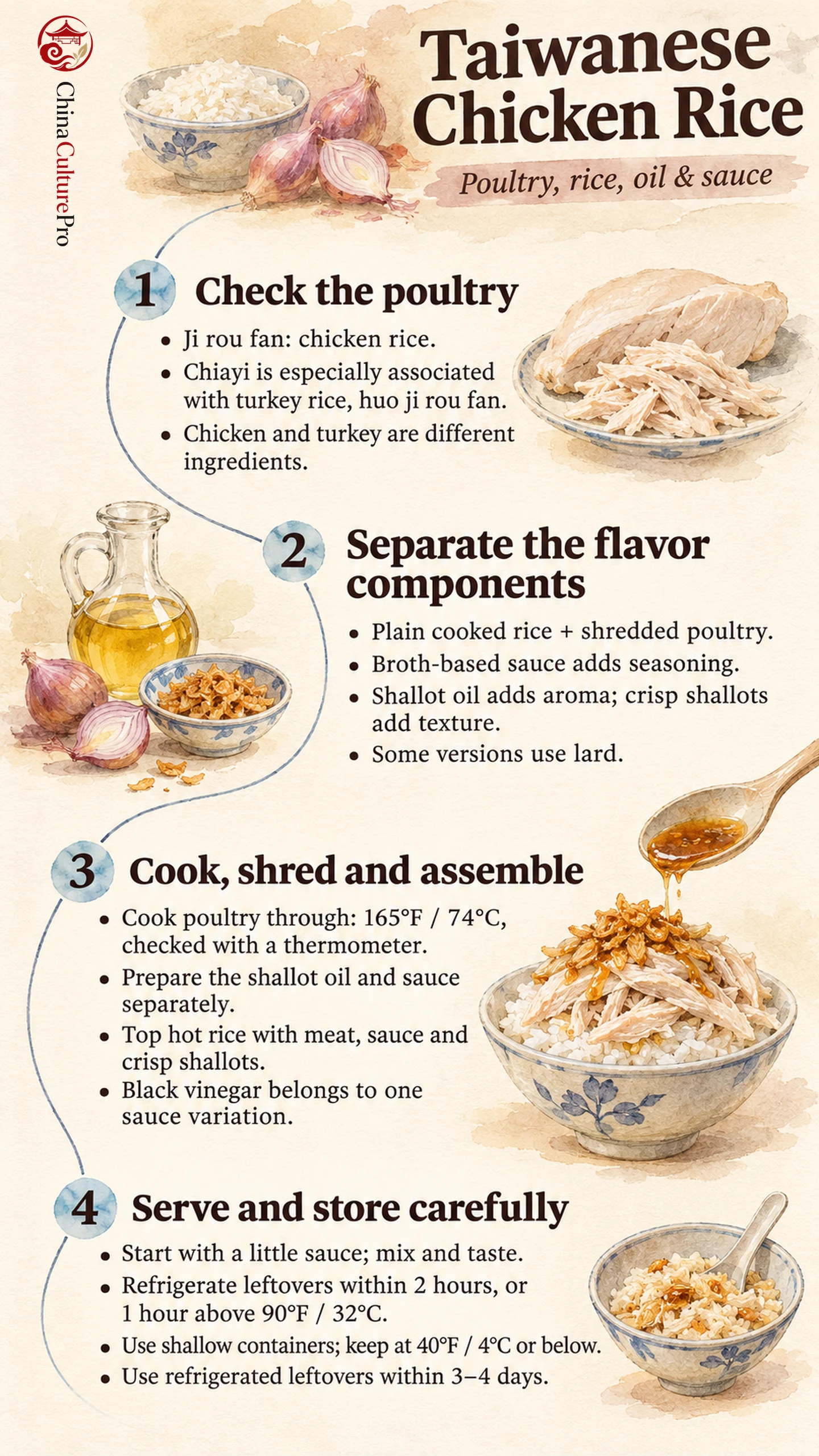
This is a modest-looking bowl in which the liquid seasoning and aromatic fat do much of the work. The guide follows the ingredient choices and preparation that distinguish it within Taiwanese food culture, including the closely related Chiayi turkey version.
Chicken Rice and Chiayi Turkey Rice
Chiayi’s huo ji rou fan (火雞肉飯; huǒ jī ròu fàn) uses shredded or sliced turkey over white rice with sauce and shallots.[1]
The shared format does not require every kitchen to use the same meat cut or sauce. A home chicken recipe may use breast, thigh or both; the preparation below follows a documented version using ordinary chicken.[2]
Hainanese rice is cooked with chicken fat and broth; this Taiwanese version dresses plain cooked rice.[1]
For other combinations of rice and toppings, the Chinese rice dishes guide provides a broader map. A shared rice base does not make the preparation or regional identity the same.
Rice, Poultry, Shallot Oil and Sauce
Cook the rice so that its grains retain some resilience once sauce is added. A documented home version uses short-grain white rice, bone-in chicken breast, rendered chicken fat and fried shallots. Bones contribute to the cooking broth; the skin supplies fat for the aromatic oil.[3]
Think of sauce and oil as separate components. Broth supplies liquid, soy sauce and sugar adjust seasoning, while the shallot oil carries aroma. Crisp shallots add another texture on top. Combining all of them into one heavy gravy before tasting can obscure those differences.
One sauce variation adds rice wine, white pepper and black vinegar; vinegar is not compulsory.[2]
A Home-Style Chicken Rice Method
Use a tested recipe for quantities; this overview includes an optional black-vinegar sauce.[2]
- Cooked white rice
- Chicken breast or thigh
- Chicken skin or prepared chicken fat
- Sliced shallots
- Ginger and scallion
- Chicken broth and soy sauce
- Rice wine, sugar and white pepper
- A little black vinegar, if using this sauce variation
- Cook the chicken: Simmer chicken with ginger and scallion until cooked; shred once safe to handle.
- Prepare the aromatic fat: Render and strain chicken fat. Gently fry sliced shallots in it; reserve oil and crisp shallots separately.
- Make the sauce: Boil broth, chicken fat, soy sauce, sugar, white pepper and rice wine. Add black vinegar if using.
- Assemble the bowl: Top hot rice with shredded chicken, sauce and crisp shallots.
For the chicken-cooking step, check the thickest part with a food thermometer: poultry should reach 165°F (74°C). A fixed simmer-and-rest time is not a substitute for that check across different cuts and sizes.[4]
The Chinese cooking methods guide explains the broader differences between simmering meat, rendering fat and frying an aromatic.
Serving Variations and Leftovers
Shreds or slices, sweeter or saltier sauce, and chicken fat or lard can change the serving.[1]
Begin with a modest amount of sauce, then mix and taste before adding more. Rice should remain part of the meal’s texture rather than disappear beneath liquid. Serve the crisp shallots at the end if you want their texture to remain noticeable.
For leftovers, divide the food into shallow containers and refrigerate within two hours, or within one hour above 90°F (32°C). Keep refrigerated food at 40°F (4°C) or below and use it within three to four days.[5]
FAQs About Taiwanese Chicken Rice
Is ji rou fan always made with turkey?
No. Chicken versions are common; the specific name huo ji rou fan identifies turkey rice.[1]
Is it the same as Hainanese chicken rice?
No. Here plain rice is dressed after cooking; Hainanese rice is cooked with chicken fat and broth.[1]
Can chicken rice contain pork fat?
Yes. Some sauces use lard, so the poultry topping does not establish the fat used throughout the bowl.[1]
Sources
[1] Taiwan National Immigration Agency, cultural food feature. 臺灣庶民美食:嘉義火雞肉飯
[2] Chef Qiu Baolang, original recipe, Wecook123. 嘉義雞肉飯
[3] Edwina, original recipe. Taiwanese Chicken Rice
[4] USDA FSIS. Safe internal temperature for cooking meat and poultry
[5] USDA FSIS. How do I handle leftovers safely?