


Quick Answer: What Are Suzhou Mooncakes?
Suzhou-style mooncakes, sushi yuebing(苏式月饼,sūshì yuèbǐng), are filled pastries recognized for their fine, flaky layers.
- Skin: A wheat-based pastry built from two doughs with different water and fat content.
- Filling: Sweet pastes or savory centers, including the well-known fresh-pork version.
- Occasion: A Mid-Autumn favorite in Suzhou and the wider Jiangnan region.
They differ from the familiar molded Cantonese mooncake and from chilled snow skin mooncakes. The style is defined more usefully by its pastry than by a rule that every filling must be pork, every surface must carry a red stamp or every recipe must use the same fat.
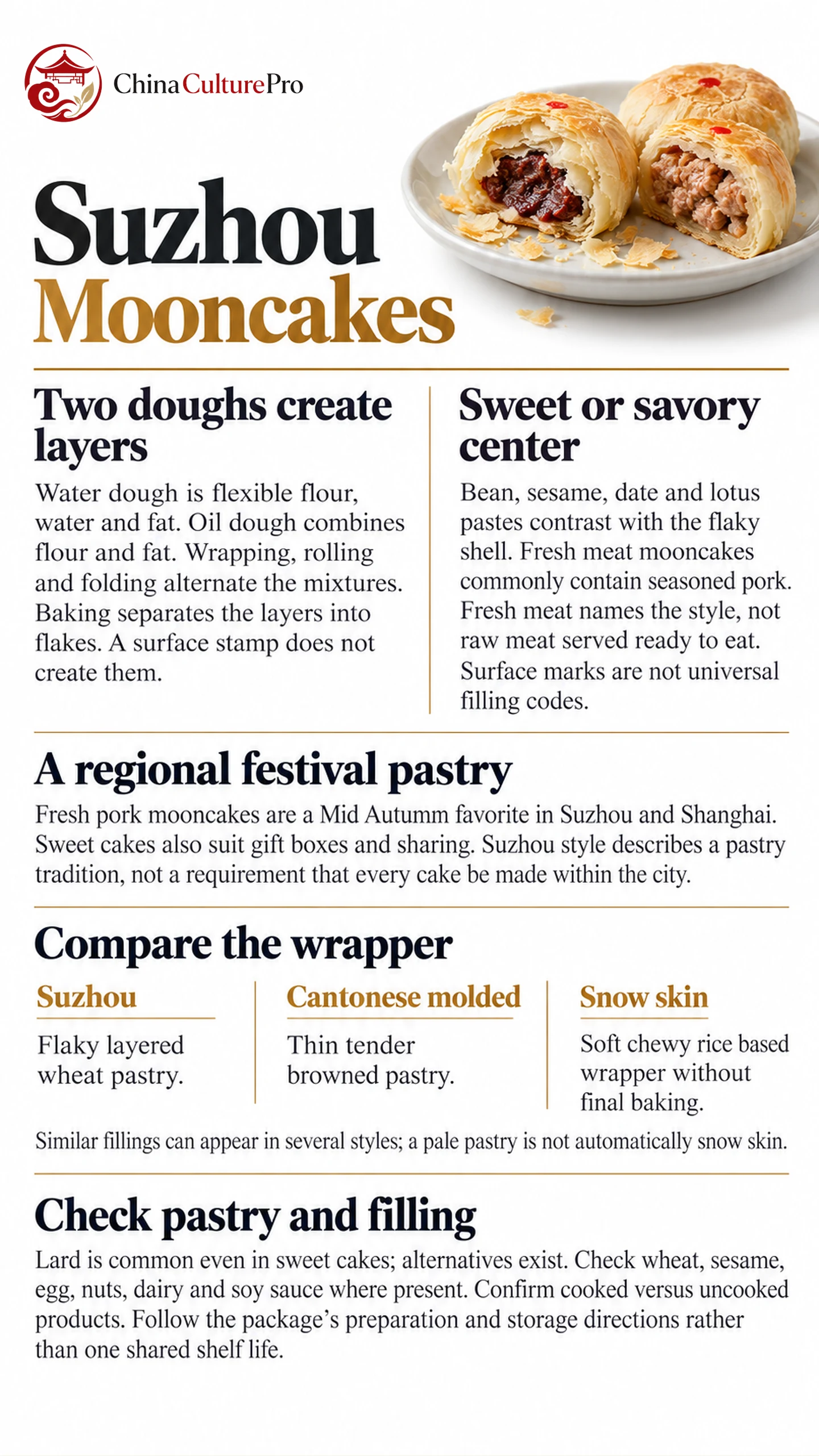
A pale round pastry breaks into thin flakes, revealing either a dark sweet paste or a juicy savory center. That contrast makes Suzhou mooncakes distinctive within the wider mooncake family. Understanding the layers first helps explain why the same regional style can accommodate such different fillings.
The Flaky Skin: Water Dough and Oil Dough
The pastry begins with two mixtures. The water dough combines wheat flour with water and some fat, creating a flexible wrapper. The second mixture, yousu(油酥,yóusū), combines flour and fat into a softer, richer dough. “Oil dough” therefore does not mean a pocket of liquid oil.[1]
One dough encloses the other, and rolling and folding distribute them into alternating layers. Once baked, these layers separate into the delicate flakes visible at a broken edge. They are produced by the dough arrangement rather than by the red surface mark, the filling or a raising agent alone.[1][2]
Lard is a familiar pastry fat, but alternatives occur. A documented version uses coconut oil as an option, while other preparations use vegetable shortening. Changing the fat can change flavor and handling, so a substitute should not be described as producing an identical result in every recipe.[2]
The overall effect is a tender, crumbly shell with a more fragile bite than a compact molded crust. The layers can remain relatively pale. A carved mooncake mold is unnecessary for creating them: shaping, filling and layering have already established the pastry’s structure.
Sweet Pastes and Fresh-Pork Fillings
Sweet Suzhou-style mooncakes can contain red bean, sesame, date or lotus paste. The paste gives the center a dense, smooth contrast to the dry flakes. Some bean fillings include osmanthus for fragrance; others are simpler. Chinese red bean desserts show how the same ingredient takes different forms outside mooncakes.[2][3]
Fresh-meat mooncakes, xianrou yuebing(鲜肉月饼,xiānròu yuèbǐng), commonly enclose seasoned pork. The filling is savory but may also include a little sweetness. Recipes can use scallion, ginger, soy sauce and cooking wine, producing a juicy center within the flaky shell.[4]
“Fresh meat” names the filling style; it does not mean that the finished pastry is served with raw pork. In a common preparation, the filling is enclosed before the mooncake is baked. Raw or frozen uncooked products sold for preparation at home must still be cooked according to their instructions.
Sweet and savory are useful starting categories, not exhaustive rules. Salted egg yolk or other additions may appear in individual versions. A red dot or stamp can help a bakery identify its products, but its meaning is not a universal ingredient code. Confirm the label or ask about the actual center.
Suzhou, Shanghai and Mid-Autumn Traditions
In Suzhou, freshly made meat mooncakes are closely associated with the Mid-Autumn season. Their appeal includes the contrast between a crisp shell and moist filling, making them a food people often want to eat soon after preparation. The style also belongs to a wider Jiangnan pastry culture rather than remaining within one city’s boundaries.[5]
Shanghai cuisine includes its own strong attachment to fresh-pork mooncakes. The regional name and the place of purchase therefore need not match: a Shanghai bakery can make a Suzhou-style pastry. The label describes a culinary style as well as a place.[4]
Gift boxes and shared pastries connect the sweet versions with Mid-Autumn traditions, while a warm savory mooncake can also function as an individual snack. A date-paste cake for sharing and a fresh-pork cake eaten at a counter offer different experiences within the same broad pastry style.[3]
The name identifies a regional pastry tradition with both sweet and savory uses, rather than a rule about where every cake must be made.
How Suzhou Mooncakes Compare with Other Styles
The wrapper provides the clearest comparison. Looking only at a bean or lotus filling can obscure the differences, because similar pastes can appear inside more than one style.[2][6][7]
| Style | Wrapper character | Typical preparation distinction |
|---|---|---|
| Suzhou-style | Flaky, layered wheat pastry | Water dough and fat-rich dough are worked together before filling and baking |
| Cantonese molded | Thin, tender browned pastry | Syrup-based dough is filled, molded and baked |
| Snow skin | Soft, chewy rice-based wrapper | Cooked components are assembled without a final pastry bake |
A Suzhou mooncake is therefore not simply a Cantonese mooncake without a design. Nor is a pale baked pastry automatically snow skin. The comparison between snow skin and baked mooncakes explains those broader choices in more detail.
The layered method also connects Suzhou mooncakes with other Chinese pastries, including wife cakes. A related pastry technique does not make their fillings or cultural names interchangeable.[2]
Choosing, Serving and Ingredient Checks
Choose the filling and then check the pastry fat. A sweet bean center can still be surrounded by lard pastry; a meat-free filling alone does not establish vegetarian suitability. For a plant-based version, both doughs, the filling and the finish need confirmation.
Check wheat, sesame, egg and any nuts or dairy additions relevant to your needs. Soy sauce can occur in a pork filling, while an egg wash or sesame finish may be present on the surface. Ask about shared equipment if cross-contact matters.[8]
For a fresh-pork pastry, establish whether you are buying a cooked snack or an uncooked product. For packaged mooncakes, inspect the ingredient list, production information and storage conditions. Follow the stated directions rather than assigning all flaky pastries the same room-temperature shelf life.[9]
A small plate catches the loose flakes. Tea is a familiar accompaniment, and cutting a sweet cake can make several fillings easier to share. Reheating may change the shell’s texture, but it must follow the product’s guidance; a crisp surface alone does not prove that an uncooked meat center has been properly cooked.
FAQs About Suzhou Mooncakes
Are Suzhou mooncakes always savory?
No. Sweet bean, sesame, date and lotus pastes coexist with the familiar pork-filled version. The flaky pastry is the more consistent identifying feature.
Do Suzhou mooncakes contain lard?
Many do, including sweet versions. Other fats are also used, so check both pastry doughs and the filling when animal ingredients matter.
Are fresh-meat mooncakes cooked before serving?
A ready-to-eat fresh-meat mooncake should contain cooked meat. Uncooked retail products require full preparation according to their instructions.
Do Suzhou mooncakes need a carved mold?
No. Their layered pastry can be shaped by hand. A red stamp or dot is a surface finish, not the source of the flaky layers.
Sources
[1] Shanghai Information Office. Chinese Pastry’s Delicious Layers
[2] Michelle, Sift & Simmer. Suzhou-Style Mooncakes
[3] Michelin Guide. Suzhou Style Mooncakes: A Chef’s Account
[4] Judy Leung. Shanghai Savory Mooncakes
[5] Suzhou Municipal Government. Delicacies
[6] Judy Leung. Lotus Mooncakes with Salted Egg Yolks
[7] Judy Leung. Snow Skin Mooncakes
[8] U.S. Food and Drug Administration. Food Allergies: What You Need to Know
[9] Suzhou Market Regulation Authorities. Mooncake Consumer Advice, 2026