

Quick Answer: What Is Red Yeast Rice Used For?
Red yeast rice, Hong Qu Mi (红曲米, hóng qū mǐ), is rice fermented with Monascus fungi. In Chinese food, it is associated with red color, fermentation and the making of certain wines and condiments.[1][2]
- It contributes to Red Fermented Bean Curd, Hong Fu Ru (红腐乳, hóng fǔ rǔ), and some rice wines.[1]
- Related Red Wine Lees, Hong Zao (红糟, hóng zāo), season regional dishes, especially in Fujian cooking.[3]
- Ground grains can supply color in a recipe without replacing its other seasonings.[6]
Culinary red yeast rice should not be confused with red-skinned table rice or treated as interchangeable with a dietary supplement.[1][2]
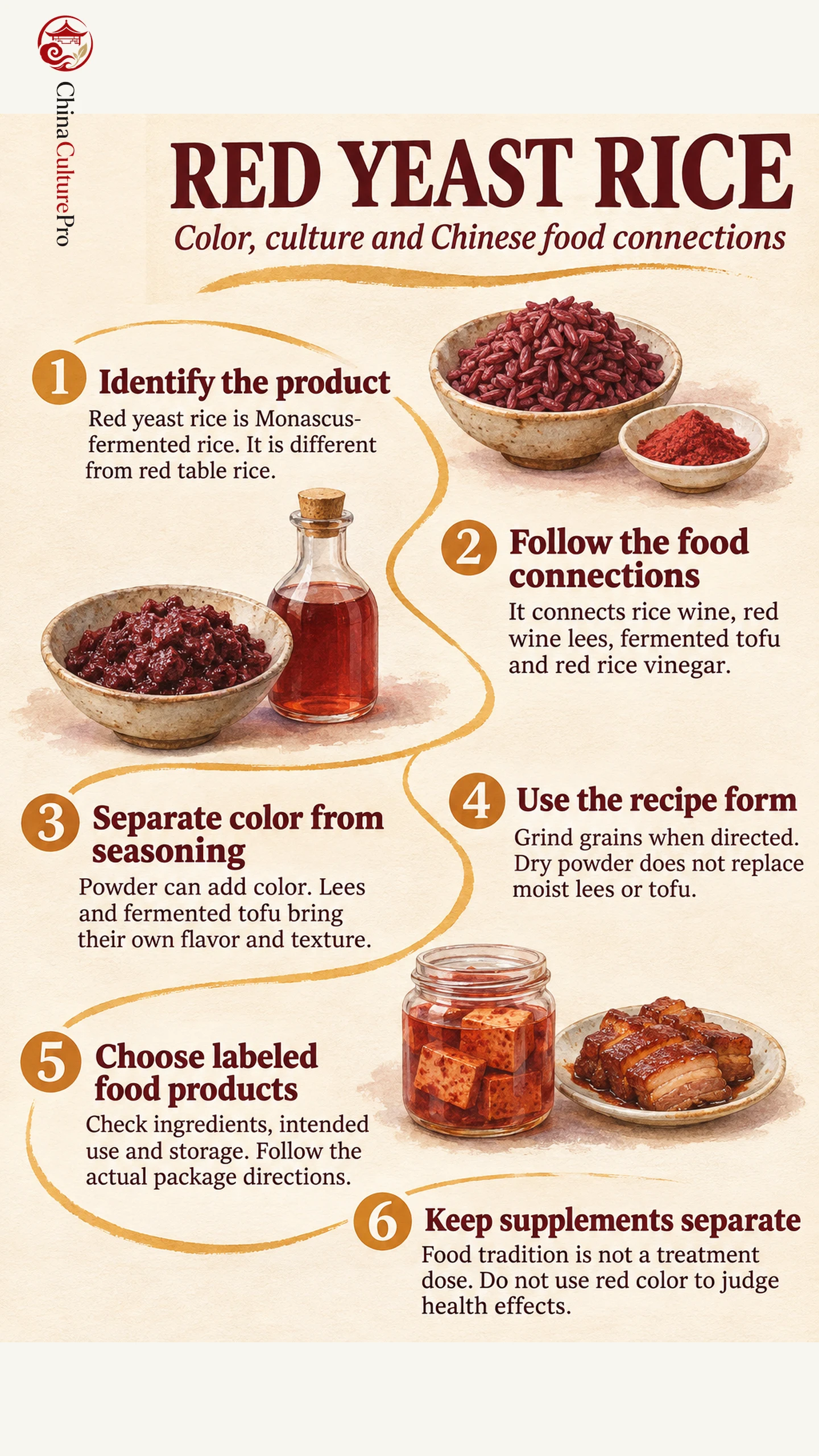
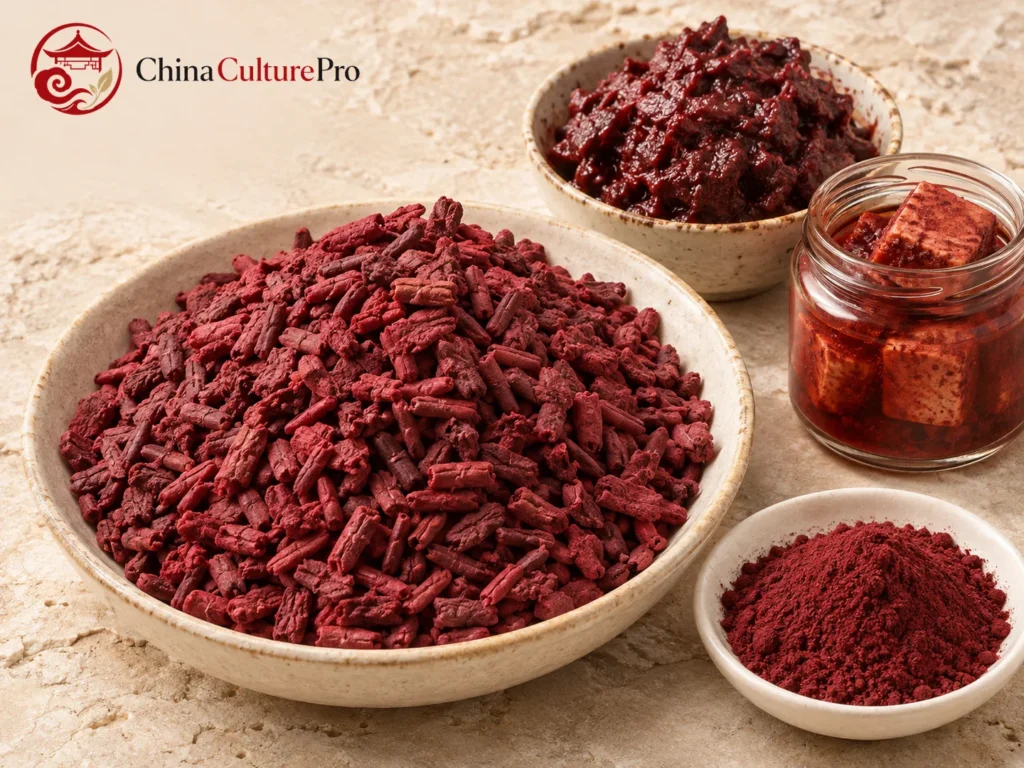
The useful question at a grocery shelf is which product the recipe means. Dry fermented grains, a moist wine-lees paste, a jar of tofu cubes and a bottle of vinegar are different ingredients, even when red yeast rice connects their production.
Red Yeast Rice and Similar-Looking Ingredients
Match the ingredient’s form as well as its name. A red grain and a red tofu cube cannot fill the same role.
| Ingrédient | Description |
|---|---|
| Ordinary red rice | A red-colored rice grain eaten as a staple, not the same fermented product |
| Red yeast rice | Rice fermented with Monascus fungi, used in food production and seasoning |
| Red wine lees | The moist solids remaining after red-yeast-rice wine is strained |
| Red fermented bean curd | A seasoned fermented tofu product whose red version can incorporate red yeast rice |
The distinctions follow the ingredient’s production, not just the shade in the packet or jar.[1][2][3][4]
From Fermented Rice to Regional Foods
One important connection runs through rice-wine making. Hong Qu and glutinous rice are used to make wine; after straining, the remaining solids become red wine lees. In Changle, part of Fuzhou, this fragrant red seasoning appears in everyday local cooking.[3]
- Wine-lees dishes: chicken, pork and eel are among the foods seasoned with red lees. The lees carry a wine-derived aroma as well as color, illustrating a distinctive strand of Fujian cuisine.[3]
- Fermented tofu: red fermented bean curd combines fermented tofu with its preserving seasonings. Red yeast rice can be added to the brine; the finished curd is a salty, savory ingredient for sauces and braised meats.[4]
- Red rice vinegar: fermentation produces a finished liquid seasoning rather than a grain paste. Chinese red vinegar is used with some seafood soups and fried poultry dishes.[5]
These connections explain why “contains red yeast rice” does not mean that every finished product tastes alike.
What Flavor and Color Does It Add?
Distinguish a coloring ingredient from a complete fermented condiment. In some Char Siu (叉烧, chā shāo) recipes within Cantonese cuisine, a little ground red yeast rice increases the red tint while fermented bean curd and the rest of the marinade provide the seasoning.[6]
That does not make the powder a spoon-for-spoon substitute for red curd. You would lose the curd’s tofu body, salt and savory character.[4] Likewise, red wine lees bring a fermented, wine-like fragrance that cannot be described simply as “red food coloring.”[3]
Nor does a red exterior prove that a restaurant dish contains this ingredient. A recipe may use another coloring method or omit extra coloring entirely.[6]
Using the Form a Recipe Actually Calls For
For a marinade that specifies whole red yeast rice, grind the grains finely before incorporating them. Follow that recipe’s measured amount rather than adding a handful as though it were rice for a meal.[6]
If it calls for red wine lees, use the moist fermented seasoning, not dry rice powder. If it calls for red fermented bean curd, mash the specified curd and brine into the sauce. Those changes affect texture and seasoning, not merely presentation.[3][4]
Identify the intended ingredient before considering a substitution: these four forms have no universal conversion.
Choosing and Keeping Culinary Products
Choose a clearly labeled food product from a traceable supplier, with ingredients, intended use and storage directions. A packet of grain, a jar of fermented seasoning and a supplement bottle require different decisions; shared English wording is insufficient.
Follow the actual package for preparation and storage, including refrigeration after opening when directed. Do not assign a jar’s shelf life to an unlabelled homemade ferment, or attempt to reproduce a commercial culture simply by leaving cooked rice to turn red.
Why Food Use Is Different from Supplement Use
Traditional food use does not establish a cholesterol-lowering dose or a health benefit from a red-colored meal. Fermentation strain and conditions can affect compounds such as monacolin K, which is chemically identical to lovastatin. Products with substantial amounts can have drug-like side effects and interactions.[1][2]
Some products may also contain kidney-damaging citrinin. The word “natural” does not verify product quality. Discuss cholesterol treatment or supplement use with a qualified clinician.[2]
FAQs About Red Yeast Rice
Is red yeast rice the same as ordinary red rice?
No. Ordinary red rice is a staple grain; red yeast rice has undergone Monascus fermentation and serves different culinary roles.[1]
Is red yeast rice actually a yeast?
The usual organism, Monascus purpureus, is a mold. “Red yeast rice” is the familiar English product name.[2]
Can red yeast rice replace red fermented bean curd?
Not as an equivalent ingredient. The finished tofu condiment adds body and savory seasoning that a coloring powder does not supply.[4][6]
Does eating red-colored food lower cholesterol?
Color cannot establish a medicine-like effect or a safe dose. Culinary use is not a substitute for appropriate medical treatment.[2]
Sources
[1] Hong Kong Centre for Food Safety. What Is Red Fermented Rice?
[2] National Center for Complementary and Integrative Health. Red Yeast Rice: What You Need To Know
[3] Changle District Government. Red Wine Lees in Changle Food Culture
[4] The Woks of Life. Fermented Bean Curd
[5] The Woks of Life. Chinese Red Vinegar
[6] Jason Farmer. Char Siu Recipe