


Quick Answer: What Is Hubei Lotus Root and Pork Rib Soup?
Hubei lotus root and pork rib soup (排骨藕汤, páigǔ ǒutāng) combines bone-in pork with chunky lotus root in a savory broth. It is closely associated with Hubei home cooking and hospitality, especially in Wuhan. [1]
- Lotus root: Starch-rich varieties become soft and floury.
- Pork: Ribs provide meat; additional pork bones may enrich the broth.
- Method: Simmering brings the meat and lotus root together.
- Serving: Eat the root and meat as well as drinking the soup.
A bowl can be lightly seasoned without being vegetarian. The broth, meat cuts and seasonings vary between kitchens.
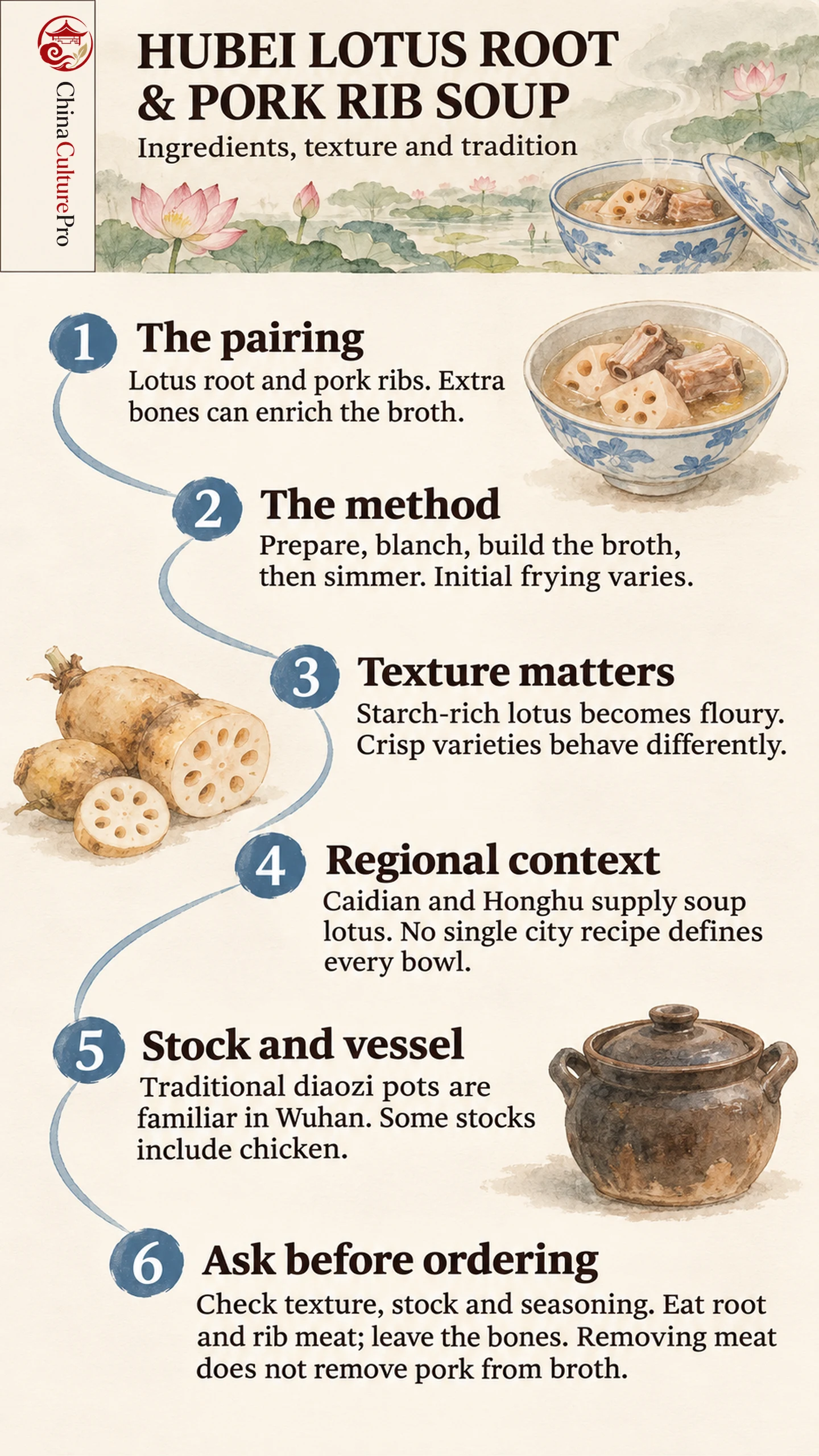
The memorable part of this soup is often the lotus root: thick pieces with visible holes that soften without losing their shape. Within Chinese food, it offers a useful introduction to the ingredients and simmered dishes of Hubei.
Ingredients: What Each Component Adds
The central pairing is lotus root and pork, rather than a large collection of spices. A documented Hubei preparation uses ribs alongside larger pork bones, with ginger, cooking wine, salt, white pepper and scallions. These are one established combination, not a compulsory ingredient list for every household. [2]
| Élément | Role in the bowl |
|---|---|
| Lotus root chunks | Provide the characteristic porous shape and soft, starchy bite. |
| Pork ribs | Supply bone-in meat to eat alongside the broth. |
| Additional pork bones | Build a richer soup base in versions that use them. |
| Ginger and seasonings | Support the savory flavor without replacing the lotus-and-pork pairing. |
Do not assume an apparently simple bowl contains only the two ingredients named on the menu. Cooking wine, prepared stock and finishing seasonings are worth checking when particular ingredients matter to you.
How the Soup Is Prepared
The defining method is simmering. Preparations differ in how they build the broth before that stage: some cooks briefly stir-fry the blanched meat with ginger, while others begin with an already prepared stock. [2][3]
- Prepare the pork and clean, peeled lotus root; cut both into substantial pieces.
- Blanch the pork, then build the soup base. In a documented Wuhan approach, the meat is stir-fried with ginger before liquid is added.
- Simmer the pork and lotus root until the meat is tender and the root reaches the intended texture.
- Adjust the seasoning and serve the broth together with the solid ingredients.
Among Chinese cooking methods, simmering explains the finished texture. The brief frying stage builds the base before the ingredients cook in liquid; it does not make this a stir-fried dish.
Lotus Root Texture: Powdery or Crisp
For the familiar soft Hubei bowl, look for fen ou (粉藕, fěn ǒu), meaning floury or starchy lotus root. It develops a yielding, almost crumbly interior. Crisp lotus varieties are better suited to preparations where a clean snap is wanted, such as stir-fries and salads. [1][5]
Ask about the cooked texture rather than relying on the number of holes in a cut piece. A photograph can show shape and color, but it cannot establish the variety or promise how that root will behave in the pot.
The root is a substantial part of the meal, not simply a garnish. When comparing bowls, notice its texture separately from the tenderness of the pork and the richness of the liquid.
Hubei Variations and the Wuhan Soup Tradition
Caidian and Honghu are among the Hubei growing areas associated with starch-rich soup lotus. The regional tradition connects local produce with earthenware-pot simmering; it does not establish a separate, fixed recipe for every growing area. [4]
In Wuhan, the traditional vessel is often called a diaozi (铫子, diàozi). Water-based home versions coexist with richer restaurant preparations. One reported restaurant version builds its stock from pork and chicken parts before adding the ribs and lotus root, so the dish name alone does not disclose the full broth. [5]
The soup belongs to shared meals and hospitality as well as everyday cooking. Its place at family gatherings helps explain its association with home in Chinese food culture. Neither a particular vessel nor an elaborate stock is enough, by itself, to prove that one bowl represents all of Hubei. [1]
Ordering and Eating the Soup
Use the Chinese name when an English menu is unclear, then ask three concrete questions: is the lotus root soft and floury, what goes into the stock, and which seasonings are added? These questions are more useful than asking whether a bowl is simply “authentic.”
Take broth into an individual bowl and eat the lotus root and rib meat alongside it. Expect bones in the pork pieces; separate the meat as you eat. If the soup arrives in its cooking vessel, let the serving portion cool enough before tasting.
Removing the ribs does not remove pork from the broth. For gluten restrictions, check cooking wine, stock products and compound seasonings rather than treating a pale-colored soup as a complete ingredient statement.
FAQs About Hubei Lotus Root and Pork Rib Soup
Is This Soup Usually Spicy?
The documented preparation uses white pepper rather than a chili-heavy seasoning base. Ask about added chilies or dipping condiments if you want a mild meal. [2]
Does It Always Contain Pork Ribs?
Ribs are central to the named dish, but larger pork bones can also contribute to its broth. A broader lotus-root soup label may need clarification.
Is the Soup Vegetarian or Gluten Free?
The pork-based version is not vegetarian. Gluten-free suitability depends on the complete stock and seasonings, so confirm the kitchen’s ingredients rather than judging by appearance.
Why Is the Broth Sometimes Cloudy?
Some documented Wuhan methods deliberately produce a pale, rich broth. Cloudiness alone does not identify the stock ingredients or show whether milk has been added. [3][5]
Sources
[1] Hubei Department of Culture and Tourism. 武汉排骨藕汤
[2] Hubei Chu Cuisine Research Institute. 莲藕排骨汤
[3] China National Radio / Changjiang Daily. 排骨藕汤如何煨?武汉煨汤技艺传承人教你秘诀
[4] Hubei Health Commission. 湖北藕汤编制说明
[5] Liu Kun and Li Yingxue. From pond to pot: Hubei’s lotus root soup tastes of autumn