


Quick Answer: What Is Fish Maw Used For?
Fish maw is the swim bladder of a fish, usually sold dried or already fried and puffed. Hua jiao (花胶, huā jiāo) is a common Chinese name; yu du (鱼肚, yú dǔ) also appears on labels and menus. It adds gelatinous or sponge-like texture to soups and braises.[1][2]
- Choose the right form: Hard, unfried dried pieces and airy, puffed pieces need different preparation.
- Build flavor in the broth: Prepared puffed pieces take up the surrounding soup.[2]
- Allow preparation time: Thickness and processing determine the method; a quick soak cannot be assumed to suit every product.[1][4]
Fish maw comes from fish, so it is not vegetarian. Buy a clearly identified product rather than choosing by a prestigious-sounding name alone.
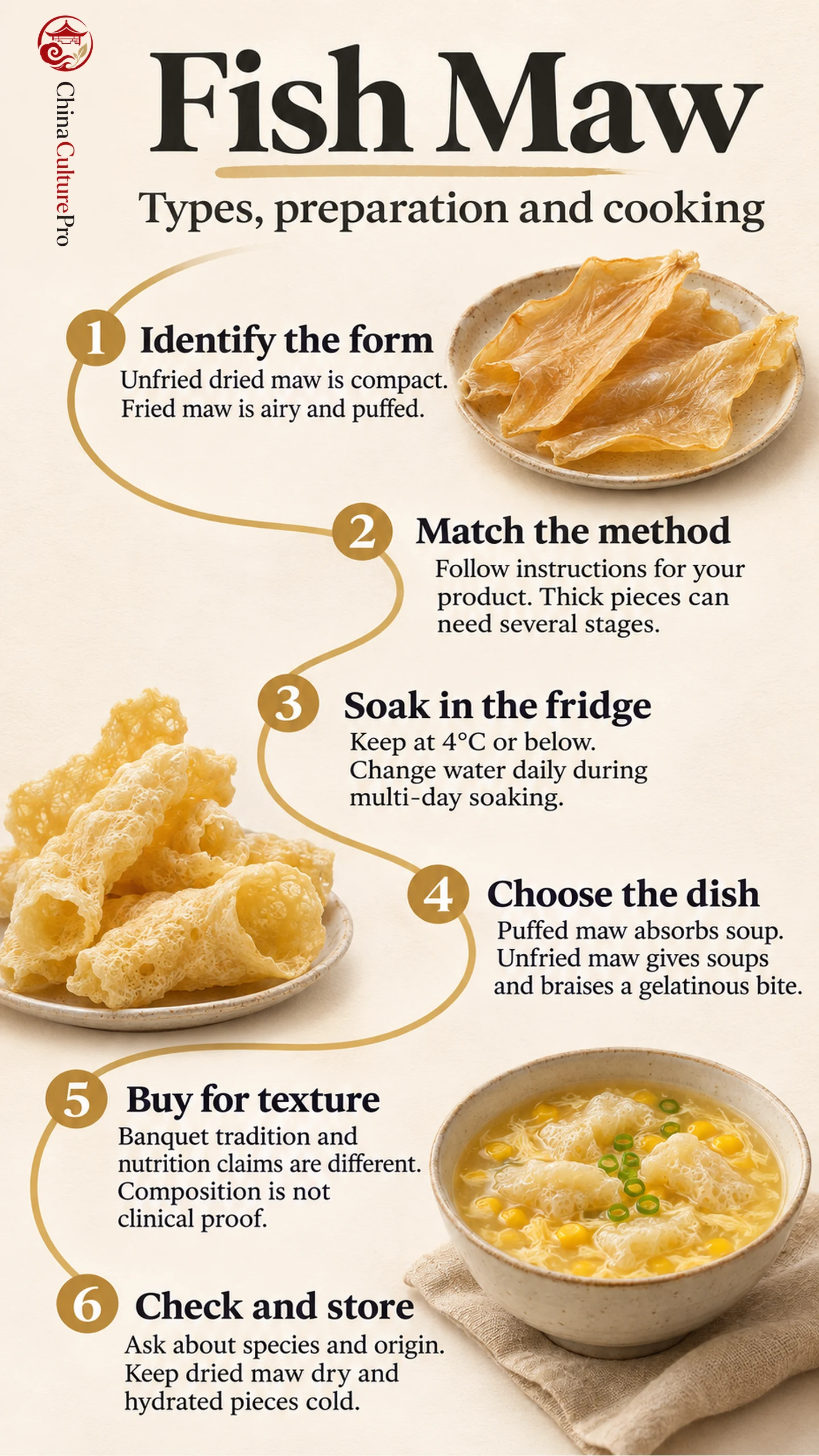
The useful first question at the dried-seafood counter is whether the recipe requires unfried dried maw or a purchased puffed product. That distinction matters more for preparation than a broad label such as “premium.”
Dried and Fried Fish Maw Need Different Handling
The finished texture depends on both the starting form and the cooking method. “Fried” describes processing before sale; once soaked and simmered in soup, those pieces are not expected to remain crunchy.[2][3]
| Forme | Éléments à observer | Role after preparation |
|---|---|---|
| Unfried dried fish maw | Hard, compact pieces, sometimes flattened or tubular | A more substantial, chewy or gelatinous ingredient for soups and braises.[1] |
| Fried or puffed fish maw | Light, expanded pieces with an airy, porous surface | Soft, broth-filled sponges in soups, including corn or crab-and-egg versions.[2][3] |
When buying loose pieces, ask which form the seller has supplied. An unfamiliar Chinese trade name is not enough to choose a preparation schedule.
How to Rehydrate Fish Maw for Your Recipe
Use the supplier’s instructions for the exact product and a recipe written for that form. These checkpoints help you follow that method without confusing the two products:
- Identify and rinse: Confirm whether the maw is unfried or puffed, then rinse it with clean water before preparation.
- Follow the matching softening method: Unfried dried pieces may need steaming and one or more refrigerated soaking stages. Size-specific instructions can differ substantially; there is no single steaming time for every piece.[4]
- Keep soaking cold: Use a clean container and refrigerate at 4°C or below. During multi-day preparation, change the water daily and keep the pieces submerged.[4][5]
- Finish for the chosen dish: Once softened, drain, rinse and cut as directed. For a puffed-maw soup, the recipe may include a ginger-and-spring-onion blanch before the pieces enter the stock.[2]
A thick piece that remains firm inside needs the product’s further softening steps, not an arbitrary deadline. Discard pieces with mould or an unusual sour or rancid smell; aromatics do not make them usable.[1]
Chinese Dishes That Make the Most of Its Texture
- Cantonese corn soup: Prepared puffed maw supplies juicy, sponge-like pieces among sweet corn and egg ribbons. This is an accessible example of texture working alongside broth in Cantonese cuisine.[2]
- Crab-and-egg soup: Puffed maw sits in a chicken-stock base with crab, egg and a starch-thickened consistency. Its porous pieces contrast with the fine strands around them.[3]
- Soups and braises with unfried maw: Rehydrated dried pieces give a substantial, gelatinous bite; match their cooking time to the recipe.[1]
For a first attempt, choose a recipe that states whether its weight refers to dried, puffed or already soaked pieces. Those amounts should not be treated as interchangeable.
Banquet Value and Nutrition Claims
Fish-maw soup can appear at Lunar New Year meals and wedding celebrations, while simpler versions are also cooked at home. Its place in Chinese food culture includes both celebratory hospitality and everyday family cooking.[3]
Protein-rich composition helps explain its nutritional interest, but composition research is not proof of a beauty treatment. A study analyzing three fish species measured protein, amino acids and fatty acids; it did not test whether eating fish maw improved people’s skin or treated illness. Treat collagen or tonic marketing as a separate claim from the texture you are buying for dinner.[7]
Buying and Storing Fish Maw
Choose the form required by your recipe and ask about the fish species, origin and preparation instructions. Price alone cannot establish identity or suitability. Totoaba is a protected fish listed in CITES Appendix I; do not assume an unidentified expensive maw is an ordinary unrestricted seafood purchase. Check the relevant wildlife and import requirements before buying or carrying unfamiliar products across borders.[6]
Keep dried products protected from moisture in an airtight container, following their storage label. Warm, humid conditions encourage deterioration; discard mouldy food rather than trimming it for soup. Refrigerate hydrated pieces and freeze prepared portions if you will not cook them promptly.[1][5]
FAQs About Fish Maw
Is fish maw a fish stomach?
No. It is the swim bladder, which controls buoyancy, rather than the stomach suggested by a literal reading of the menu name.[2]
How long should fish maw soak?
There is no universal time. Thick unfried pieces may require multiple refrigerated stages, while puffed products follow a different method. Use the instructions for the specific form and thickness.[4]
Why does fish maw become thin during cooking?
Excessive heat or prolonged cooking can break down its structure. Follow the recipe’s gentle cooking method and monitor the pieces.[1]
Do I need expensive fish maw for soup?
No. Corn-and-egg soup can use ordinary purchased puffed fish maw. Buy the form specified by the recipe.[2]
Sources
[1] Wing Joo Loong. How to Prepare Dried Fish Maw for Cooking
[2] The Hong Kong Cookery. Fish Maw Creamed Corn Soup
[3] Wok and Kin. Fish Maw Soup
[4] On Hing Dry Seafood. How to Soak and Store Fish Maw
[5] Singapore Food Agency. Food Safety Tips
[6] NOAA Fisheries. Totoaba: Conservation and Management
[7] Wen J. et al. Proximate Composition, Amino Acid and Fatty Acid Composition of Fish Maws