
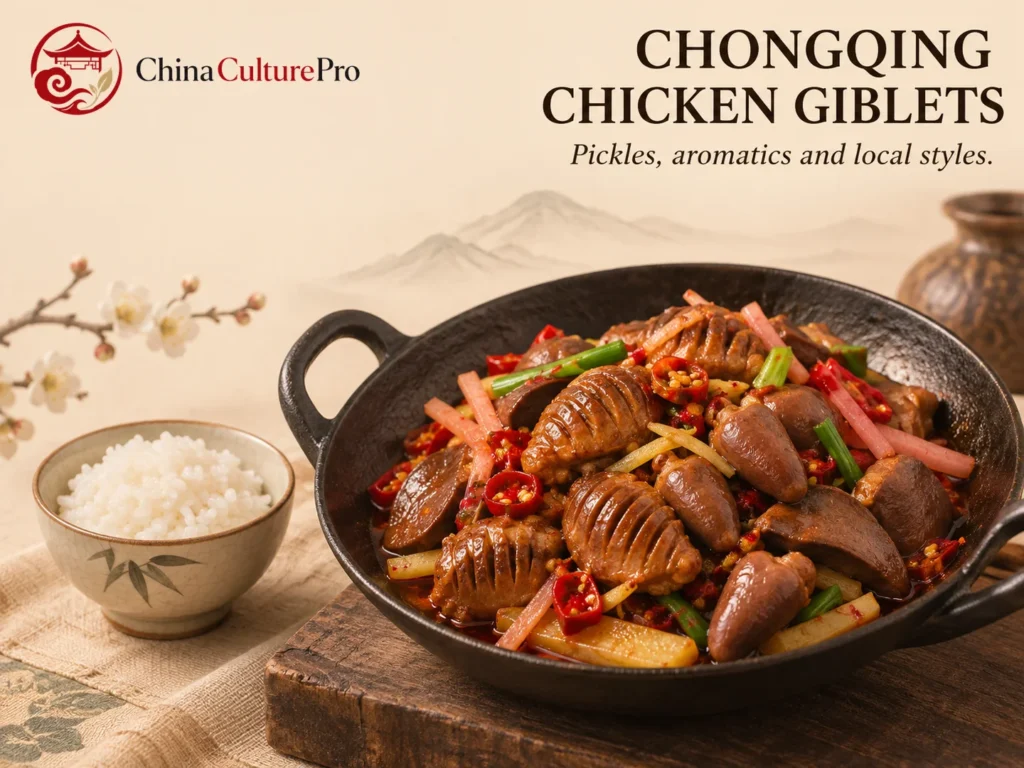

Quick Answer: What Are Chongqing Chicken Giblets?
Qianjiang chicken giblets (黔江鸡杂; Qiánjiāng jī zá) is a Chongqing dish combining chicken organs with pickled chilies and radish. The mix can include gizzards, hearts, liver and intestines, so “giblets” does not mean gizzards alone.[1]
- Flavor: Pickled vegetables give the dish its sour, hot character.
- Method: Aromatic frying can lead into a gentle finishing stage.
- Serving: A hot dry pot is one established presentation.[2]
It is an offal dish with local variations, rather than a single recipe for every restaurant.

The useful starting point is the organ mixture and the pickles. A menu translation such as “chicken gizzards” may identify only part of what is in the pot. Once those components are clear, it becomes easier to understand the cooking sequence and the differences between a concentrated dry-pot presentation and versions with more vegetables.
Giblets, Pickled Vegetables and Aromatics
Gizzards, hearts, liver and intestines all appear in the dish’s local ingredient descriptions. A heritage feature pairs these organs with pickled chilies and pickled radish. The English title should therefore be read as a mixed-organ preparation, even when a particular cook selects fewer kinds.[1]
Pickled ginger and radish are important to a dry-pot description, with scallions added at the end. The pickles belong inside the dish’s flavor structure: they are not simply a cold garnish placed beside plain chicken.[2]
Other local descriptions add garlic and include several kinds of pickled vegetables. Qianjiang itself is a district in eastern Chongqing, near the Hubei border; the name signals that regional association.[4]
For ingredient shopping, distinguish ready-prepared pickled chilies and radish from fresh chilies and raw radish. Do not assume they are interchangeable simply because the vegetables look similar. If your recipe includes Sichuan peppercorns, treat their numbing flavor as a separate seasoning choice from the sourness of the pickles.
The Stir-Fry and Gentle-Finish Method
The broad process combines aromatic frying with a finishing stage. The dry-pot description starts by frying seasoned giblets with fragrant aromatics and keeps the pot gently heating for serving. The cook still needs to finish every poultry piece thoroughly.[2]
- Choose and portion the giblets: Use cleaned, food-grade chicken giblets and cut them into pieces suitable for the selected recipe; keep raw poultry and its utensils separate from ready-to-eat food.
- Prepare the pickle mixture: Cut the prepared pickled chilies, ginger and radish as required, and have the other aromatics and chosen vegetable base ready.
- Fry the aromatics and giblets: Heat the recipe’s oil, fry the aromatics until fragrant, then add the seasoned giblets and stir-fry.[2]
- Finish cooking completely: Use the recipe’s gentle finishing stage as needed and check the poultry pieces with a food thermometer for 165°F (74°C) before serving.[5]
- Assemble for serving: Serve with the cooked vegetable base if using, add scallions and bring the finished dish to the table.[2]
This is a general sequence, not a complete quantified recipe. The amount of liquid, cut size and finishing time need to come from the particular method you are following. For the broader distinction between a quick fry and a longer finish, see Chinese cooking methods.
Qianjiang Dry Pots and Vegetable-Rich Versions
One local dry-pot description places the fried giblets over potato strips and keeps the pot gently heating during the meal. Its appeal lies in concentrated, sizzling ingredients rather than a large bowl of soup.[2]
A district specialty description offers a broader composition: chicken organs can be combined with thin chicken slices, potato pieces, pickled chilies and scallions. Once the chicken is cooked, vegetables such as cabbage, bean sprouts, winter melon or leafy greens can be added during gentle table cooking.[3]
These examples give potatoes a documented place in the dish. When selecting a recipe, check its whole composition rather than assuming that adding vegetables makes it a different dish.
Compare the broader broth-based traditions separately in Sichuan versus Chongqing hot pot. That comparison helps explain the surrounding food culture without erasing the identity of this particular dish.
Ordering and Serving Chicken Giblets
Ask which organs are included, whether the dish comes as a dry pot, and what vegetables are already in the base. These questions resolve more practical uncertainty than asking whether a restaurant’s version is the single “authentic” one.
A regional dining description presents the food in large pots suitable for sharing. Some establishments also pair it with a local beef-and-greens dish. Treat that as one serving possibility, rather than a promise about every menu.[4]
At home, bring the finished dish to the table only after the poultry has reached the safe internal temperature. A burner or a sizzling pot is a serving arrangement; neither replaces checking that the giblets are fully cooked.[5]
FAQs About Chongqing Chicken Giblets
Does chicken giblets mean only gizzards?
No. Qianjiang descriptions include hearts, liver and intestines as well as gizzards. Check the actual mix if you prefer particular organs.[1]
Is this the same as Chongqing spicy chicken?
For this dish, ask specifically for Qianjiang chicken giblets: its core is offal and pickled vegetables, not a general order for spicy chicken meat.[1]
Are potatoes always included?
Potatoes appear in local dry-pot and district specialty descriptions, but those examples do not establish that every restaurant must include them. Ask about the base when ordering.[2][3]
Sources
[1] Chongqing Intangible Cultural Heritage Protection Center and Hualong News. 一锅黔江鸡杂 品味舌尖上的武陵味
[2] Chongqing Municipal Commission of Culture and Tourism. 黔江鸡杂
[3] Qianjiang District People’s Government. 黔江特产(2026年版)
[4] Consulate-General of Japan in Chongqing. 黔江鶏雑
[5] FoodSafety.gov. Cook to a Safe Minimum Internal Temperature