

Quick Answer: What Is Reduction Firing?
Reduction firing (还原烧成, huányuán shāochéng) exposes ceramics to a kiln atmosphere with relatively little available oxygen. It can change the chemical state of iron and copper compounds and, with it, the color of a fired glaze.[1][2][3]
- Iron in celadon: Celadon (青瓷, qīngcí) can develop green or blue-green tones when iron in the glaze is reduced.[1][2]
- Copper reds: Red can form in the glaze itself or in copper decoration beneath a transparent glaze.[3]
- Reading a finished vessel: Color reflects the glaze, the firing and the way light travels through the surface.[2][3][4]
The atmosphere can change during firing and cooling, so its effects can vary even within one glaze.[4]

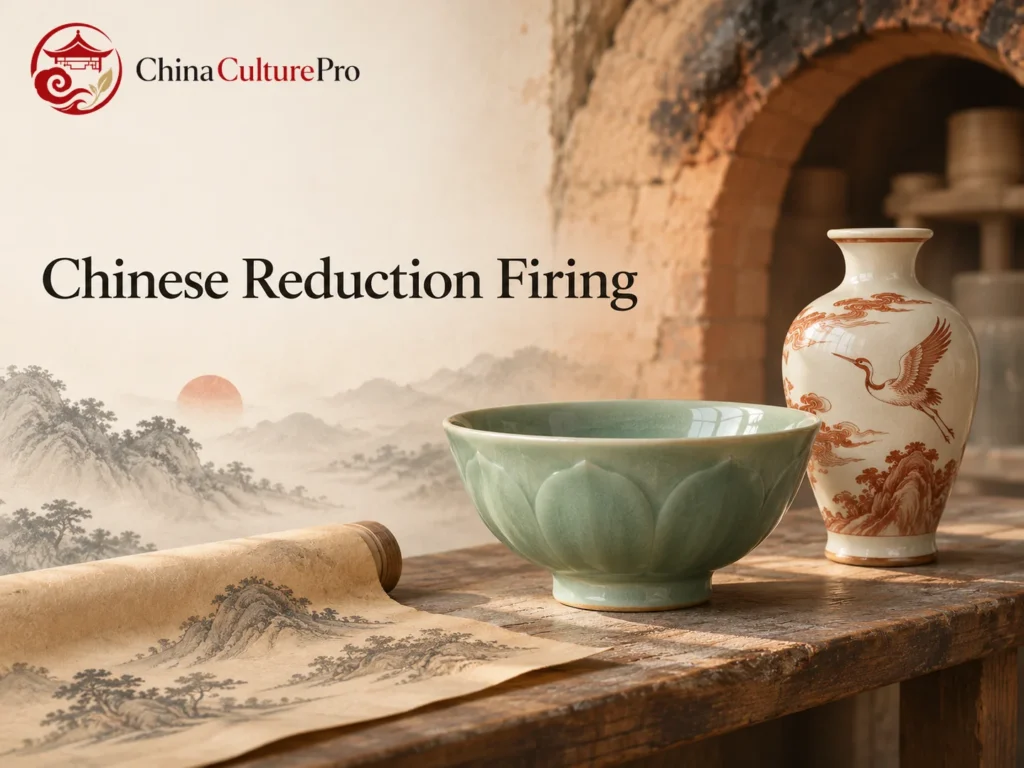
A soft green bowl and a porcelain vessel with a red motif can look like opposite results. A reducing stage can help produce either color, depending on the material. The difference lies partly in which colorant is reacting and where it sits in the vessel’s surface.[1][2][3]
How a Reducing Atmosphere Changes a Glaze
A fuel-fired kiln contains hot gases from combustion. With ample oxygen, the atmosphere can favor oxidation. When less oxygen is available relative to the fuel, the gas mixture can favor reduction. Under reducing conditions, some compounds in the body or glaze move toward lower oxidation states. For example, the balance between two chemical forms of iron, commonly described as ferric and ferrous iron, can shift.[1][2][4]
Atmosphere can change during a single firing. It can also differ from one area of the kiln to another. The kiln’s shape, the movement of combustion gases and where pieces sit all matter. The long sloping form of Chinese dragon kilns is an example of why airflow and the placement of ware belong in the same discussion. Even the outermost glaze layer can change as oxygen reaches it during cooling.[1][4]
Why Longquan Celadon Looks Green
In Longquan celadon, a small proportion of iron helps produce the characteristic green glaze. A reduction atmosphere can favor ferrous iron, but the color depends on the other glaze ingredients and on the way the fired surface scatters and absorbs light. Study of Southern Song and Yuan plum-green wares has examined glaze composition, iron’s chemical state and microstructure together.[2]
Glaze thickness and the ceramic body can also alter what the eye sees. A glaze that pools in a recess can look deeper in color than the thinner layer across a raised edge. Small bubbles or particles can scatter light and change how translucent the glaze appears. These optical effects help explain why pieces grouped under Chinese celadon can differ substantially in shade and surface.[2]
How Copper Produces Red Glazes and Decoration
In a copper-red glaze, copper is present in the glaze mixture itself. In underglaze copper red, the potter applies the copper-bearing design to the body and covers it with a clear glaze. Both approaches can use reduction, but the color sits in different parts of the object. On a decorated piece, the red may appear only where a brush line or patch was applied.[3]
In research on one 13th- to 14th-century Chinese porcelain specimen, red and black areas of an underglaze decoration showed differences in how copper was distributed and the forms in which it was present. The result explains why a single firing can leave noticeably different colors on the same vessel. For forms and examples beyond painted decoration, see the guide to Chinese copper-red glazes.[3]
How Researchers Recognize Reduction Firing
A catalogued kiln site and dated layer give researchers a place and time to start from. In the laboratory, looking at a sample in section shows how features change from the clay body to the outer glaze. Chemical measurements can then distinguish forms of iron or copper that a photograph cannot resolve. Tests on experimental reduction-fired celadon glazes found evidence of more oxidized iron near the surface than in parts of the interior. A glaze can therefore retain traces of different conditions in different layers.[2][3][4]
For a museum visitor, compare the overall color, thin spots at the rim and glaze pooled in recesses before drawing conclusions. These details show how uneven a single surface can be. To judge origin or date, combine that observation with the object’s shape, body, documented findspot and the kinds of comparison used in Chinese porcelain history.[2][3]
FAQs About Chinese Reduction Firing
Does reduction firing always make a glaze green?
The result depends on which colorants and other ingredients are present. Under reducing conditions, iron-bearing celadon can turn green, while a copper-bearing glaze or decoration can develop red.[1][2][3]
Does wood firing always create a reducing atmosphere?
Wood is a fuel. The availability of oxygen depends on how the firing chamber is supplied with air and on conditions at different stages of firing. Those conditions can shift during a wood firing.[1][4]
Can I identify a reduction-fired object by eye?
Color and surface can suggest a firing history. Identification is more secure when the object’s context and body or glaze analysis agree with that interpretation.[2][3][4]
Sources
[1] Lehigh University Art Galleries. Color, Culture, and Chemistry
[2] Heritage Science. Color Characteristics of Plum-Green Celadon Glaze From the Longquan Kiln
[3] Journal of Synchrotron Radiation. Colouration Mechanism of Underglaze Copper-Red Decoration Porcelain
[4] Journal of the European Ceramic Society. Surface Oxidation and Fe Valency Distribution in Celadon Glaze