


Quick Answer: What Is Chaozhou Beef Hot Pot?
Chaozhou beef hot pot(潮州牛肉火锅,cháozhōu niúròu huǒguō)is a regional table-cooking tradition associated with finely divided beef cuts, a lightly seasoned cooking broth and separate dipping sauces. It belongs to the wider Chaoshan food culture of eastern Guangdong.
- Beef: Named cuts foreground differences in grain, fat and connective tissue.
- Broth: A clear cooking liquid lets those meat flavors remain prominent.
- Dip: Shacha(沙茶酱,shāchá jiàng)is a familiar savory companion, with other sauces also available.
The names offer texture clues, not universal Western butcher translations. Cooking needs depend on the actual food and conditions, rather than one safe number of seconds for every plate.
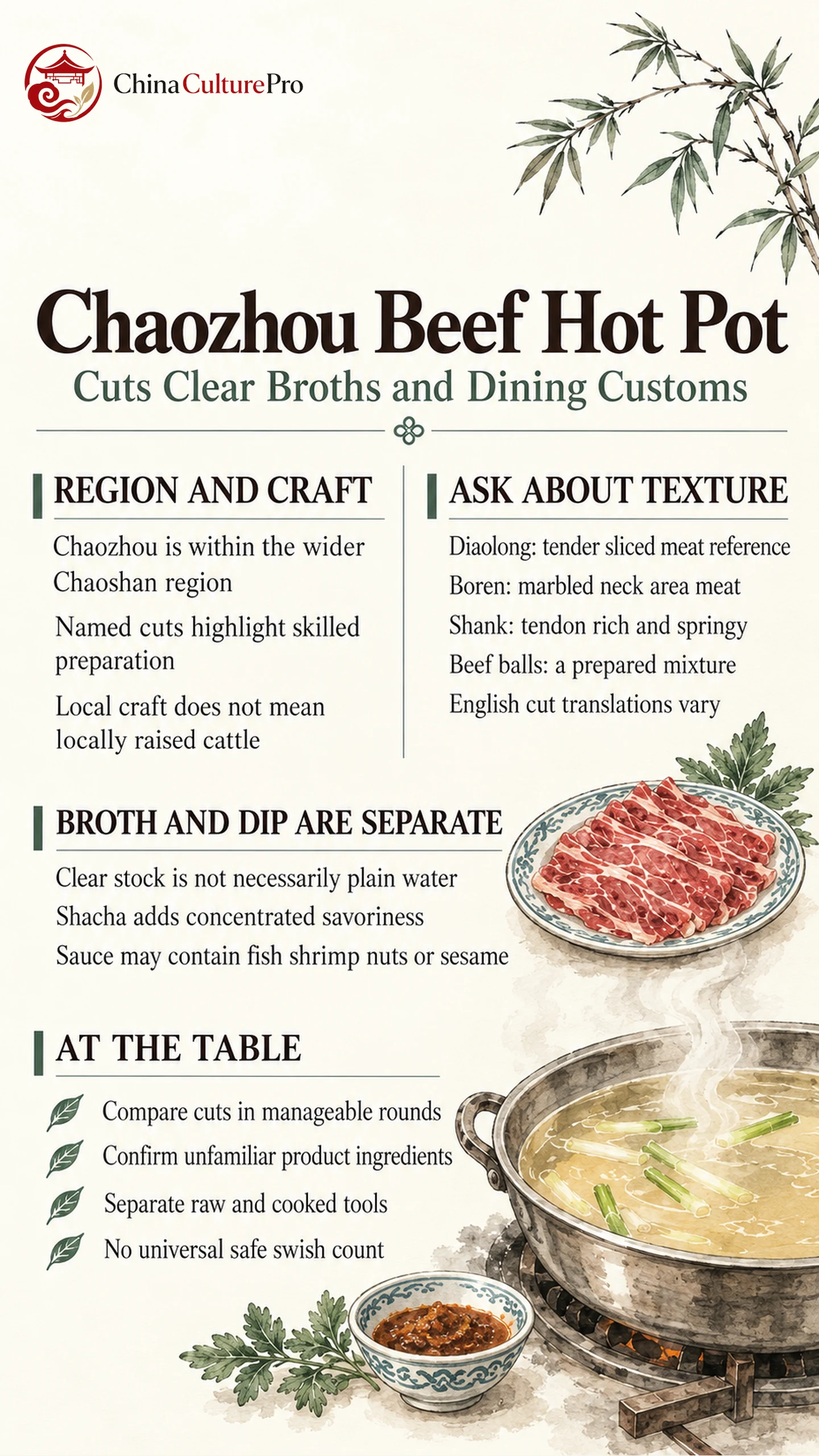
Several plates of beef can look similar at first, yet deliver quite different bites. One is lean and smooth, another visibly marbled, another threaded with connective tissue. Within the Chinese hot pot family, this style gives cutting, separate presentation and texture a particularly visible role.
Chaozhou, Chaoshan and the Beef-Cutting Tradition
Chaozhou is one city within the broader Chaoshan region, which also includes Shantou and Jieyang. English menus may use Chaozhou, Chaoshan or Teochew as related regional references, although they are not identical geographic labels. The Teochew cuisine guide explains that wider food context.[2]
The cutting counter is part of the appeal. Beef is divided into named categories and arranged separately so diners can compare the resulting textures. Contemporary field reporting documents both that skilled work and the continuing importance of beef-ball making.[1]
Local culinary identity does not mean all cattle were raised locally. Chaozhou’s industry draws on livestock supplied from other regions as well as local craft. Claims about freshness, slaughter timing, freezing or a particular breed should therefore be checked with the restaurant rather than inferred from the dish name.
Nor does a detailed cutting system make every menu identical. The available animal, supply, slicing practice and house vocabulary influence what appears on a particular day. Ask staff to explain the plates instead of assuming every list must contain the same number of cuts.
Reading the Cut Names on a Menu
These examples explain texture; English cut translations vary between menus.[2]
| Menu item | Useful texture clue | Identification boundary |
|---|---|---|
| Diaolong(吊龙,diàolóng) | A tender sliced-meat reference associated with the back or side area | Do not assume every menu means precisely tenderloin, rib-eye or sirloin |
| Boren(脖仁,bórén) | Neck-area meat known for visible marbling and a resilient bite | Fat distribution varies; the name does not specify a fixed percentage |
| Tendon-rich shank meat | A more springy or chewy texture from connective tissue | Ask which local name and cut the restaurant uses |
| Beef balls(牛肉丸,niúròu wán) | A springy minced or pounded-beef product | A prepared mixture, not another thin muscle slice |
Use the table to express a preference: tender slices, more marbling or a firmer bite. A mixed selection can make differences easier to notice without requiring a diner to memorize an entire butcher’s vocabulary.
Beef balls deserve a separate question about ingredients and cooking status. A smooth surface does not disclose binders or seasoning, and precooked and raw products need different handling. The hot pot ingredients guide separates whole cuts from processed foods.
Clear Broth and the Shacha Dipping Bowl
Clear beef stock and white radish are familiar reference points. Other additions vary. Clear means visually transparent, not plain water or an absence of animal ingredients. The broth can develop more beef flavor as food cooks in it.
Regional accounts describe shacha moving from the cooking liquid into a separate dipping bowl. Present-day broth recipes still vary.[2]
Shacha contributes a concentrated savory, often grainy finish. Peanut and chili sauces are other regional accompaniments.[3] The dipping sauces guide distinguishes those choices from the broth itself.
Check composition carefully. Some shacha products contain fish and shrimp, with sesame, soy or nuts also relevant; a manufacturer’s published label confirms that combination in one product.[4] A beef-centered meal can therefore contain seafood through its sauce even when no seafood plate is ordered.
Dining Customs and Ingredient Checks
Shared plates let the table compare cuts as the meal progresses. Some kitchens suggest an order for tasting leaner, fattier or more connective cuts, but that sequence is a house preference rather than one national dining rule. Choose the foods and portions the group wants.
Ask staff about unfamiliar cuts and use their guidance alongside proper cooking principles. Thin meat, dense meatballs and offal cannot all be judged by the same swish count. A local timing chart describes a particular preparation at best; it does not establish safety for every slice.
Keep raw and cooked tools separate, avoid crowding the pot, cook food thoroughly and wait for the broth to return to a full boil after a refill.[5] Color alone cannot establish meat doneness; internal temperature is a more reliable check.[6] The hot pot eating guide explains the shared-table process.
For ingredient restrictions, check the stock, dipping sauce and compound products separately. Beef stock remains animal-based when the visible meat is removed. Use the vegetarian food guide when asking whether a genuinely separate plant-based preparation is available.
FAQs About Chaozhou Beef Hot Pot
Is Chaozhou beef hot pot spicy?
The familiar broth is lightly seasoned. Chili may appear in a dip, and house broth options vary. Confirm the actual order.
Are local cut names the same as Western steak cuts?
Not exactly. They belong to a regional cutting vocabulary, and English equivalents can be approximate. Ask about texture and the actual muscle or product.
Does shacha contain seafood?
Many versions do, including fish or shrimp. Others differ. Check the specific sauce, especially when avoiding seafood or animal ingredients.
Is there one safe number of seconds for every cut?
No. Thickness, product type, starting condition and broth heat affect cooking. A universal countdown cannot replace thorough cooking.
Sources
[1] Deng Hua for Xinhua. Chaozhou’s Beef Food Industry
[2] Shanghai Daily via Shanghai Information Office. Hot Spots for Hot Pots Delight Meat Gourmets
[3] Guangdong Overseas Chinese Affairs Office. Chaozhou Beef Hot Pot Group Standard
[4] HAW-DI-I Foods. Shacha Product and Allergen Information
[5] Centre for Food Safety. Hot Pot Food Safety Advice
[6] Food Safety and Inspection Service. Can You Tell if Meat Is Safely Done by Its Color